Most recruiters are selling you a dream of high pay and unlimited home time that vanishes the moment you pull out of the terminal. You’ve likely felt the sting of vague pay scales that hide deductions or the fear of being assigned a beat-up rig that won’t pass a level one inspection. It’s exhausting to navigate these misleading promises, especially when the industry is short 175,000 drivers and you know your worth. You deserve a carrier that respects your time and provides modern equipment that doesn’t leave you stranded on the shoulder.
I’m here to help you cut through the noise to find top-tier carriers and the essential gear for new truck drivers to succeed in 2026. Whether you’re looking for a new Class 8 sleeper or trying to maximize your CPM, having the right information is your best defense. We’ll explore how to find carriers with strong freight density in your region; we’ll also break down the professional gear kit you need to stay compliant with the latest FMCSA electronic documentation rules. Let’s get you prepared for the road ahead with the grit and transparency this job demands.
Key Takeaways
- Redefine your search for “trucking companies near me” by focusing on a carrier’s specific hiring radius and regional freight density rather than just physical terminal locations.
- Master the art of vetting potential employers by digging into CSA scores on the FMCSA portal and unmasking hidden pay structures like detention and layover pay.
- Leverage specialized digital resources and industry platforms to identify carriers actively moving freight in your preferred lanes before committing to a contract.
- Secure your career from day one by assembling a professional kit of essential gear for new truck drivers that meets the strict 2026 safety and compliance standards.
- Protect your safety and your cargo by investing in professional-grade securement equipment from Mytee Products to ensure you’re ready for any load.
Table of Contents
- Beyond the Search Bar: What "Trucking Companies Near Me" Really Means
- Fleet Profiles: Choosing Between OTR, Regional, and Dedicated Routes
- The Driver’s Scorecard: How to Vet a Carrier and Their Equipment
- Modern Job Hunting: Using Digital Tools to Find the Best Carriers
- Ready for Day One: Essential Gear for New Truck Drivers
Beyond the Search Bar: What “Trucking Companies Near Me” Really Means
Most search results for “trucking companies near me” are just automated directories that point you toward a physical office address, but that isn’t how the road works. In the world of a professional Truck driver, “near me” isn’t about where the corporate headquarters sits; it’s about the carrier’s hiring area. This is the specific geographic radius where a company can actually get you home for your reset. A national carrier with a terminal 300 miles away might actually be “closer” than a local warehouse if they have a drop lot just down the road from your house.
Your actual work-life balance depends on regional hubs and freight lanes rather than fancy office buildings. If a carrier has a massive freight presence in your state, they can swap loads or find a backhaul that puts you in your own driveway for the weekend. Before you sign on the dotted line, you need to know if they have the density to keep you moving. You’ll also need to start thinking about your setup; having the essential gear for new truck drivers ready to go ensures you aren’t scrambling when that first dispatch comes through. Being prepared is the only way to protect your livelihood in this fast-paced industry.
To better understand how to prepare for your first few weeks on the road, watch this helpful video:
The Myth of the Local Office
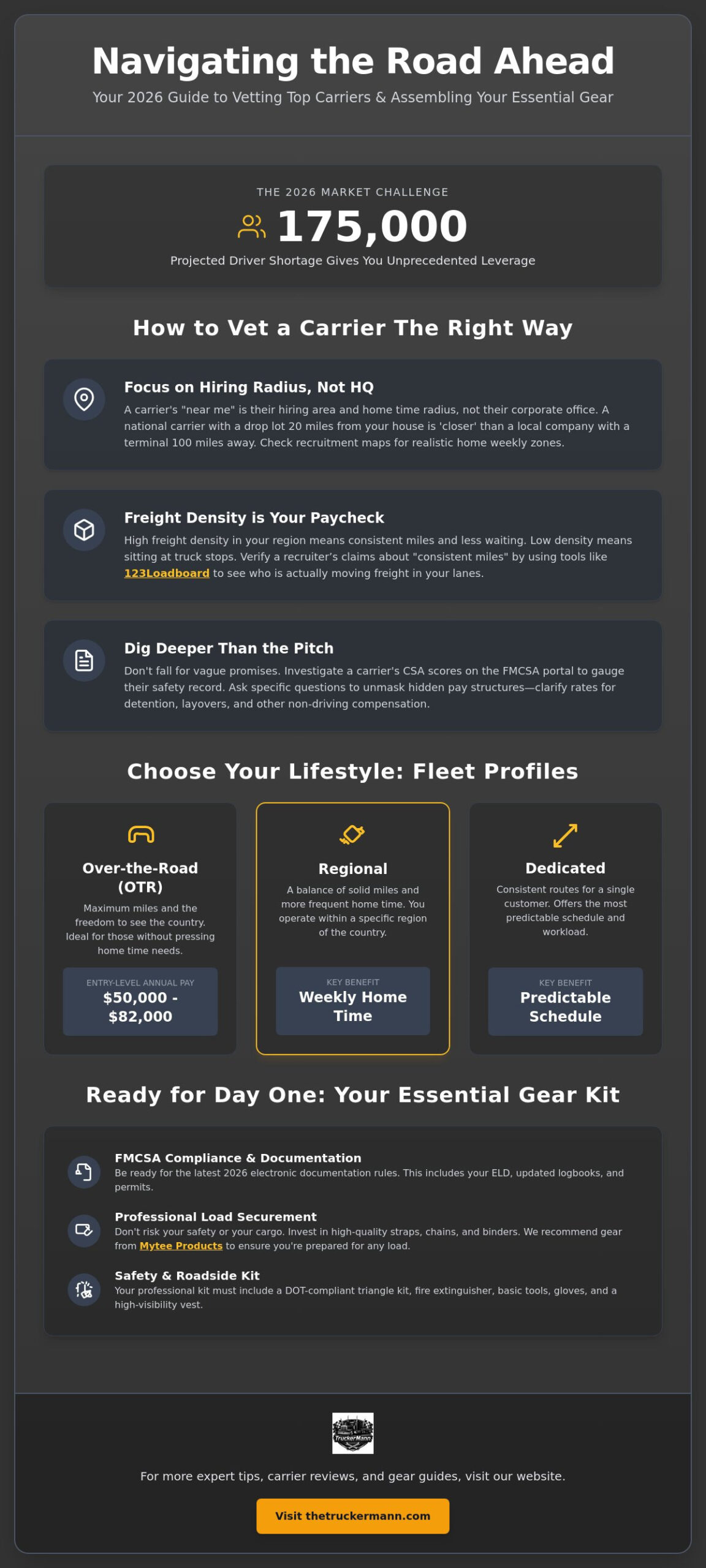
Corporate headquarters locations rarely dictate where you’ll actually spend your time or how often you see your family. Many of the biggest players in the game run out of small towns in the Midwest but have hiring zones that cover the entire Eastern Seaboard. To find the truth, ignore the “About Us” page and look for carrier recruitment maps. These maps show you the difference between “home daily” radii, which are usually within 50 miles of a terminal, and “home weekly” zones that can stretch hundreds of miles out. Don’t get stuck with a carrier that considers “near you” to be a six-hour commute after a seventy-hour week.
Why Freight Density Dictates Your Success
Freight density is the lifeblood of your paycheck. If a carrier doesn’t have enough customers in your region, you’ll find yourself sitting at truck stops waiting for a load that probably doesn’t pay enough to cover your lunch. A “hiring lane” is the geographical corridor where a carrier consistently recruits and moves freight. You can use tools like 123Loadboard to see which companies are actually posting loads in your area. Seeing real-time data on 123Loadboard helps you verify recruiter claims about “consistent miles” before you commit.
Once you’ve picked a carrier with strong lanes, make sure your truck is stocked with essential gear for new truck drivers, including high-quality securement tools. Investing in professional equipment from Mytee Products means you’re prepared for whatever freight density throws your way. Whether you’re hauling flatbed or dry van, gear from Mytee Products ensures you stay compliant and safe while you’re chasing those miles.
Fleet Profiles: Choosing Between OTR, Regional, and Dedicated Routes
Choosing a fleet type isn’t just a career move; it’s a lifestyle choice that determines how often you’ll sleep in your own bed. In the 2026 market, the industry is grappling with a projected shortage of 175,000 drivers, which gives you more leverage than ever to pick the route that fits your personal goals. You’ve got to decide if you want the high-mileage freedom of Over-the-Road (OTR) work or the predictable rhythm of a dedicated account. Each path requires a different mindset and a specific kit of essential gear for new truck drivers to stay safe and comfortable during those long stretches away from home.
The OTR Lifestyle: Miles and Freedom
OTR is the traditional path where you’ll see the most of the country while turning the highest number of miles. Entry-level drivers in 2026 can expect to earn between $50,000 and $82,000 annually, but hitting the top end of that bracket requires staying out for 21 days or more at a stretch. This lifestyle effectively makes your truck your home, so don’t skimp on the basics. Since eating at truck stops can cost you between $5,000 and $8,000 a year, bringing a 12-volt fridge and a portable stove is a smart move for your wallet. This setup is part of the essential gear for new truck drivers who want to maximize their take-home pay while maintaining their health on the road.
Dedicated and Regional: The Middle Ground
Regional and dedicated routes offer a middle ground that many veterans prefer for better work-life balance. Dedicated accounts often involve hauling for a single customer, which leads to consistent routes and familiar docks. It’s usually the best setup for drivers with families, but don’t blindly trust a recruiter’s “home weekly” promise. Use 123Loadboard to research which carriers actually dominate specific regional lanes in your area. If you see a company frequently moving freight on 123Loadboard, it’s a strong sign they have the density to keep you busy without sending you thousands of miles away from your home terminal.
Safety remains the top priority regardless of which fleet type you choose. You should regularly study the Wisconsin Commercial Driver’s Manual to stay sharp on safety standards and inspection protocols. If you’re moving flatbed loads on a regional route, your securement gear is your lifeline. Make sure you’re using professional-grade straps and tarps from Mytee Products. Using reliable equipment from Mytee Products not only keeps you compliant with FMCSA standards but also ensures your cargo stays put through every turn. Finding the right fit takes a bit of digging, but the effort pays off in long-term career satisfaction. You can join our community of pros to get more insider tips on vetting carriers before you sign a contract.
The Driver’s Scorecard: How to Vet a Carrier and Their Equipment
A recruiter’s job is to fill seats, but your job is to protect your CDL and your sanity. Don’t let a shiny signing bonus distract you from the reality of the equipment you’ll be operating. In 2026, a new Class 8 sleeper truck costs between $170,000 and $172,000, which includes that 15% tariff surcharge on imported parts. Because of these high costs, some carriers are pushing their older rigs further than they should. You need to know if you’re being handed the keys to a reliable machine or a rolling roadside violation before you ever pull out of the yard. Being a professional means doing your homework before the first dispatch.
Safety Scores: The Truth Behind the Curtain
The FMCSA SAFER portal is your best friend when you’re looking for the truth. Every carrier has a public record, and you should be looking at their CSA scores like your life depends on it, because it does. Pay close attention to the “Vehicle Out-of-Service” percentage. If a company’s rate is significantly higher than the national average, it’s a massive red flag that they prioritize profit over maintenance. You can use the DOT inspection level 1 checklist to perform your own walkaround of their yard during your orientation. If the trailers have bald tires and frayed straps, move on to the next company. Part of your essential gear for new truck drivers should include a high-quality tire pressure gauge and a sturdy flashlight to ensure you can catch these issues during your daily pre-trip inspections.
The “Real” Pay Rate
Cents-per-mile is a vanity metric. You can’t pay your mortgage with a high CPM if you’re sitting for six hours at a receiver for free. Ask recruiters specific questions about detention pay, layover pay, and breakdown pay. In a market where the median annual wage for heavy truck drivers is $57,440, the difference between a good year and a great one often comes down to these “hidden” pay categories. A carrier that pays for every minute you’re delayed shows they value your time. Beyond the paycheck, look at the equipment standards. If you’re hauling flatbed, ask if they provide high-quality securement tools or if you’ll need to source your own. Many pros prefer to carry their own gear from Mytee Products to ensure they have reliable straps and chains that won’t fail under pressure. Having your own kit from Mytee Products is a smart move when the carrier’s provided gear looks like it’s seen better decades. This level of preparedness is what separates the professionals from the steering wheel holders. Your essential gear for new truck drivers kit isn’t complete without tools you can trust, and Mytee Products offers the durability needed for the long haul.
Modern Job Hunting: Using Digital Tools to Find the Best Carriers
Stop using generic search bars that treat a trucking company like a local pizza joint. Generic sites often point you toward brokers or corporate offices that don’t even have a parking lot for a tractor-trailer. In 2026, the real hunt happens on specialized digital platforms where you can see the actual movement of freight. Finding the right carrier is about more than just a job posting; it’s about verifying that a company has the work to keep you moving. You’re entering a market with a projected 175,000 driver shortage, so you have the upper hand if you know where to look.
Using technology to vet your next employer is a power move that most new drivers overlook. While you’re researching companies, you should also be building your professional kit. Knowing the essential gear for new truck drivers and having it ready shows recruiters you’re a serious professional, not just someone looking for a paycheck. Being prepared with gear from Mytee Products proves you’ve done your homework on safety and cargo securement. You want to be the driver that carriers compete for, not just another name in a stack of applications.
Researching Carrier Activity
Seeing a carrier’s name pop up daily on a load board isn’t just noise; it’s proof of financial stability. When a company is constantly moving freight, they have the cash flow to maintain their fleet and pay their drivers on time. By using 123Loadboard, you can see which carriers are dominating the lanes you actually want to drive. 123Loadboard helps drivers identify busy carriers by showing real-time load postings and freight density in specific regions. This data lets you cross-reference recruiter claims about “consistent miles” with the reality of the market.
The Application Power Move
Before you even pick up the phone to call a recruiter, get your paperwork in order. Most guys wait for the carrier to pull their MVR and PSP reports, but bringing your own shows you’re a professional who values transparency. This is also the time to invest in yourself. Completing specialized training through the DLA Academy can significantly increase your leverage when negotiating a starting CPM. Carriers are desperate for talent, but they’ll pay a premium for someone who has already mastered advanced skills at the DLA Academy. Proving your worth through the DLA Academy makes you a high-value candidate from day one. You can master the application process by following our proven driver’s roadmap.
Ready for Day One: Essential Gear for New Truck Drivers
You’ve signed the papers. The keys are in your hand. The cab smells like a mix of industrial cleaner and the dreams of the driver who had it before you. But if you roll out of the yard with only what the carrier provided, you’re setting yourself up for a long, frustrating week. Whether you’re in a brand new $172,000 Class 8 sleeper or a reliable used model, your success depends on how you outfit your space. Assembling a professional kit of essential gear for new truck drivers is the final step in transitioning from a trainee to a master of the road. It’s about preparedness, safety, and making sure you don’t have to spend your hard-earned CPM on overpriced truck stop supplies.
Securement and Safety Gear
Never trust your life or your CDL to a carrier’s leftover, frayed straps. Most company-provided gear has been beaten to death by drivers who didn’t care, so you should supplement your kit with high-quality securement tools from Mytee Products. If you’re hauling open deck, you need your own winch bars and edge protectors from Mytee Products to ensure every load stays locked down tight. For a deeper dive into specialized equipment, check out our guide on The Best Flatbed Trucking Gear for 2026. Beyond straps, visibility is your best defense against roadside accidents. Pick up professional-grade flags and wide-load lights from Truck n Tow to ensure you’re compliant with every state’s regulations. Having reliable maintenance tools from Truck n Tow, such as a heavy-duty tire pressure gauge and a fifth-wheel puller, will save you hours of struggle in a dark lot.
Personal Comfort and Connectivity
Your cab is your office, kitchen, and bedroom all rolled into one. Since eating out can drain $8,000 from your annual budget, a 12-volt fridge is one of the most essential gear for new truck drivers looking to stay profitable. You also need to stay on the right side of the law regarding technology. As of February 7, 2026, law enforcement can put you out of service immediately if your ELD is on the FMCSA’s revoked list. Check your device quarterly to stay safe. Thankfully, as of June 22, 2026, you don’t have to carry a printed operator’s manual anymore, but you should still keep digital backups of all your documents. Transitioning to electronic DVIRs has made inspections faster, but you still need a professional-grade flashlight from Truck n Tow to see what the sensors might miss. Investing in durable cargo control from Mytee Products and maintenance essentials from Truck n Tow ensures you’re ready for whatever the 2026 freight market throws your way. Welcome to the community, driver. Let’s get to work.
Master Your Path in the 2026 Freight Market
Finding a career in trucking isn’t about luck; it’s about preparation and knowing how to read the terrain. You’ve learned that “near me” is a matter of hiring lanes and freight density rather than just an office address on a map. By vetting carriers through the SAFER portal and prioritizing modern equipment, you’re protecting your CDL from the start. Success on the road requires more than just a license. It demands a professional mindset and the essential gear for new truck drivers that ensures every load is secured correctly. You aren’t just a driver; you’re the backbone of the economy, and you deserve a setup that reflects that level of responsibility.
We’ve provided veteran-led industry insights since 2021 to help you navigate these shifts with confidence. We are trusted by professional drivers for our direct links to carrier-vetted equipment, including high-quality tools from Mytee Products. Ready to upgrade your professional setup? Shop our full resource list here. Keep your eyes on the road and your head in the game. The miles are out there, and with the right tools, you’re going to master them. Stay safe out there, driver.
Frequently Asked Questions
How do I find out if a trucking company is actually hiring in my area?
You can identify a carrier’s active hiring zone by checking their official recruitment maps or searching specialized industry job boards. Physical office addresses are often misleading because a company based in another state might have high freight density right in your backyard. Using tools like 123Loadboard allows you to see where they are actually moving loads, which confirms if they have enough work to keep you busy near home.
What is the best way to check a carrier’s safety record?
The FMCSA SAFER portal is the industry standard for verifying a company’s commitment to safety and equipment maintenance. You should look up their DOT number to see their CSA scores, specifically focusing on the Vehicle Out-of-Service and Driver Out-of-Service percentages. High rates in these categories suggest a culture that ignores maintenance or pushes drivers past legal limits. It’s your CDL on the line, so verify these records before you sign any contract.
Are small trucking companies better to work for than mega-carriers?
Small fleets often provide a more personal, fraternal atmosphere where you aren’t just a number, but they may lack the extensive terminal networks of larger carriers. Mega-carriers typically offer more robust training programs and newer equipment, which is helpful when you’re just starting out. The best choice depends on whether you value a family-style environment or the high-tech resources and predictable freight lanes of a national operation with thousands of trucks.
What questions should I ask a trucking recruiter during the first phone call?
Ask about the “hidden” parts of the pay package, such as detention, layover, and breakdown pay, rather than just the base CPM. You should also confirm their specific home time policy for your zip code and ask about the average age of their fleet. Don’t forget to inquire if they provide the essential gear for new truck drivers or if you’re expected to bring your own securement tools and safety equipment to the orientation.
How much experience do most trucking companies near me require?
Experience requirements vary wildly, but many national carriers have finishing programs for new CDL holders with zero experience. Specialized hauling or high-paying regional fleets often require one to two years of clean driving history. If you’re looking to bypass these entry-level hurdles, completing advanced training at the DLA Academy can make you a more attractive candidate. Proving your skills through the DLA Academy helps you land better regional roles faster.
Can I work for a company if their nearest terminal is 200 miles away?
You can absolutely work for a carrier with a distant terminal as long as you live within their designated hiring lane. Many companies allow drivers to take their trucks home or use local drop lots for resets during their time off. The key is ensuring they have enough freight density in your region so they don’t have to deadhead you 200 miles just to get you home for the weekend.
What essential gear for new truck drivers should I buy before my first day?
You should invest in a high-quality flashlight, a tire pressure gauge, and professional-grade securement tools before your first solo trip. Buying your own straps and chains from Mytee Products ensures you aren’t relying on worn-out company equipment that could fail an inspection. This essential gear for new truck drivers, combined with maintenance tools from Truck n Tow, helps you stay safe and compliant during your first weeks on the road.
How does a company’s CSA score affect me as a driver?
A company’s CSA score directly impacts how often you’ll be pulled in for roadside inspections at scale houses. If a carrier has a poor safety rating, DOT officers are more likely to target their trucks for Level 1 inspections, which can eat into your driving time. Working for a carrier with a clean record means fewer headaches and more time spent turning miles. It also reduces the risk of personal violations appearing on your PSP report.
Disclaimer
The information provided on The TruckerMann is for general informational and educational purposes only. While every effort is made to ensure the accuracy and reliability of the content, trucking laws, FMCSA regulations, DOT requirements, safety standards, and industry policies can change at any time. Readers are encouraged to verify all information with official government agencies, professional advisors, or qualified industry professionals before making business, legal, financial, safety, or compliance-related decisions.
The content shared on this website reflects personal opinions, experiences, research, and commentary and should not be considered legal, financial, medical, tax, or professional advice. The TruckerMann and its owners, contributors, affiliates, or representatives are not responsible for any losses, damages, violations, penalties, or liabilities resulting from the use or misuse of information found on this website.
Some content on this website may contain affiliate links, sponsored content, or promotional material. This means we may earn a commission at no additional cost to you if you choose to purchase through certain links.
By using this website, you agree that you do so at your own discretion and risk.