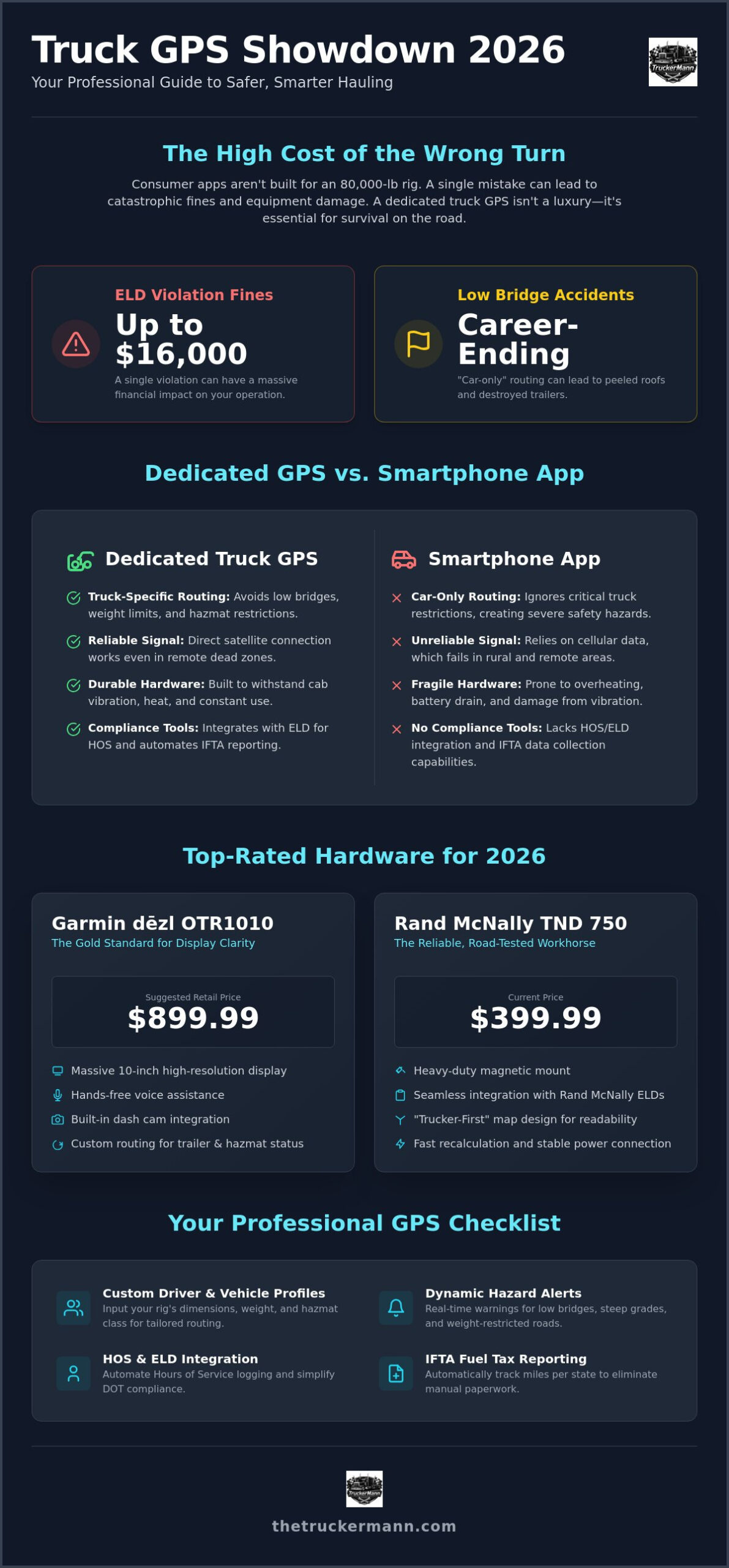
A single ELD violation can cost you up to $16,000; however, that financial hit is nothing compared to the sickening sound of your trailer roof peeling back under a low bridge because a free smartphone app steered you wrong. You’ve spent enough time behind the wheel to know that finding the best truck gps devices isn’t about luxury, it’s about survival. It’s frustrating when your signal drops in a rural dead zone, and it’s even worse when you’re stuck manually calculating IFTA fuel taxes after a long haul. You deserve a companion in the cab that works as hard as you do.
We’ve done the heavy lifting to identify the most reliable, bridge-safe, and regulation-ready units available in 2026. This guide is designed to keep your record clean and your rig moving by focusing on hardware that offers accurate truck-specific routing and seamless HOS integration. Whether you’re eyeing the high-resolution clarity of a Garmin dēzl OTR1010 or the proven performance of a Rand McNally TND 750, we’re breaking down the equipment that turns your cab into a professional command center. Let’s make sure you have a reliable sentinel on your dashboard for every mile of the journey ahead.
Key Takeaways
- Understand why consumer smartphone apps fail in the commercial world and how dedicated routing protects your 80,000-lb rig from hazardous car-only paths.
- Compare the industry’s top-rated hardware for 2026 to find the best truck gps devices that offer the durability and technical precision required for long-haul life.
- Master the use of dynamic routing and commercial filters to navigate around traffic jams and locate rest areas designed for professional drivers.
- Discover how integrating your navigation with ELD hardware can automate IFTA fuel tax reporting and simplify your DOT compliance paperwork.
- Get a professional blueprint for matching specific GPS features to your haul type to maximize the return on your equipment investment.
GPS vs. Smartphone Navigation
You’ve seen the videos of trailers wedged under 11-foot bridges, and you know exactly how that happens. It starts with a driver trusting a smartphone app that was never meant for a professional rig. Relying on consumer-grade navigation is a gamble with your CDL. The best truck gps devices are built for the heavy-haul reality, offering a level of reliability that a phone simply can’t provide. From the physical durability of the hardware to the specialized databases under the hood, these tools are essential gear for anyone serious about their career on the road.
Hardware is another area where phones fall short. Your dashboard is a brutal environment. Between the constant vibration of the diesel engine and the direct sunlight hitting the windshield, consumer electronics often overheat or shake loose. A dedicated truck GPS is built with vibration dampening and heat-resistant casings designed to survive years of OTR service. It isn’t just about the screen; it’s about the durability of the internal components that keep your rig moving and your focus on the pavement.
Data and Signal Reliability
Dedicated units pull information directly from satellite constellations, providing a consistent connection that cellular devices can’t match. An Automotive navigation system designed for trucking has significantly more processing power dedicated specifically to routing logic. This means it recalculates a missed turn in a heartbeat rather than spinning a loading icon while you’re barreling toward a restricted exit. These units also feature stable power connections that won’t wiggle loose, ensuring your battery stays charged even on the roughest stretches of interstate where cellular signals often vanish.
Truck-Specific Hazard Alerts
The biggest danger of ‘car-only’ routing is the lack of clearance data. A standard app doesn’t care that your trailer is 13’6″; it only sees the shortest path. Professional devices use massive databases of low-bridge heights to keep you from peeling your roof back. Beyond clearances, you get vital warnings for weight-restricted bridges, residential zones where trucks are prohibited, and steep grades that require careful gear management. These alerts act as a second set of eyes, helping you avoid DOT inspection violations and protecting your livelihood from costly routing errors. Using the best truck gps devices ensures you’re never surprised by a “No Trucks” sign after it’s too late to turn around.
Top 5 Truck GPS Units for 2026
Choosing the right hardware is about more than just a pretty screen; it’s about having a co-pilot that doesn’t blink when the weather turns sour or the cellular signal dies. In 2026, the market for best truck gps devices has narrowed down to a few heavy hitters that actually survive the vibration and heat of a long-haul cab. We’ve vetted these units based on their ability to handle complex routing, stay current with DOT regulations, and offer the durability that owner-operators demand. Every unit on this list is designed to keep your rig on bridge-safe roads while protecting your bottom line from costly out-of-route miles.
Garmin dēzl 2026 Edition
The Garmin dēzl OTR series, specifically the OTR1010, remains the gold standard for drivers who want a massive 10-inch display. With a suggested retail price of $899.99, it’s a significant investment, but the high-resolution screens are a game-changer for night driving. Eye strain is a real career-killer during those late-shift hauls, and this display handles it better than anything else on the market. Beyond the visuals, the built-in dashcam integration and voice assistance allow you to keep your hands on the wheel while adjusting your route. It handles custom routing based on your specific trailer dimensions and hazmat status with surgical precision. Following FMCSA safety tips for GPS usage is much easier when your device supports hands-free operation and clear lane guidance.
Rand McNally TND 750/850
Veterans often stick with the TND series because of the ‘Trucker-First’ map design that emphasizes readability over flashy graphics. The TND 750 is currently available for $399.99 and offers a solid 7-inch screen that integrates seamlessly with Rand McNally ELD devices for one-screen management of your logs and navigation. One of the standout features is the heavy-duty magnetic mount. It’s designed to stay put even when you’re bouncing over washboard roads in a terminal or hitting potholes on the B-roads. It’s a reliable workhorse that doesn’t overcomplicate the job, focusing instead on the core data you need to stay compliant.
Must-Have Navigation Features
A high-quality display is useless if the software underneath doesn’t understand the specific burdens of a professional driver. You aren’t just steering a vehicle; you’re managing a mobile business where every minute spent idling in traffic or searching for a parking spot eats into your profit. The best truck gps devices offer more than just a map; they provide a comprehensive suite of tools designed to handle the logistical hurdles of the 2026 freight market. From avoiding a gridlocked metro area to finding a shower that doesn’t require a three-hour wait, these features are what separate a professional tool from a consumer toy.
Dynamic routing is your first line of defense against a ruined schedule. Modern units analyze real-time traffic data to suggest alternates before you’re already committed to a dead-stop jam. When you’re pulling into a complex city environment, lane guidance and junction views become your best friends. These features provide a clear, split-screen visual of exactly which lane you need for an upcoming interchange, preventing those last-second, dangerous lane changes. Many owner-operators consult reviews of the Best GPS Fleet Tracking Software to see how these professional-grade routing algorithms compare to full fleet management systems.
Point of Interest (POI) Filters
Life on the road is about managing your clock and your comfort. Your GPS should allow you to filter points of interest by diesel prices, shower availability, and truck-specific parking capacity in real-time. This level of detail keeps you from pulling into a packed rest area with only five minutes left on your HOS clock. For those looking to maximize efficiency, the top units in 2026 offer integration with load-planning tools. Being able to plan your route based on where the next high-paying freight is waiting ensures that you’re never deadheading longer than necessary.
Specialized Load Routing
Not every haul is a standard 53-foot dry van. If you’re hauling hazardous materials, your device must have specific filters for explosives, flammables, or inhalants to keep you on legal hazmat routes. Flatbedders have their own set of challenges, often requiring height and weight overrides for oversized loads. When you’re hauling heavy equipment and using specialized flatbed trucking gear, you need a GPS that respects the physical limits of your setup. The best truck gps devices allow you to save multiple truck profiles, making it easy to switch your routing logic from a standard reefer run to a wide-load flatbed haul with just a few taps on the screen.
Regulatory and ELD Integration
A DOT officer walking toward your driver-side door shouldn’t make your heart skip a beat. When your paperwork is tight and your logs are clean, an inspection is just a brief pause in your day rather than a threat to your livelihood. A single ELD violation can cost you up to $16,000; that is a hit most owner-operators can’t afford to take. The best truck gps devices in 2026 act as a digital defense lawyer on your dashboard, ensuring that your navigation and your legal requirements are always in sync. By choosing hardware that prioritizes compliance, you’re protecting your CDL and your bank account simultaneously.
Integrating your navigation with ELD compliance hardware creates a unified system that tracks every mile without you having to lift a finger. Instead of juggling a tablet for logs and a separate unit for maps, the top-tier devices for 2026 allow you to view your remaining drive time directly on the main navigation screen. This setup gives you predictive alerts when it’s time to find a spot for your mandatory 30-minute break, helping you avoid the stress of racing against a ticking clock. It’s about working smarter, not harder, while keeping the FMCSA off your back.
Streamlining Paperwork
IFTA filings are the bane of every driver’s existence, but they don’t have to be a weekend-long headache. Modern GPS units automate mileage tracking by state, providing you with a clean report at the end of the quarter that saves hours of manual tallying. These devices also feature a dedicated DOT inspection mode. With a single tap, you can hand over your digital logbook for a DOT inspection level 1, showing the officer exactly what they need to see in a format they recognize. This professional transparency often leads to faster inspections and fewer “random” deep dives into your sleeper berth.
Safety Ratings and Compliance
Your CSA score is your resume in this industry. The best truck gps devices help you maintain a high rating by providing real-time speed limit warnings and driver behavior coaching. If you’re coming into a curve too hot or exceeding the posted limit in a construction zone, the device alerts you before a trooper does. These units also offer cloud-based storage for your fuel receipts and bills of lading, ensuring that your critical business data is backed up even if the physical hardware takes a tumble. Staying compliant isn’t just about following rules; it’s about building a reputation as a safe, reliable professional who knows how to master the tools of the trade.
If you want to ensure your rig is fully prepared for the next time the lights go on behind you, check out our comprehensive DOT inspection guide to stay one step ahead of the inspectors.
Choosing Your Road Companion
Picking your road companion is a high-stakes decision that impacts every mile you log. You aren’t just buying a gadget; you’re hiring a digital navigator that needs to be as reliable as your transmission. The best truck gps devices should be viewed as an investment in your safety and your professional reputation. While the upfront cost of a premium unit might feel like a gut punch, it’s nothing compared to the price of a single out-of-route violation or a damaged trailer. You need a device that matches the grit of your daily grind and the specific requirements of your haul, whether you’re pulling a reefer or hauling oversized equipment.
You might be tempted to grab whatever is on the shelf at the next truck stop when your old unit dies. It’s a convenient fix, but you’ll often pay a premium for that convenience. Online marketplaces usually offer a broader selection and more competitive pricing. Regardless of where you buy, the first thing you should do is plug it in and run every available map and software update. Road layouts and weight restrictions change constantly. Staying current is especially vital with new environmental regulations like California’s Clean Truck Check program, which is fully active in 2026, requiring heavy-duty vehicles to stay compliant with emissions testing and fees.
Decision Framework
If you’re a rookie, look for a user interface that is intuitive and doesn’t overwhelm you with data while you’re still learning the ropes of the road. Veterans often prefer the deep-menu customization found in higher-end models that allow for granular control over routing logic. Screen size is a matter of dashboard real estate. A 7-inch screen is the industry standard for a reason; it’s large enough to see at a glance without blocking your view of the hood. However, if you’re running OTR and spend long hours in the seat, a 10-inch tablet can significantly reduce eye strain. Always check the warranty and support options. When the screen goes dark in the middle of a night run, you want a manufacturer that stands behind their hardware.
Final Gear Checklist
Don’t forget the small accessories that make a big difference in your daily operation. An anti-glare shield is essential for those afternoon hauls heading west, and a heavy-duty mount ensures your investment doesn’t end up on the floorboards after hitting a pothole. You can find professional-grade mounting hardware and accessories for the best truck gps devices at TrucknTow. These extras are the finishing touches on a professional setup that keeps you focused on the pavement ahead.
Reliability is your best co-pilot. The Truckermann has seen enough drivers get burned by cheap tech to know that quality pays for itself in the long run. Master your equipment, stay observant, and keep your rig moving toward the next payday. Your career is a lifestyle, not just a job, and the right tools make all the difference in mastering it.
The Bottom Line
Success on the road in 2026 demands more than just grit; it requires the right technical arsenal to navigate an increasingly complex regulatory landscape. We’ve explored how the best truck gps devices transition from simple navigation tools to comprehensive business managers. By automating your IFTA reporting and providing bridge-safe routing, these units pay for themselves by preventing the costly errors that can sink an independent operation. You now have the decision framework to choose a device that matches your specific haul, from urban junctions to long-haul interstates.
Don’t let outdated tech or unreliable smartphone apps dictate your safety record. Selecting pro-grade hardware is a commitment to your professional longevity and your peace of mind. As you build out your equipment setup, remember that the right co-pilot doesn’t just show the way; it protects your livelihood at every turn. You’ve got the miles ahead; make sure you have the right eyes on the road to see them through.
Upgrade your rig with the best truck GPS units today and ensure your next haul is your most efficient one yet. Keep your tires rolling and your record clean.
Frequently Asked Questions
GPS vs. Smartphone
Yes, you need a dedicated unit because smartphone apps lack the specialized clearance and weight restriction data required for heavy rigs. While phones are great for personal cars, they often rely on cellular signals that fail in rural dead zones. A professional unit pulls data directly from satellites, ensuring you never lose your routing when you’re miles away from the nearest tower.
Low Bridge Accuracy
Garmin and Rand McNally lead the industry because they use proprietary databases of vertical clearances rather than crowdsourced data. When you’re searching for the best truck gps devices, look for units that allow you to input your exact trailer height and weight. This custom profile ensures the routing logic steers you away from 11-footers and weight-restricted B-roads before you’re already committed to the turn.
IFTA Tax Automation
Yes, the Garmin dēzl OTR series includes built-in tools that automate mileage logging by state. This feature is a lifesaver during tax season because it tracks exactly how many miles you’ve run in each jurisdiction. Instead of manually tallying paper logs, you can export a clean digital report that saves you hours of paperwork and keeps your business records DOT-ready for any audit.
Subscription Costs
Generally, professional GPS units are a one-time purchase and don’t require a mandatory monthly fee for basic navigation. While some premium live services like real-time fuel prices or weather overlays might offer a subscription, the core truck-specific routing works right out of the box. Buying one of the best truck gps devices is an upfront investment that pays for itself by preventing costly routing errors and out-of-route miles.
Optimal Screen Size
The 7-inch display is the industry standard because it offers high visibility without blocking your view of the hood. Many OTR drivers now prefer 8 or 10-inch tablets to reduce eye strain during long night shifts. Your choice should depend on your cab’s layout and how much dashboard real estate you can safely spare without creating a blind spot in your field of vision.
Map Update Frequency
Monthly updates are the best way to account for new road construction and updated weight restrictions. Road layouts change constantly, and running on outdated data is a fast way to find yourself facing a “No Trucks” sign. Most modern units offer free lifetime updates via Wi-Fi, making it easy to keep your routing accurate while you’re parked at a terminal or taking a mandatory break.
ELD Integration
Yes, many modern units allow for seamless integration with FMCSA-registered ELD systems to help you manage HOS logs and navigation on a single screen. This keeps your dashboard clean and ensures your remaining drive time is always visible alongside your route. It’s a critical setup for staying compliant with current regulations and avoiding the stress of racing against a ticking clock.
Built-in Dashcams
Yes, several top-tier models like the dēzlCam series feature integrated dashcams that record your drive in high definition. These units provide an extra layer of liability protection by capturing critical footage in the event of an accident or a disputed DOT inspection. It’s an efficient way to combine two essential pieces of gear into one power connection, keeping your cab organized and your record protected.
Disclaimer
The information provided on The TruckerMann is for general informational and educational purposes only. While every effort is made to ensure the accuracy and reliability of the content, trucking laws, FMCSA regulations, DOT requirements, safety standards, and industry policies can change at any time. Readers are encouraged to verify all information with official government agencies, professional advisors, or qualified industry professionals before making business, legal, financial, safety, or compliance-related decisions.
The content shared on this website reflects personal opinions, experiences, research, and commentary and should not be considered legal, financial, medical, tax, or professional advice. The TruckerMann and its owners, contributors, affiliates, or representatives are not responsible for any losses, damages, violations, penalties, or liabilities resulting from the use or misuse of information found on this website.
Some content on this website may contain affiliate links, sponsored content, or promotional material. This means we may earn a commission at no additional cost to you if you choose to purchase through certain links.
By using this website, you agree that you do so at your own discretion and risk.