Did you know that as of January 1, 2026, a BMI over 35 or a neck circumference over 17 inches now triggers a mandatory sleep apnea screening during your DOT physical? It’s a sobering reality that makes staying fit about more than just feeling good; it’s about protecting your CDL and keeping your seat. Most of us know the drill. You spend eleven hours a day behind the wheel, fighting chronic back pain and hunting for a meal that isn’t deep-fried or wrapped in plastic. It’s easy to feel like the road is designed to wear you down, and the fear of failing that next medical exam is a constant passenger in the cab.
This guide is here to change that narrative. You’ll master the practical truck driver health tips and gear choices that protect your health, your medical card, and your career longevity. We’re going to break down the specific habits that help you pass the DOT physical with flying colors, reduce daily fatigue, and potentially add another decade to your driving career. From managing the new 2026 regulatory thresholds to choosing equipment that saves your spine, we’ve got your back.
Key Takeaways
- Learn how specific hypertension and BMI levels can slash your medical card duration from two years down to just three months.
- Ditch the “Truck Stop Trap” by equipping your sleeper berth with modern appliances that fuel your body without the mid-day sodium crash.
- Master these practical truck driver health tips to turn your pre-trip inspection into a five-minute mobility routine that wakes up your joints.
- Combat road isolation and the “loneliness epidemic” with mental resilience techniques designed to manage high-stress environments at shippers and receivers.
- Discover the ergonomic gear and specialized seating investments that protect your spine and extend your driving career by a decade.
Health and Your DOT Medical Card
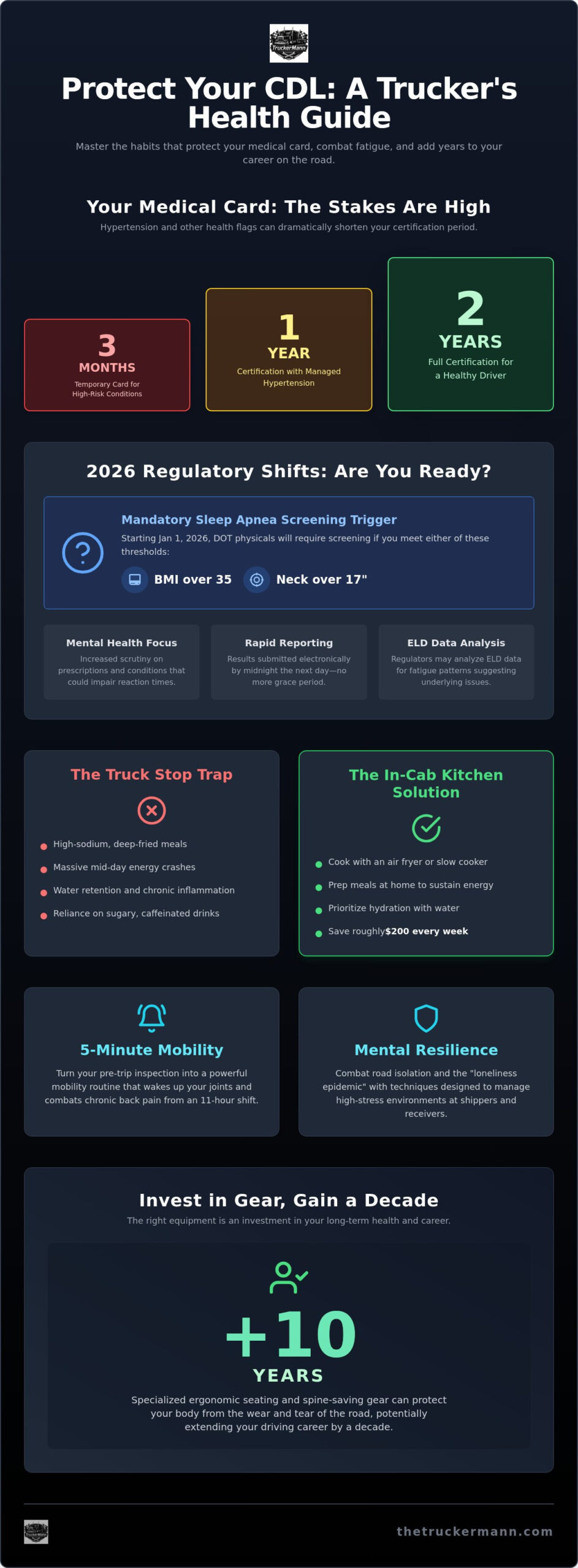
Think of your DOT physical as the ultimate gatekeeper for your livelihood. It isn’t just a routine checkup; it’s a high-stakes evaluation that determines whether you stay in the cab or get sidelined. Driver Medical Compliance is the non-negotiable baseline for a professional career. If your blood pressure is high or your BMI is pushing limits, you aren’t just looking at a lecture from a doctor. You’re looking at a shortened medical card. While a healthy driver walks away with a two-year certification, hypertension can slash that down to a one-year or even a three-month temporary card, forcing you back into the exam room far sooner than you’d like.
These regulations have tightened significantly. Understanding current truck driver lifestyle and risks is essential for anyone trying to navigate these hurdles. For instance, as of January 1, 2026, the FMCSA has set clear triggers for mandatory sleep apnea screenings. If your BMI is over 35 or your neck circumference exceeds 17 inches, you’re now required to undergo testing. Integrating proactive truck driver health tips into your routine doesn’t just impact your sleep; it prevents a paper trail that could halt your progress at the next medical exam.
To better understand how these health factors play into your long-term success, watch this helpful video:
The Cost of Failing a Physical
Failing or getting a restricted card isn’t just a blow to your pride. It hits your wallet hard. Medical downtime means lost wages, and the cost of re-testing adds up quickly. Top-tier fleets often look for drivers with a full two-year card as a sign of reliability and lower insurance risk. If you’re constantly on a three-month “short card,” you might find yourself disqualified from the best-paying freight. You can find more details on preparing for your exam here: Renewing Your DOT Medical Card.
2026 Regulatory Health Shifts
The landscape of compliance is shifting toward total driver wellness. In 2026, DOT examiners are placing a much heavier focus on mental health and the disclosure of prescription medications. They’re looking for anything that could impair your reaction time. Additionally, as of June 2025, certified medical examiners are required to submit results electronically by midnight the following day, meaning there’s no longer a grace period to “fix” a bad result. Regulators are also starting to look at ELD data to identify fatigue patterns that might suggest underlying health issues. Prioritizing truck driver health tips keeps you off the “short card” list and reduces your overall risk profile during a roadside inspection.
Nutrition Strategies for the Sleeper Berth
The road is a minefield of high-sodium traps that can wreck your energy levels before you even hit your first fuel stop. Most drivers fall into the “Truck Stop Trap” because it’s convenient, but those salt-heavy meals lead to massive mid-day crashes, water retention, and chronic inflammation. One of the most effective truck driver health tips is to build a 2026 “In-Cab Kitchen.” With modern 2,000-watt inverters becoming standard in newer rigs, you can easily run an air fryer or a compact slow cooker. These tools let you move away from the roller grill and toward meals that actually sustain your body through a long shift.
Managing your hydration is just as critical as your food choices. Chasing caffeinated energy drinks often leads to a brutal sugar crash that makes the last three hours of your shift feel like an eternity. Stick to water and limit coffee to the morning hours to keep your heart rate steady. If you follow the “3-Day Prep” rule by cooking at home before your run, you can save roughly $200 every week. That extra cash adds up quickly, especially when you’re looking to maximize your earnings as outlined in our Truck Driver Salary guide. It’s about working smarter, not just harder.
Mastering In-Cab Meal Prep
Success on the road starts with your grocery list. Look for high-protein, low-prep options that don’t require a full kitchen to assemble. Canned tuna, pre-cooked grains, and rotisserie chicken are staples for the OTR professional. When you’re navigating a Walmart in a rig, stick to the perimeter for fresh produce and lean meats. Using an air fryer while parked is a game-changer for quick, healthy meals, while a slow cooker can safely simmer a roast or stew in your sleeper berth while you’re making miles. It’s an easy way to ensure you have a hot, nutritious meal waiting for you at the end of your 14-hour clock.
Smart Snacking to Stay Alert
There’s a direct link between blood sugar spikes and the dangerous mental fog known as “white line fever.” When you reach for candy or soda, your insulin levels skyrocket and then plummet, leaving you drowsy behind the wheel. Choosing nuts and seeds provides a steady stream of energy that keeps you focused without the jittery highs. The FMCSA provides official driver health and safety tips that emphasize the importance of consistent energy for safe operation. Every dollar you spend on junk food is a “Road Tax” on your health and your profit margins. If you’re looking for the right gear to keep your kitchen organized, checking out specialized cab equipment can help you stay prepared for the long haul.
Movement for the 11-Hour Shift
The 11-hour driving window is a marathon of stillness that wreaks havoc on your lower back and circulation. You don’t need a gym membership or hours of high-intensity cardio to stay road-ready; you just need to move with purpose during your natural breaks. One of the most effective truck driver health tips is the “Pre-Trip Movement” routine. Before you even touch the hood latch, spend five minutes waking up your joints with these movements:
- Shoulder Rolls: Release the tension built up from holding the wheel.
- Torso Twists: Wake up your spine and core after hours of sitting.
- Leg Swings: Improve blood flow to your lower extremities to prevent cramping.
This prepares your body for the physical demands of the day, from climbing into the cab to cranking landing gear. Your trailer is more than just a cargo container; it’s a mobile weight room. Use the ICC bumper for tricep dips or the side of the trailer for inclined push-ups while you wait for your paperwork at a shipper. These short bursts of resistance training keep your metabolism firing and prevent muscle atrophy. Ergonomics also play a huge role in preventing “Trucker Back.” Adjust your seat so your knees are slightly lower than your hips to take pressure off your sciatic nerve. When you hit your 34-hour reset, don’t spend the entire time in the bunk. Getting out for a twenty-minute walk helps reset your mind and body for the next run.
The 5-Minute Cab Workout
You can fight tension without even leaving the driver’s seat. Use red lights or slow-moving traffic to perform seated neck stretches to release the “death grip” on the wheel. Keeping a set of resistance bands from Truck n Tow in your side box allows you to perform curls or rows during your mandatory 30-minute break. For those of you pulling open decks, maintaining consistent core strength is vital because it prevents debilitating back injuries during heavy flatbed securement and tarping maneuvers.
Walking the Lot Safely
Truck stops aren’t exactly fitness centers, but they offer plenty of space for low-impact cardio. Aim to walk the perimeter of the lot twice after you park for the night. A thorough inspection of your rig is a great way to stay mobile while ensuring your equipment is safe. Safety is paramount in high-traffic areas, so always wear your high-visibility vest and keep your eyes moving for backing trailers. If you’re looking to level up your career while staying healthy, checking out the training at DLA Academy can provide the professional edge you need to move into more specialized, higher-paying roles.
Mental Resilience and Road Isolation
The “Loneliness Epidemic” isn’t just a buzzword; it’s a genuine safety hazard for long-haul drivers. Spending weeks away from home can cloud your judgment and drain your motivation, making it harder to stay sharp on the road. Mental resilience is just as vital as physical strength. When you’re dealing with road rage or a disrespectful clerk at a shipper, remember that your reaction is the only thing you can control. Reframing these moments as temporary hurdles rather than personal attacks is one of the best truck driver health tips for protecting your peace of mind and staying professional.
Beating Road Fatigue
There’s a critical difference between being tired and being truly fatigued. Under the current ELD rules, your clock might say you’re ready to roll, but your brain might disagree. True fatigue is a cumulative state that impairs your reaction time more than a few drinks would. Master your sleep hygiene by using white noise apps or high-quality blackout curtains to drown out the chaos of a noisy rest area. Maintaining this level of mental clarity doesn’t just keep you safe; it gives you the edge needed to identify and secure lucrative opportunities when others are too drained to look.
Staying Connected to the Home Front
Isolation doesn’t have to be your default setting. Schedule a “Digital Dinner” where you prop up your phone and eat with your family at the same time. It creates a sense of normalcy that the road often steals. Join driver-led forums or social groups where you can talk shop with people who actually get it. If the weight of the road starts feeling too heavy, don’t tough it out alone. Professional resources for driver mental health are more accessible than ever. If you want to keep your career on track and your mind right, check out the veteran-led resources at The Truckermann for more advice on navigating the mental demands of the industry.
Essential Gear for a Healthy Cab
Your truck is your office, your kitchen, and your bedroom. Treating it like a temporary campsite is a recipe for physical breakdown. When you invest in high-quality cab gear, you’re actually investing in the longevity of your spine and your CDL. Ergonomic seating and proper lumbar support aren’t luxuries; they’re essential tools for saving your back one mile at a time. A seat that lacks the right cushioning or support can lead to chronic nerve compression and the dreaded “trucker’s leg” before you even finish your first year on the road.
Beyond the seat, the way you handle your cargo determines your physical risk. Using specialized load securement gear from Mytee Products can significantly reduce the strain on your joints. Whether you’re throwing chains or pulling straps, having the right leverage points makes the difference between a productive day and a trip to the chiropractor. It’s about working with your equipment, not against it.
Don’t overlook your sleep environment. High-quality blackout curtains and reliable climate control are fundamental truck driver health tips because they protect your REM cycles. In a noisy rest area, your body needs a sanctuary to recover from the mental and physical fatigue we discussed in previous sections. If you aren’t sleeping deeply, you aren’t recovering, and that leads to the blood pressure and BMI triggers that threaten your DOT medical card. A well-rested driver is a safe driver.
Tools That Reduce Physical Strain
For those in the flatbed sector, the weight of your equipment is a constant threat. Switching to lightweight tarps and ergonomic winches can prevent the rotator cuff injuries that end careers prematurely. Brute force is rarely the best way to get the job done. “Cheap gear” often leads to physical injury and lost wages because it requires more physical effort to operate under pressure. You can find a full breakdown of injury-prevention tools in our guide to The Best Flatbed Trucking Gear.
The 2026 Tech-Health Stack
Modern technology offers a new layer of protection for the professional driver. Wearables designed for the field can track your steps during lot walks and monitor your sleep quality while you’re in the bunk. Even your load-planning tools can play a role in your wellness. By using 123Loadboard, you can plan your routes with better rest-stop access in mind, ensuring you have a safe place to park and move before your clock runs out. It’s a simple way to integrate health into your daily operations without sacrificing your schedule. A healthy driver is a profitable driver. Mastering these truck driver health tips through the right gear and tech ensures you stay in the driver’s seat for the long haul.
Master the Road for the Long Haul
Success in this industry is a marathon, not a sprint. We’ve covered how 2026 regulations have turned driver health into a non-negotiable part of your professional record. From managing blood pressure thresholds to mastering sleeper berth nutrition, every small habit protects your DOT medical card and your livelihood. Mental resilience and staying connected to the home front are just as vital as your physical stats. By using these practical truck driver health tips, you’re doing more than just surviving the week. You’re securing your future in the cab.
Don’t let the physical demands of the road dictate your career longevity. Whether it’s choosing ergonomic gear that saves your spine or using tech to find rest-friendly stops, you have the power to stay profitable and pain-free. At The Truckermann, we provide veteran-led advice on DOT compliance and practical gear recommendations because we know the reality of the sleeper berth. We’re committed to helping you turn this job into a long-term, successful lifestyle. You’ve got the grit to master this industry, and we’re here to help you navigate the path ahead.
Find better routes and stay healthy with 123Loadboard
Frequently Asked Questions
How do I pass my DOT physical if I have high blood pressure?
You pass by maintaining a reading below 140/90 during your exam. If your pressure is higher, the examiner might only issue a one year or three month temporary certificate. Avoid caffeine, nicotine, and high sodium foods for at least 48 hours before your appointment. Consistent management through prescribed medication and daily truck driver health tips is the only way to ensure you keep a full two year medical card.
What are the best healthy snacks for truck drivers at gas stations?
Reach for hard boiled eggs, raw almonds, or Greek yogurt found in the refrigerated section. These options provide the protein you need to stay alert without the sugar crash associated with candy or soda. Avoid the tempting roller grill and look for pre-cut vegetables or fruit cups instead. These choices help you maintain steady blood sugar levels during long stretches between your scheduled stops.
Can I exercise inside my truck cab?
You can absolutely stay active without leaving the sleeper berth by using resistance bands anchored to the seat frame. Seated leg lifts and core bracing exercises can be done while you’re waiting for a green light at a terminal. These movements keep your blood flowing and prevent the stiffness that leads to chronic joint pain. Staying mobile inside the cab is a great way to maximize your mandatory break time.
What is the “Trucker Diet” and does it actually work?
The “Trucker Diet” typically focuses on high protein and low carb meal prepping to avoid the high calorie traps found at truck stops. It works effectively if you’re consistent with in cab cooking using an air fryer or slow cooker. By avoiding processed sugars and refined flours, you prevent the energy spikes and dips that cause mid day fatigue. This approach is a cornerstone of effective truck driver health tips for long term success.
How do I manage sleep apnea while living on the road?
Use a CPAP machine equipped with a 12V adapter to run directly off your truck’s power or a dedicated portable power station. As of January 1, 2026, mandatory screening is required if your BMI is over 35 or your neck circumference exceeds 17 inches. Staying compliant with your therapy is necessary to keep your medical card. Clean your mask and tubing daily to prevent infections while living in the cab.
What are the best stretches for lower back pain from driving?
Focus on hamstring stretches and the seated figure four stretch to release your glutes and lower back. Tight hamstrings pull on your pelvis, which is a primary cause of sciatica for many professional drivers. Spend two minutes stretching every time you stop for fuel or a bathroom break. This simple routine helps prevent the chronic “Trucker Back” that can sideline even the most seasoned veterans in the industry.
How does driver health affect insurance rates for owner-operators?
Your health directly impacts your safety performance and CSA scores, which insurance companies use to determine your premiums. Chronic fatigue or untreated medical conditions significantly increase the risk of a high dollar accident. Owner-operators with clean medical records and no health related safety violations often see better rates because they are viewed as lower risk. Staying healthy is a direct investment in your business’s bottom line and future profitability.
What gear should I buy to make my truck cab more ergonomic?
Invest in a high quality memory foam lumbar cushion and a gel seat topper to reduce road vibration and pressure on your spine. Ergonomic steering wheel covers can also reduce hand fatigue and cramping during long hauls. These items, combined with blackout curtains for better sleep, create a cab environment that supports your body. Upgrading your workspace is one of the smartest moves you can make for your physical health.
Disclaimer
The information provided on The TruckerMann is for general informational and educational purposes only. While every effort is made to ensure the accuracy and reliability of the content, trucking laws, FMCSA regulations, DOT requirements, safety standards, and industry policies can change at any time. Readers are encouraged to verify all information with official government agencies, professional advisors, or qualified industry professionals before making business, legal, financial, safety, or compliance-related decisions.
The content shared on this website reflects personal opinions, experiences, research, and commentary and should not be considered legal, financial, medical, tax, or professional advice. The TruckerMann and its owners, contributors, affiliates, or representatives are not responsible for any losses, damages, violations, penalties, or liabilities resulting from the use or misuse of information found on this website.
Some content on this website may contain affiliate links, sponsored content, or promotional material. This means we may earn a commission at no additional cost to you if you choose to purchase through certain links.
By using this website, you agree that you do so at your own discretion and risk.