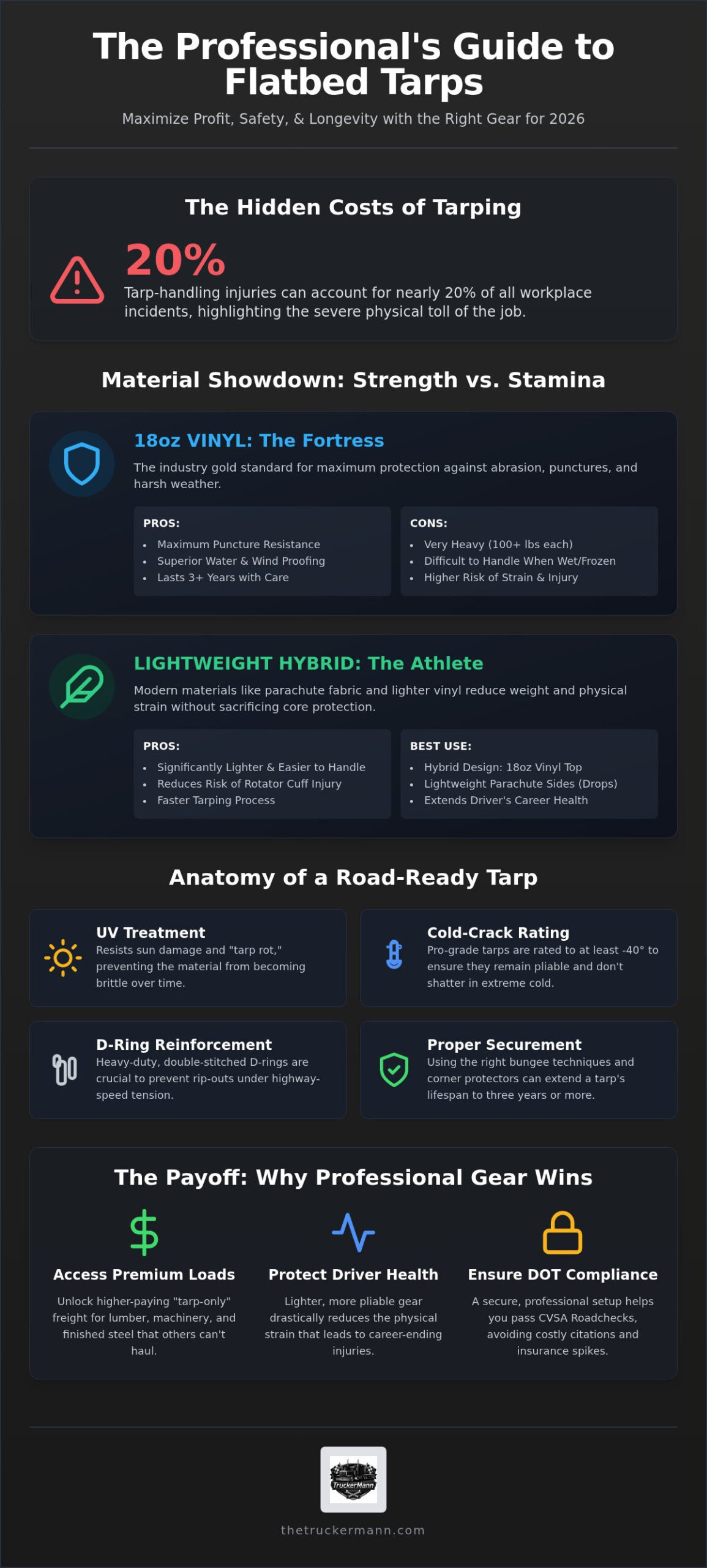
Did you know that tarp-handling injuries account for nearly 20% of all workplace incidents at some regional carriers, even when most loads don’t require them? It is a staggering figure that highlights the physical toll of wrestling with frozen, overweight 18oz vinyl in a winter windstorm. Finding the best tarps for flatbed trucking isn’t just a matter of weatherproofing your freight; it is about protecting your rotator cuffs and ensuring you don’t spend your hard-earned settlement on replacement gear every single season.
We’ve all felt that surge of frustration when a D-ring rips out under tension or a cheap corner shreds during its first long-haul run. You deserve equipment that respects the grit of the job and lasts for more than a few months on the road. This 2026 guide promises to show you the most durable, lightweight, and professional-grade options from trusted names like Mytee Products and Truck n Tow. We will preview the latest hybrid materials and “parachute” fabrics designed to help you pass the 2026 CVSA Roadcheck with zero securement issues while finally ending the exhausting tarping dance at the shipper.
Key Takeaways
- Discover how investing in professional-grade gear opens doors to premium “tarp-only” loads and higher-paying freight categories.
- Compare the heavy-duty protection of 18oz vinyl against the injury-preventing benefits of modern, lightweight hybrid parachute fabrics.
- Learn to select the best tarps for flatbed trucking by matching drop lengths and material weights to your specific cargo needs.
- Master securement techniques like proper bungee etiquette and corner protector placement to extend your tarp’s lifespan to three years or more.
- Get veteran-vetted gear recommendations from trusted suppliers like Mytee Products to ensure your setup remains DOT-compliant and road-ready.
Why Quality Tarps Define Your Flatbed Earning Potential
A flatbed tarp is far more than a simple sheet of plastic. It is a specialized, heavy-duty shield designed to protect weather-sensitive freight from moisture, road salt, and abrasive debris. When you’re running a Flatbed truck, your equipment serves as the primary defense for the customer’s investment. Shippers pay a premium for “tarp-only” loads because they recognize the extra labor and risk involved. If you have the right gear, you can command higher rates for lumber, machinery, and finished metals that dry van drivers can’t touch.
To better understand how the right equipment impacts your daily operations, watch this helpful video from a veteran perspective:
Accessing High-Value Freight
Brokers and shippers of high-value electronics or finished steel have zero patience for substandard equipment. When you arrive at a shipper with professional-grade gear from Mytee Products, you immediately establish credibility. Cheap, thin tarps that tear during the first winter haul don’t just ruin the cargo; they ruin your reputation. A single cargo claim for water damage can exceed the cost of a premium set of the best tarps for flatbed trucking by thousands of dollars. Investing in high-density vinyl ensures you stay on the “preferred” list for the best-paying brokers in the industry.
Long-Term ROI and Driver Health
Calculating the true cost of your gear requires looking past the initial price tag. While a budget tarp might save you money today, 18oz vinyl often lasts three years or more with proper care. The secret to longevity lies in the D-ring reinforcement. If these tension points aren’t double-stitched and heavy-duty, they will rip out under the stress of highway speeds. Beyond the financial return, your physical health is at stake. Higher-quality materials are often more pliable in cold weather, reducing the risk of the rotator cuff injuries that plague the flatbed community. Proper gear makes the “tarping dance” faster and safer.
Safety and DOT compliance are the final pieces of the puzzle. A flapping or torn cover is a major red flag for inspectors, especially during the 2026 CVSA International Roadcheck. An insecure load citation can sideline your truck and spike your insurance rates. Using reliable gear from Truck n Tow helps you maintain the tight, professional look that keeps inspectors moving to the next truck. Your tarps are your paycheck’s insurance; don’t let a cheap corner tear cost you a contract.
Material Science: 18oz Vinyl vs. Lightweight Parachute Tarps
Choosing the right skin for your load is a delicate balance between bulletproof protection and your own physical longevity. The industry gold standard has long been 18oz vinyl. It’s thick, waterproof, and stands up to the brutal abrasion of wind-whip at 70 mph. However, a full set of 18oz lumber tarps can weigh over 100 pounds each when dry, and significantly more when soaked or frozen. This is where the best tarps for flatbed trucking in 2026 are evolving. Many veterans are shifting toward hybrid designs that use 18oz vinyl on the top deck for water resistance and lighter 14oz vinyl or parachute material on the drops to save their shoulders.
Understanding Vinyl Weight
The difference between 18oz and 14oz might seem small on paper, but your lower back will feel every ounce during a Friday afternoon reload. 18oz vinyl offers maximum puncture resistance, which is essential when you’re hauling jagged machinery or industrial equipment that could easily pierce a thinner skin. To ensure these covers don’t turn into brittle crackers after a season in the sun, look for UV-treated fabrics that resist “tarp rot” and fading. The cold-crack rating is the specific temperature at which vinyl becomes brittle and prone to shattering, and for professional-grade gear, this standard must be at least -40 degrees. If your vinyl turns into a sheet of glass in North Dakota, you’re looking at a very expensive mistake.
The Rise of Lightweight Materials
We are seeing more owner-operators move toward “airbag” or parachute tarps, especially as they look to extend their careers without a trip to the orthopedic surgeon. These materials are incredibly light, often cutting the weight of a standard tarp in half. While they excel on lumber loads where the freight has relatively smooth edges, they lack the raw puncture resistance of heavy vinyl. If you’re hauling sharp-edged steel or odd-shaped machinery, stick to the heavy stuff. However, for standard 8-foot drops on kiln-dried lumber, these lightweight options are a game-changer for daily productivity. Adhering to the Cargo Securement Rules is much easier when you aren’t too exhausted to pull your straps tight.
Before you pull the trigger on a new set, check out the latest hybrid options at Mytee Products to see how weight-saving tech can work for you. Keeping your gear up to date is part of the professional lifestyle. You can find more advice on mastering your equipment by visiting The Truckermann gear guide for the latest industry updates.
Essential Tarp Types for Every Flatbed Setup
Your trailer is a blank canvas, but the freight you put on it dictates your gear list. While you might want to buy one set and be done with it, the reality of the road requires a specialized arsenal. The best tarps for flatbed trucking are categorized by their “drop” length, which refers to how much fabric hangs over the side of the load. If you’re pulling a standard 48-foot or 53-foot trailer, you need to know exactly which configuration will keep you compliant and your cargo dry.
Lumber Tarps vs. Steel Tarps
Lumber tarps are the heavy hitters of the industry. These usually feature 6-foot to 8-foot drops to cover tall stacks of kiln-dried wood or shingles. Because of their massive surface area, a single 18oz lumber tarp can easily top 100 pounds. Managing these solo is a rite of passage, but it’s also where injuries happen. Steel tarps, by contrast, have shorter drops, typically around 4 feet. They’re designed for low-profile, high-density hauls like steel plates or coils. You can’t use a steel tarp on a lumber load because you’ll leave the bottom half of the freight exposed to road spray. Conversely, using a lumber tarp on a steel load leaves you with too much excess fabric to tuck and fold, creating a “parachute effect” that shreds your gear. For a deeper look at the hardware needed to keep these skins tight, check out our guide on Essential Tools for Professional Cargo Securement.
Specialty Covers for Niche Hauls
Beyond the basics, successful owner-operators carry specialty covers to protect their reputation. Smoke tarps are a small but vital investment. These cover just the front of the load to prevent diesel exhaust and soot from staining weather-sensitive freight. It’s a cheap way to avoid a massive cleaning bill from a disgruntled shipper. For those hauling steel, coil tarps or “bonnet” styles are a lifesaver. They’re pre-shaped to fit over a coil, allowing for rapid securement without the bulky folds of a flat tarp. If you find yourself hauling odd-shaped machinery, a three-piece tarp system offers the most versatility. This setup allows you to mix and match sections to cover over-dimensional loads without wasting time on complex folds. Regardless of what you’re hauling, every piece of gear must meet FMCSA cargo securement regulations to ensure the safety of everyone on the highway. High-quality options from Truck n Tow or Mytee Products provide the specific dimensions and D-ring counts needed for these professional-grade hauls.
Tarp Securement: Maximizing Gear Longevity and Safety
Throwing the best tarps for flatbed trucking is only half the battle. If you don’t prep the load correctly, even the most expensive 18oz vinyl won’t last a single cross-country run. Securement is where your gear is either saved or destroyed. It is a game of tension, friction, and foresight. When you are moving at highway speeds, your tarp is constantly vibrating against the cargo. Without proper padding, that vibration turns into a saw blade that can shred your investment in hours. Protecting your skin means protecting your paycheck.
Preventing Abrasion and Tears
The “Golden Rule” of tarping is simple: never let vinyl touch a sharp edge. Before you even think about unfolding your gear, walk the load and identify “hot spots.” These are the sharp bolts on a piece of machinery or the ragged corners of a lumber stack. Plastic corner protectors are essential, but sometimes you need more. I’ve found that throwing a few old moving blankets or rubber pads over jagged edges creates a vital buffer layer. These cheap accessories are far more affordable than replacing a full set of lumber tarps. For a deeper dive into these techniques, see our article on Weatherproofing Your Load: Best Tarping Practices.
The Art of the Bungee
Your choice of tarp straps dictates how well your cover survives the “wind-whip” of the open road. Natural rubber bungees are the go-to for winter because they stay pliable in the frost. However, if you’re running through the Southwest in July, EPDM synthetic straps are superior because they won’t rot under intense UV heat. When hooking into your D-rings, focus on distributing the tension evenly rather than cranking down on a single point. Over-tensioning your bungees actually shortens tarp life by pulling the vinyl fibers past their elastic limit and inviting grommet failure. You want the tarp tight enough to prevent flapping, but not so tight that the fabric is screaming for mercy.
Even with the best prep, the road is unpredictable. Road debris or a shifting load can cause a small puncture that will grow into a massive tear if left alone. Always carry a professional repair kit with HH-66 vinyl cement and scraps of matching material. A five-minute patch at a truck stop can save you from a rejected load at the receiver. If your current securement kit is looking a bit thin, you can find veteran-approved straps and protectors at Truck n Tow or Mytee Products.
Ready to build a securement setup that actually lasts? Visit The Truckermann gear hub to see the exact tools we use to keep our loads tight and our tarps in one piece.
Top-Rated Flatbed Tarps for the 2026 Season
Gear isn’t just a cost; it’s an investment in your safety and your reputation. As we head into the 2026 season, the market has settled on a few clear winners for the best tarps for flatbed trucking. Whether you’re a seasoned heavy-haul veteran or a new owner-operator looking to make your mark, your choice of skin will define your daily grind. The Truckermann has narrowed down the field based on durability, weight, and real-world feedback from the community to ensure you get the most out of every mile.
Recommended Gear from Industry Leaders
For those who prioritize raw durability without breaking the bank, Mytee Products remains a top choice for the 2026 season. Their 18oz vinyl lumber tarps are known for standing up to the most abrasive road debris, and they have perfected the double-stitched D-ring rows that prevent mid-haul failures. If you need something more specialized, like custom coil covers or unique machinery wraps, Truck n Tow offers an inventory that caters to niche haulers who can’t find what they need at a standard stop. They understand that a one-size-fits-all approach doesn’t work when you’re hauling over-dimensional loads. To round out your setup, don’t forget to check out our comprehensive guide on The Best Flatbed Trucking Gear for Logistics & Securement in 2026.
Final Selection Checklist
Before you click “buy” on a new set, run through this veteran-approved checklist. It’s easy to get distracted by a low price tag, but the cheapest option often costs the most in the long run. Use these criteria to find the best tarps for flatbed trucking that fit your specific route and load types.
- Weight check: Can you safely lift this tarp onto a 5-foot load without risking a back injury? If it’s over 100 pounds, consider a parachute-hybrid for your drops.
- Feature check: Does the tarp have at least three rows of D-rings? Multiple rows allow you to adjust for different load heights without leaving excess fabric to flap in the wind.
- Material check: Ensure the vinyl has a cold-crack rating of at least -40 degrees and is UV-treated to prevent the fabric from rotting after a summer in the sun.
- Vendor check: Only buy from marketplaces that offer a solid warranty against manufacturing defects and have a reputation for standing by their drivers when gear fails.
Selecting the right equipment is about more than just checking a box for the shipper. It’s about ensuring you can do this job for the next twenty years without a surgeon’s intervention. Stay safe out there, keep your loads tight, and always invest in gear that works as hard as you do.
Secure Your Success and Your Health
The road doesn’t care about excuses, but it certainly cares about your equipment. We’ve explored how the right material choice, from heavy 18oz vinyl to modern parachute hybrids, can mean the difference between a profitable haul and a career-ending injury. Finding the best tarps for flatbed trucking is a strategic move that pays dividends in reduced cargo claims and faster load times at the shipper. It’s about making the job work for you, not the other way around.
Our veteran-tested recommendations prioritize your physical health and long-term durability. By sourcing from trusted US suppliers and mastering the art of securement, you ensure your setup remains professional and DOT-compliant. Don’t wait for a corner to tear or a D-ring to fail before you take action. You’ve earned the right to work with gear that respects the grit of the job.
Upgrade your securement gear at Mytee Products today
Keep your head up, your straps tight, and your freight dry. You’ve got the knowledge to master the road; now make sure you have the gear to match it.
Frequently Asked Questions
What is the best weight for a flatbed lumber tarp?
18oz vinyl is the industry standard for the top section because it provides the best durability and waterproofing. Many drivers now prefer hybrid designs with 14oz sides to reduce the total weight. This setup results in the best tarps for flatbed trucking by balancing heavy-duty protection on the roof with manageable handling during the tarping dance.
How long should a high-quality vinyl tarp last?
A high-quality vinyl tarp should last at least three years if you use corner protectors and maintain proper tension. UV exposure and chemical road salts will eventually degrade the fabric, but avoiding “wind-whip” is the most effective way to extend its lifespan. Regular inspections for small pinholes can prevent a minor issue from becoming a total failure during a winter storm.
Are parachute tarps actually waterproof?
Parachute tarps are highly water-resistant but aren’t 100% waterproof like heavy-duty vinyl. They excel at shedding rain and preventing road spray from soaking kiln-dried lumber. If you’re hauling moisture-sensitive machinery or finished steel, you should stick to 18oz vinyl or use a hybrid design that keeps vinyl on the top deck where water typically pools.
Can I use a steel tarp for a lumber load?
You can’t safely use a steel tarp for a standard lumber load because the drops are too short. Steel tarps usually feature 4-foot drops, while lumber stacks often require 6-foot to 8-foot coverage. Using the wrong size leaves the bottom of the cargo exposed to moisture and road debris, which can lead to rejected loads at the receiver and lost revenue.
How do I prevent my tarps from flapping in the wind?
Preventing wind flap starts with sealing the front of the load to eliminate the “parachute effect” where air gets trapped under the fabric. Use extra bungees to pull the material tight against the cargo and ensure there are no loose pockets. Proper tensioning doesn’t just keep the load secure; it prevents the fabric from shredding itself against the trailer or cargo edges at highway speeds.
What is a cold-crack rating and why does it matter?
A cold-crack rating is the specific temperature at which vinyl material becomes brittle and prone to shattering. For professional gear, you want a rating of at least -40 degrees. If you’re running through northern states in the winter, a low rating ensures your tarps remain pliable enough to fold and unfold without cracking or tearing in sub-zero environments.
Is it better to repair or replace a torn tarp?
It’s better to repair small punctures immediately using HH-66 vinyl cement and matching patches. However, if the tear is structural or the vinyl has become “crunchy” from UV damage, it is time for a replacement. Once the base fabric is exposed or D-rings start pulling out, the tarp is no longer reliable for protecting high-value freight or passing DOT inspections.
What size tarps do I need for a standard 53ft flatbed?
For a standard 53ft trailer, you typically need two 24′ x 27′ lumber tarps with 8-foot drops to achieve full coverage with a proper overlap. This setup ensures that the entire length of the load is protected from the elements. If you’re hauling lower-profile loads, a pair of 16′ x 27′ steel tarps will provide the necessary protection without the physical strain of wrestling with excess fabric.
Disclaimer
The information provided on The TruckerMann is for general informational and educational purposes only. While every effort is made to ensure the accuracy and reliability of the content, trucking laws, FMCSA regulations, DOT requirements, safety standards, and industry policies can change at any time. Readers are encouraged to verify all information with official government agencies, professional advisors, or qualified industry professionals before making business, legal, financial, safety, or compliance-related decisions.
The content shared on this website reflects personal opinions, experiences, research, and commentary and should not be considered legal, financial, medical, tax, or professional advice. The TruckerMann and its owners, contributors, affiliates, or representatives are not responsible for any losses, damages, violations, penalties, or liabilities resulting from the use or misuse of information found on this website.
Some content on this website may contain affiliate links, sponsored content, or promotional material. This means we may earn a commission at no additional cost to you if you choose to purchase through certain links.
By using this website, you agree that you do so at your own discretion and risk.