The biggest name on the side of a trailer doesn’t guarantee the best life in the driver’s seat. You’re likely tired of the bait and switch where a recruiter promises the world but hands you the keys to a governed rig and a confusing pay scale that never seems to add up. It’s a common story in this industry, and it’s exactly why we’re cutting through the noise to find where the real opportunities are hiding.
We agree that your time and your CDL are too valuable to waste on broken promises about home time or outdated equipment. Finding the best trucking companies to work for in 2026 means looking for carriers that prioritize driver retention through transparency, solid per diem structures, and late-model trucks. You deserve a seat in a fleet that values your safety record as much as your mileage and provides the modern amenities that make life on the road bearable.
This guide breaks down the top-rated carriers for the coming year based on veteran insights and current market data. We will explore which fleets are leading the pack in pay scales, equipment quality, and genuine work-life balance so you can make your next career move with confidence and clarity.
Key Takeaways
- Learn why the 2026 market requires shifting your focus from simple mileage rates to comprehensive lifestyle and technology packages.
- Master the art of vetting carriers by requesting fleet age in writing to ensure you operate late-model equipment with essential modern amenities.
- Identify the best trucking companies to work for within high-paying niches like LTL and specialized flatbed hauling for better home time.
- Discover the specific, hard-hitting questions to ask recruiters so you can bridge the gap between their promises and your actual paycheck.
- Map out a clear transition from general freight into high-value specialized roles that offer the highest level of stability and safety.
2026 Trucking: Finding Your Right Fit
The 2026 horizon looks different than the old days of just chasing the highest cents-per-mile (CPM) on a recruiter’s flyer. Freight demand is shifting toward high-tech logistics, and the equipment you operate is becoming as important as the freight you haul. If you want to find the best trucking companies to work for, you have to look at the whole package, including how a fleet handles the rapid integration of autonomous assistance and real-time data tracking.
Chasing a high rate without looking at the carrier’s stability is a rookie mistake. New mandates are hitting the books this year, including tighter FMCSA enforcement on speed limiters and updated ELD requirements that track more than just your duty status. This U.S. Trucking Industry Overview shows how much the regulatory environment dictates our daily grind. A carrier that fights for its drivers during these transitions, rather than just passing the compliance burden down to the cab, is worth its weight in gold. We’ve seen too many good drivers burned by companies that prioritize their bottom line over the physical reality of the road.
Diversifying your skill set is the best way to stay relevant. Being a generalist in a dry van is getting tougher as margins thin out. Specialized niches like flatbed or heavy haul are where the money stays stable even when the spot market dips. If you’re ready to master securement and move into these higher-paying roles, having the right gear is essential. You can find professional-grade securement tools at Mytee Products to ensure you’re prepared for the physical demands of specialized hauling. These roles offer more than just a paycheck; they offer the kind of job security that comes with being a specialist.
Market Trends Shaping Driver Choices
Spot rates are volatile right now, making contract carrier stability more attractive than ever. We’re seeing a rise in driver-centric technology, from high-speed in-cab internet to advanced safety systems that actually help rather than hinder. Safety scores (CSA) matter more than ever. A fleet with poor scores gets pulled into every scale house in the country, eating into your drive time and your patience. The best trucking companies to work for in 2026 are those that maintain a clean record and invest in the tech that keeps you moving.
Lifestyle vs. Paycheck Balance
Your mental health and family time shouldn’t be the cost of doing business. While OTR still pays the big bucks for some, the growth in regional and local routes is providing better “Home Weekly” guarantees. Equipment quality is the final piece of the puzzle. Operating a 2026 rig with a reliable APU and a comfortable bunk makes a massive difference in your quality of life. Don’t settle for a carrier that expects you to live in a truck that’s seen better days; the best fleets are rotating their equipment every three years to keep their drivers comfortable and safe.
Performance Metrics: What Makes a Fleet ‘Best’?
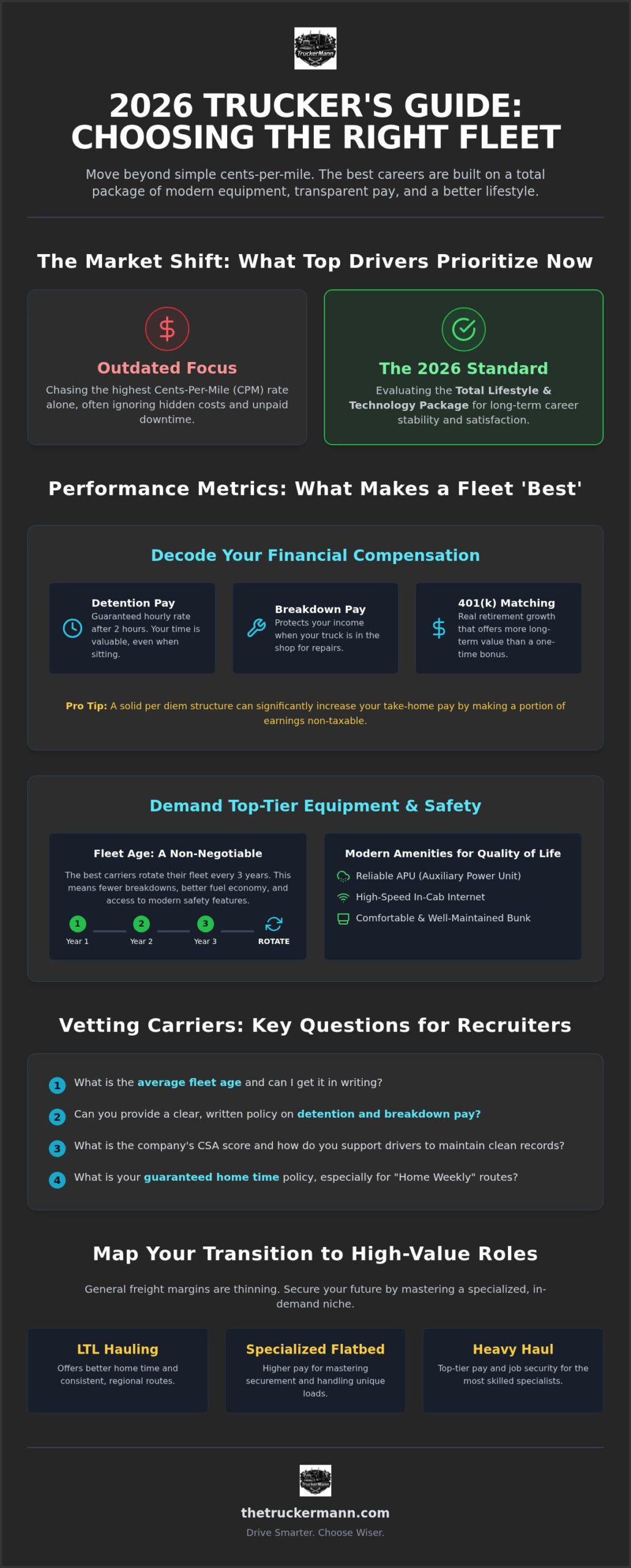
Recruiters love to throw big numbers at you, but a high cents-per-mile (CPM) rate is worthless if you’re sitting at a dock for six hours without pay. When we evaluate the best trucking companies to work for, we look past the surface level. It’s about transparency and whether the company respects the hours you put in. A truly top-tier fleet doesn’t just pay for miles; it pays for your expertise and your time, regardless of whether the wheels are turning. You’re looking for a partner, not a boss who treats you like a line item on a spreadsheet.
Financial Compensation Decoded
Don’t get blinded by a massive sign-on bonus. These are often structured as traps that require you to stay for a year or more just to see the full payout. Instead, look for longevity bonuses and solid per diem structures. Per diem can significantly increase your net take-home pay by making a portion of your earnings non-taxable, which is a detail many rookies overlook. According to the Truck Driver Job Outlook, pay and working conditions vary wildly across the industry, making it vital to scrutinize the fine print of your contract. You should also demand clear policies on these specific benefits:
- Detention Pay: A guaranteed hourly rate that kicks in after the second hour at a shipper.
- Breakdown Pay: Protection for your income when the shop has your rig for repairs.
- 401k Matching: Real retirement growth that provides more long-term value than a one-time bonus.
You can stay ahead of these market shifts by checking out the veteran-led resources at The Truckermann, where we break down the reality of carrier pay scales and help you avoid the common pitfalls of the trade.
Equipment and Safety Standards
The difference between a three-year-old truck and a five-year-old fleet is more than just aesthetics. Newer rigs usually come equipped with reliable Auxiliary Power Units (APUs), which are essential for staying comfortable during your mandatory breaks without idling the main engine. Safety technology is another major factor. While some drivers find lane-assist and collision mitigation annoying, these systems can save your CDL and your life in a split second. A company’s maintenance program tells you everything you need to know about their priorities. Do they pull a truck off the road for a minor air leak, or do they push you to run it just one more time? The best trucking companies to work for always support a driver’s right to refuse an unsafe load. If you’re looking to transition into a carrier that values high-end gear and safety, using tools like 123Loadboard can help you research which carriers are moving the best freight with the best equipment.
Top Tier Carriers: 2026 Industry Leaders
Finding the best trucking companies to work for isn’t about looking at a single, generic list. It’s about matching your specific skills to a freight niche that rewards your expertise. A driver chasing the highest possible pay in flatbed hauling has a completely different day than an LTL driver who is home every night for dinner. We’ve categorized the 2026 leaders by how they operate, giving you a clear look at where the stability and the money are actually hiding this year. Not all miles are created equal, and where you choose to hang your hat determines your quality of life.
Specialized and Flatbed Leaders
TMC Transportation remains a standout for drivers who take pride in their equipment and want a genuine stake in the company’s success. Their Employee Stock Ownership Plan (ESOP) means you aren’t just a number; you’re a shareholder who benefits directly when the fleet performs well. It’s a fraternal environment where the “black and chrome” trucks are a badge of honor on the interstate. Maverick Transportation is the other heavyweight in this category, known for a safety-first culture that is legendary among veterans. They don’t just throw you a headache rack and some chains; they provide top-tier securement training that keeps you and the public safe. To get into these high-paying roles, you need to know your tools inside and out. Check out our guide on The Best Flatbed Trucking Gear to prepare for the physical reality of these positions. You can also find professional securement gear at Truck n Tow to ensure you’re ready for day-one orientation.
LTL and Private Fleet Powerhouses
If you’re a veteran looking for the “gold standard” of stability, Walmart Private Fleet is still the mountain to climb. You need a clean record and several years of experience to even get an interview, but the reward is a predictable schedule and a six-figure earning potential. For those who prefer the fast pace of Less-Than-Truckload (LTL) work, Old Dominion Freight Line and Estes continue to lead the pack. Old Dominion has built a culture of low turnover by investing heavily in terminal infrastructure and their people. They consistently rank high for driver satisfaction because they treat local and line-haul drivers with genuine respect. Then there is UPS, which remains the pinnacle for those seeking union protections and a benefits package that is hard to touch elsewhere. Their feeder drivers enjoy some of the highest hourly rates in the best trucking companies to work for, backed by a pension that provides real long-term security.
For drivers who prefer the consistency of Dry Van or Reefer work, companies like Crete Carrier and Knight-Swift remain reliable OTR options. Crete is particularly well-regarded by veterans because they don’t govern their trucks as strictly as the mega-carriers, allowing you to maintain a better flow in traffic. They also have a reputation for honest home time, which is a rare find in the long-haul world. If you’re looking to sharpen your skills to land one of these high-value seats, consider the specialized courses at the DLA Academy to give yourself a competitive edge in the 2026 market.
Recruiter Reality: Vetting Your Next Move
The recruiter’s desk is a sales floor, not a dispatch office. Their job is to fill seats, but your job is to protect your livelihood and your sanity. When you’re hunting for the best trucking companies to work for, you have to treat the recruitment process like a cross-examination. If a promise isn’t in the contract, it doesn’t exist. We’ve seen too many good drivers trade a stable gig for a “guaranteed” home time promise that evaporated the moment they cleared orientation. You need to be the one driving the conversation, not just riding along with their pitch.
Demand specifics on equipment. If they say they have a “modern fleet,” ask for the average age in writing. A three-year-old truck is a different beast than a five-year-old rig that’s been through three different lease-operators. Use driver forums and social media groups to find the real story behind the glossy brochures. Real drivers will tell you if the shop is backed up for weeks or if the “no forced dispatch” policy is as flexible as they claim. If the recruiter gets defensive when you ask for proof, that is your signal to keep looking.
The Veteran’s Interview Checklist
Your interview is a two-way street. Don’t just answer their questions; grill them on the daily operational reality. Ask about the average weekly miles for your specific region, not just the company average. You also need to know about their tech stack. Confirm which system they use and their stance on ELD compliance to ensure you aren’t being pushed to run “creative” logs. Finally, if you’re OTR, ask about passenger and pet policies. Life on the road is hard enough without your dog or your spouse for company, and the best trucking companies to work for understand that driver comfort leads to better retention.
Red Flags to Watch For
High turnover is the biggest warning sign in this industry. If a carrier is always hiring dozens of drivers a week, you need to ask why so many people are leaving. Vague answers regarding detention pay or layover compensation are another massive red flag. If they can’t give you a straight dollar amount and a specific timeframe for when that pay kicks in, walk away. You should also pull their public CSA scores. A company with poor scores on the DOT Inspection Level 1 Checklist is a company that will cost you money in fines and downtime. Don’t let a recruiter’s charm distract you from a fleet’s poor safety record.
Before you sign that dotted line, make sure you have all the facts to protect your CDL. You can access our full carrier vetting toolkit at The Truckermann to ensure you never get caught in a recruiter’s trap again.
Professional Growth: Mastering Your Career Path
Mastering this trade means you never stop being a student of the road. Moving from a rookie to a veteran isn’t just about surviving your first winter; it’s about strategically building a resume that makes you the top choice for elite fleets. The best trucking companies to work for in 2026 aren’t just looking for someone who can keep it between the lines. They want specialists who understand the mechanics, the regulations, and the business of freight. If you’ve spent the last couple of years hauling dry van, it might be time to look toward specialized hauling where the rates are higher and the respect is greater.
Deciding between being a company driver or an owner-operator in 2026 requires a hard look at the current economy. With equipment costs and insurance premiums remaining high, many veterans are finding that staying a company driver at a top-tier carrier offers the best balance of profit and peace of mind. However, for those with an entrepreneurial spirit, the jump to independence is still viable if you leverage technology to find the highest-paying routes. Your career path is yours to steer, but you have to be willing to put in the work off the clock to master the skills required for the next level.
Advancing Your CDL Skills
Elite fleets require more than just a basic Class A. Getting your Hazmat and Tanker endorsements is the fastest way to open doors to high-paying chemical and specialized logistics roles. Beyond endorsements, your daily habits define your professional reputation. Mastering the CDL Pre Trip Inspection ensures you catch mechanical issues before they become DOT violations that tarnish your record. To stay ahead of the competition and sharpen your technical knowledge, using resources like DLA Academy can give you the edge needed to land a seat in the industry’s most exclusive fleets.
Tools for the Modern Driver
Managing your career in 2026 means staying informed about how regulatory shifts impact your path. Understanding the nuances of Interstate vs. Intrastate rules allows you to choose the lane that fits your lifestyle and earning goals. Technology is your best ally in this journey. Even if you’re a company driver, using tools like 123loadboard helps you monitor market rates and ensure your dispatcher is keeping you on the most profitable lanes. Remember, your safety record is your real resume. Keep it clean, keep your equipment maintained, and keep moving toward the career you’ve earned.
Secure Your Future in the Driver’s Seat
The road ahead in 2026 demands more than just miles; it requires a strategy. You’ve seen how the right niche, whether it’s the precision of flatbed or the steady rhythm of LTL, can transform your paycheck and your time at home. Success comes down to looking past the recruiter’s pitch and verifying the equipment age and pay transparency that actually keeps your life on track. Your CDL is your most valuable asset. Protecting it means staying vigilant about compliance while constantly upgrading your endorsements.
Finding the best trucking companies to work for requires patience and the right tools to filter through the noise. We’re here to help you handle these shifts with veteran-vetted recommendations and career growth resources designed for professional CDL holders. Don’t leave your next career move to chance when you can use industry-leading load board access to land a seat in a fleet that respects your expertise.
Ready to take the next step? Find your next high-paying load or carrier on 123loadboard and start maximizing your earnings today. Keep your record clean, your gear ready, and your eyes on the horizon. We’ll see you out there.
Frequently Asked Questions
What is the highest paying trucking company for new drivers in 2026?
Specialized carriers like TMC Transportation and Maverick Transportation typically offer the highest starting pay for rookies willing to learn flatbed securement. While many mega-carriers start drivers at lower rates, these specialized fleets provide higher cents-per-mile and performance bonuses from day one. You’ll earn your paycheck through physical labor, but the starting earnings often outpace standard dry van roles by a wide margin.
Which trucking companies offer the most home time for OTR drivers?
Regional carriers like Crete Carrier and dedicated fleets within Knight-Swift offer the most reliable home time guarantees for over-the-road drivers. To ensure you actually get back to your family, look for companies that offer “Home Weekly” or “7-on/7-off” schedules. Avoid fleets that only offer vague promises of flexible schedules, as these often lead to broken promises once you’re under a load.
Is it better to work for a mega-carrier or a small family-owned fleet?
Mega-carriers offer superior terminal amenities and newer equipment, while small fleets provide a fraternal environment with less micromanagement. If you value consistent freight and modern trucks, a large carrier is likely your best bet. However, if you want a dispatcher who knows your name and respects your personal life, a well-vetted family-owned fleet often provides a better long-term home.
What trucking companies have the best equipment and newest trucks?
GP Transco and Halvor Lines are consistently ranked among the best trucking companies to work for due to their commitment to rotating trucks every two to three years. These fleets prioritize late-model Peterbilts and Kenworths equipped with the latest APUs and safety technology. Operating newer gear isn’t just about pride; it means fewer breakdowns and more comfortable mandatory rest periods during your route.
How do I know if a trucking company has a good safety record?
You should check a carrier’s safety record by looking up their USDOT number on the FMCSA’s Safety Measurement System (SMS) website. Pay close attention to their “Vehicle Maintenance” and “Unsafe Driving” BASIC scores. A company with high percentiles in these categories is a red flag, suggesting they might push drivers to operate faulty equipment or ignore hours-of-service regulations.
Which carriers are best for female truck drivers in 2026?
Prime Inc. and Schneider National continue to lead the industry in support for female drivers through dedicated mentorship and safety initiatives. These companies invest in secure terminal facilities and provide training programs that specifically address the challenges women face on the road. Their commitment to an inclusive culture makes them top choices for women looking for a stable and respectful professional environment.
Does working for a union trucking company like UPS really pay more?
Yes, union roles at companies like UPS and ABF Freight offer significantly higher hourly pay and better pension plans than most non-union OTR positions. While the entry requirements are much stricter and you may start on the night shift, the long-term financial benefits are unmatched. The health insurance and retirement security provided by these union contracts are often the best in the business.
What are the red flags to look for when talking to a trucking recruiter?
The biggest red flag is a recruiter who refuses to put home time or pay rate promises in writing before you head to orientation. If they avoid specific questions about detention pay or their average fleet age, they are likely hiding operational flaws. You should also be wary of recruiters who focus entirely on sign-on bonuses rather than explaining the actual cents-per-mile or percentage pay structure.
Disclaimer
The information provided on The TruckerMann is for general informational and educational purposes only. While every effort is made to ensure the accuracy and reliability of the content, trucking laws, FMCSA regulations, DOT requirements, safety standards, and industry policies can change at any time. Readers are encouraged to verify all information with official government agencies, professional advisors, or qualified industry professionals before making business, legal, financial, safety, or compliance-related decisions.
The content shared on this website reflects personal opinions, experiences, research, and commentary and should not be considered legal, financial, medical, tax, or professional advice. The TruckerMann and its owners, contributors, affiliates, or representatives are not responsible for any losses, damages, violations, penalties, or liabilities resulting from the use or misuse of information found on this website.
Some content on this website may contain affiliate links, sponsored content, or promotional material. This means we may earn a commission at no additional cost to you if you choose to purchase through certain links.
By using this website, you agree that you do so at your own discretion and risk.