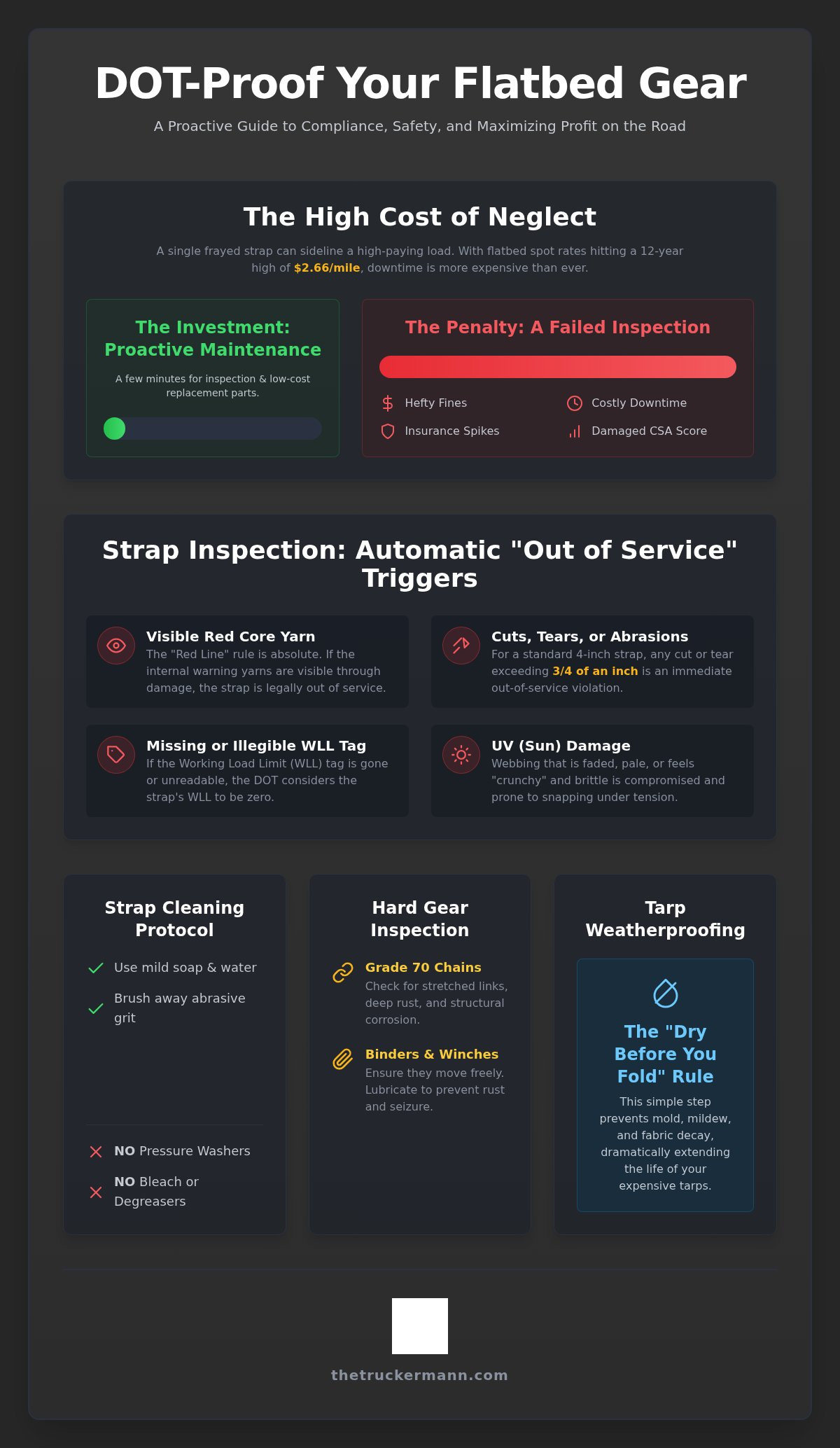
A single frayed strap or a missing WLL tag is more than just a minor nuisance; it’s a direct invitation for a DOT officer to park your rig and drain your bank account. In an industry where flatbed spot rates hit a 12-year high of $2.66 per mile this June, you can’t afford to lose a high-paying load to an “out of service” sticker. Effective flatbed gear maintenance is the difference between a smooth delivery and a costly roadside nightmare. It’s about treating your chains, binders, and straps as the precision tools they are rather than disposable overhead.
You’ve likely felt that gut-punch of finding a fresh tear in an expensive tarp or fighting a rusted binder that just won’t budge during a cold morning hook-up. We agree that replacing gear every few months is a frustrating waste of your hard-earned profit. This guide will show you exactly how to inspect, clean, and store your equipment to extend its life and ensure you’re always DOT-ready. We’ll cover everything from strap tolerances for the 2026 season to the best ways to keep your hardware moving freely, giving you a faster, safer securement process every time you pull onto the scales.
Key Takeaways
- Adopt a proactive compliance mindset to turn your securement gear into a shield against roadside inspections.
- Identify the “three killers” of polyester webbing and use edge protectors to stop friction damage before it starts.
- Evaluate Grade 70 chains for stretched links and structural corrosion to ensure your heavy loads meet FMCSA standards.
- Follow the “Dry Before You Fold” rule for tarps to prevent mold and extend the life of your weatherproofing gear.
- Commit to consistent flatbed gear maintenance to speed up your securement process and keep your toolbox organized for maximum efficiency.
Why Gear Maintenance Is Your Best DOT Defense
Proactive compliance is more than a buzzword; it’s the professional driver’s primary shield against the unpredictable nature of roadside inspections. When you pull into a scale house, you aren’t just presenting your logs and your license. You’re presenting your character as a professional. Inspectors often look for the low-hanging fruit to justify a deeper dive into your truck. Frayed straps, sun-bleached webbing, or rusty chains that look like they haven’t seen oil since the last decade are immediate red flags. They signal that if you don’t care about your securement, you probably don’t care about your brakes or your hours of service either.
The reality is that inadequate cargo securing is one of the most frequently cited violations during roadside inspections. Every time you skip a thorough flatbed gear maintenance routine, you’re essentially gambling with your CDL. A simple five-minute pre-trip inspection of your binders and straps can save you from a five-hour roadside delay or a forced out-of-service order. By keeping your gear in top-tier condition, you align yourself with the DOT Inspection Level 1 Checklist before the officer even steps out of the booth.
To better understand how equipment condition impacts your daily operations, watch this helpful video:
The Cost of Neglect
The financial sting of poor gear maintenance goes far beyond the initial fine. If a strap snaps or a chain link fails under tension, you’re looking at potentially devastating freight claims and massive insurance premium spikes. Contrast the price of a high-quality replacement strap from a reliable provider with the thousands of dollars lost to a “Failure to Secure” citation. Beyond the money, your reputation is on the line. Maintenance is the only way to keep your CSA score from tanking.
Regulatory Standards for 2026
As we move through the 2026 season, the FMCSA remains laser-focused on gear integrity, especially during high-stakes events like the CVSA Roadcheck 2026. Inspectors are trained to spot the “Red Line” rule. If the internal red core yarns of your polyester webbing are visible through nicks or abrasions, that strap is legally dead. There is no middle ground here. Either your gear meets the 49 CFR Part 393 standards, or you’re a liability waiting to happen. Consistent flatbed gear maintenance ensures you never have to guess whether your load will stay locked down when the DOT officer starts pulling on your tie-downs.
Maintaining Your Soft Gear: Straps and Winches
Your straps are the workhorses of the flatbed world, but they’re also the most vulnerable to the elements and the road. Polyester webbing is engineered for incredible strength, yet it remains susceptible to the “three killers”: nicks, cuts, and abrasions. Even a minor tear can compromise the integrity of the entire tie-down under the high-tension environment of a heavy load. This is where your flatbed gear maintenance routine needs to be surgical. You aren’t just looking for big rips; you’re looking for the subtle signs of wear that a sharp-eyed inspector will use to shut you down. If you want to stay DOT-ready, you have to treat your soft gear with the same respect you give your engine.
The “Edge Protector” rule is your best friend here. Never run a strap over a sharp corner without a buffer. Friction burns from cargo shifting even a fraction of an inch can saw through webbing in miles. When it comes to cleaning, keep the pressure washer and harsh chemicals away from your straps. Bleach and degreasers can break down the synthetic fibers, making the material brittle. Use a mild soap and water if you must, but the best approach is a simple brush-down to remove grit that acts like sandpaper within the weave.
Strap Inspection Checklist
UV fading is a silent killer of soft gear. If your straps look pale or feel “crunchy” to the touch, they’ve likely suffered sun damage that makes them brittle and prone to snapping. Always check your tags first. If the Working Load Limit (WLL) is missing or illegible, the DOT considers that strap to have a WLL of zero. Regarding retirement, the CVSA is strict. For a standard four-inch strap, a cut or tear reaching 3/4 of an inch is an automatic out-of-service violation. If you find yourself constantly tossing damaged webbing, it might be time to invest in highly durable replacement straps that can handle the rigors of the road.
Winch and Mandrel Care
Winches are the mechanical heart of your securement system, but they’re often neglected until they seize up. Road salt and winter grit love to hide in the winch track, causing grinding and premature wear. Don’t reach for the grease bucket to fix a sticky mandrel. Grease acts like a magnet for road dirt, creating a grinding paste that destroys the mechanism. Instead, use a dry lubricant like graphite or a specialized silicone spray. These keep the parts moving freely without attracting the gunk that causes jams. Finally, take a look at your winch bar. If it’s bent, straighten it or replace it. A bent bar is a safety hazard that can slip under pressure, leading to busted knuckles or worse.
Hard Gear Care: Chains and Load Binders
The battle against rust is a constant reality for any flatbedder. You need to distinguish between harmless surface rust and structural corrosion. Surface rust is common on Grade 70 chains after a single rain, but deep pitting or “scaling” means the metal is losing its integrity. According to official cargo securement regulations, any securement device with significant structural damage must be removed from service. This isn’t just about passing a CVSA check; it’s about making sure your 10,000-pound coil stays exactly where you put it.
Grade 70 Chain Integrity
Always verify that your chains have the “G70” stamp clearly visible on the links. If the DOT inspector can’t find that mark, they’ll often default to a lower grade rating, which could put you in violation of your aggregate working load limit. After running through salted winter roads, wash your chains to remove the brine that eats into the steel. Don’t let them sit in a wet heap at the bottom of your box. Proper flatbed gear maintenance involves hanging chains or storing them in a ventilated area to prevent “chain rot,” which is the accelerated corrosion that happens in stagnant, humid environments.
Binder Mechanical Service
Ratchet binders are precision mechanical tools that require regular service to survive the elements. If the threads are dry or packed with road grit, they’ll seize up just when the temperature drops below freezing. Clean the threads with a wire brush and apply a high-quality lubricant. For 2026, many veterans are moving away from heavy grease, which attracts dirt, and opting for silicone-based sprays or specialized lithium grease that remains fluid in extreme cold. If your lever binders have bent handles or cracked hooks, stop using them immediately. For those who need to upgrade their arsenal, you can find Mytee Products that offer the heavy-duty durability required for professional-grade securement.
Tarp Maintenance and Weatherproofing
Tarps are your load’s first line of defense against the elements, but they’re often the most neglected part of a driver’s kit. A heavy-duty vinyl tarp is a significant investment; you shouldn’t treat it like a disposable rag. Proper flatbed gear maintenance means keeping those tarps clean of diesel soot, road oil, and hydraulic fluid. These chemicals don’t just look bad; they slowly eat through the protective coating of the vinyl, making the material brittle and prone to cracking. When you’re at the terminal, take the time to spray off the road grime before you roll them up for storage.
The “Dry Before You Fold” rule is the golden standard for longevity. If you fold a wet tarp and shove it into a sealed toolbox, you’re creating a petri dish for mold. Moisture trapped in the folds causes the fabric to break down from the inside out. If you have to roll up in the rain, make sure to spread that tarp out to dry as soon as you get to a sunny drop site or back to the yard. While you’re at it, inspect the D-rings and grommets. These high-stress points take the brunt of the wind at highway speeds. If you see stitching starting to pull, reinforce it immediately. Using corner protectors on your cargo doesn’t just protect the freight; it doubles the life of your vinyl by preventing sharp edges from punching through during transit.
Patching Holes on the Go
Every professional should carry a tarp repair kit on the rig. Essentials include vinyl cement, patches, and a small roller. To apply a patch that actually sticks in the wind, you must clean the area with alcohol to remove any oily residue. Apply the glue to both the tarp and the patch, let them get tacky, and then use the roller to work out any air bubbles. If you start seeing “pinholing”—where tiny dots of light shine through the fabric when you hold it up to the sun—the tarp is reaching the end of its life and can no longer guarantee a dry load.
Proper Tarp Folding for Longevity
How you fold your gear determines how long it lasts. Use the “Logistics Fold” to minimize sharp, repetitive creases that eventually turn into cracks. Most importantly, avoid the “drag” at all costs. Pulling a heavy tarp across asphalt is like running it over a giant piece of 40-grit sandpaper. It ruins the waterproof coating and creates micro-tears that lead to leaks. If your current covers are starting to look like Swiss cheese, you can find professional-grade replacement tarps and repair kits at Truck n Tow to keep your cargo bone-dry.
Master your craft and protect your paycheck by investing in high-quality flatbed tarps that stand up to the rigors of the road.
The Professional Storage Strategy
Storage is the final link in the chain of flatbed gear maintenance. It’s where the discipline of the yard meets the reality of the road. If you’ve spent time inspecting your straps and oiling your binders only to toss them into a tangled heap in your side box, you’re sabotaging your own efforts. A professional driver’s toolbox is a reflection of their discipline on the road. When your gear is organized, your securement process moves faster, your stress levels drop, and you avoid the “rat’s nest” of straps that leads to micro-tears and frustration during a cold hook-up. Organization is speed, and in this business, speed translates directly into your take-home pay.
The “Wet Gear” protocol is a non-negotiable rule for anyone looking to master the industry. Never leave wet polyester straps in a sealed, dark toolbox for more than a few hours. The lack of airflow creates a breeding ground for mildew and rot, which can degrade the synthetic fibers faster than sun exposure ever will. If you have to pack up in a downpour, make it a priority to air out your soft gear at the next available opportunity. Staying ahead of these small details is what separates the veterans from the rookies, especially when you’re dialing in your Best Flatbed Trucking Gear setup for the 2026 season.
Toolbox Optimization
Keep your steel and your polyester in separate neighborhoods. Chains are heavy and abrasive; if they shift during transit, they can easily snag or crush the edges of your rolled-up straps. Use dedicated bins for smaller items like corner protectors, bungees, and winch bars. This prevents the “bottom of the box” syndrome where essential tools disappear under a pile of heavy hardware. When everything has a specific home, inventory management becomes second nature. You’ll know exactly what you have and what needs replacing before you ever leave the yard gate.
Off-Season Gear Prep
Seasonal lulls or home time are the perfect opportunities for deep-level flatbed gear maintenance. This is the time to apply rust inhibitors to your winch tracks and the internal threads of your ratchet binders. If you find gear that’s borderline, don’t wait for a DOT officer to make the decision for you. Use this time to plan your equipment budget for the coming year. If your current inventory is showing its age, consider upgrading to high-durability replacements from Mytee Products. Investing in quality gear and maintaining a strict storage routine ensures that when the next high-paying load hits the board, you’re ready to roll without a second thought.
Secure Your Livelihood with Every Hook and Link
Every mile you run is a testament to your professional discipline, and your equipment is the most visible proof of that commitment. We’ve covered why staying ahead of wear and tear is your best defense against the DOT, from identifying the “three killers” of polyester webbing to maintaining the mechanical integrity of your Grade 70 chains. Consistent flatbed gear maintenance isn’t just about avoiding an out-of-service sticker; it’s about the peace of mind that comes from knowing your load is locked down tight, no matter what the road throws at you.
By treating your tarps, straps, and binders as precision tools rather than consumables, you protect your CDL and your profit margins. When your gear is organized and your storage is bone-dry, you’re ready to seize the highest-paying loads with total confidence. If your current kit is showing signs of age that maintenance can’t fix, it’s time to invest in the best. You need gear that’s trusted by veteran flatbedders, featuring DOT-compliant load ratings and high-strength vinyl or steel options.
Upgrade your securement game with professional gear that stands up to the rigors of the field. Keep your deck clean, your chains oiled, and your eyes on the horizon. We’ll see you out there on the blacktop.
Frequently Asked Questions
How often should I inspect my flatbed straps?
You are required by federal law to inspect your straps before every trip, within the first 50 miles of travel, and every 150 miles or three hours thereafter. This schedule is mandated under 49 CFR Part 392.9 to catch any shifting or new abrasions. Frequent checks ensure that vibration hasn’t caused a sharp edge to saw through your webbing, keeping you safe and compliant.
Can I use a strap with a small cut if it is not on the edge?
No, you should not risk using a strap with any visible cut or hole, regardless of its location. DOT officers are trained to spot any compromise in the polyester weave. While some minor surface fuzzing is acceptable, a distinct cut can quickly unzip under the thousands of pounds of tension required to keep your load secure. If you see a nick, it’s time to retire that strap.
What is the best way to clean road salt off my securement chains?
Rinse your chains with fresh water and a mild detergent immediately after running through winter brine. Road salt is the primary cause of structural pitting, which weakens the metal links over time. After washing, ensure they are completely dry before applying a light coat of rust inhibitor. This prevents the “chain rot” that occurs when wet steel is left in a dark toolbox.
How do I stop my ratchet binders from seizing in the winter?
Clean the internal threads with a wire brush and apply a high-quality silicone or lithium lubricant before the cold hits. Avoid using heavy grease, as it thickens in freezing temperatures and traps road grit that causes the gears to jam. Regular flatbed gear maintenance in the autumn ensures your binders remain easy to operate when you’re hook-up in sub-zero conditions.
Is it legal to use a tarp with patches during a DOT inspection?
Yes, it is perfectly legal to use a patched tarp as long as the cargo remains properly secured and the patch doesn’t create a flapping hazard. DOT inspectors focus on the integrity of your straps and chains rather than the aesthetics of your vinyl. Just make sure your patches are applied with professional-grade adhesive so they don’t peel off at highway speeds and become a safety issue.
Does UV light really damage polyester trucking straps?
Yes, ultraviolet light causes a chemical breakdown in polyester fibers, making them brittle and significantly reducing their rated strength. You can identify UV damage by looking for severe fading or a “crunchy” texture when you flex the webbing. Storing your straps in an enclosed box when they aren’t on a load is the easiest way to prevent this silent degradation.
What should I do if my WLL tag falls off my gear?
You must remove any piece of securement gear from service if the Working Load Limit (WLL) tag is missing or illegible. Under current regulations, an unmarked device is considered to have a WLL of zero. It’s a good idea to keep a few spare, tagged straps in your box so a missing piece of plastic doesn’t result in an out-of-service order at the scales.
How can I extend the life of my lumber tarps?
Always use corner protectors on sharp freight and never drag your vinyl across the asphalt. The most important part of flatbed gear maintenance for tarps is the “Dry Before You Fold” rule. If you must roll up a wet tarp, spread it out to dry at your next stop. Trapped moisture leads to mold and material rot, which can ruin a premium tarp in a single season.
Disclaimer
The information provided on The TruckerMann is for general informational and educational purposes only. While every effort is made to ensure the accuracy and reliability of the content, trucking laws, FMCSA regulations, DOT requirements, safety standards, and industry policies can change at any time. Readers are encouraged to verify all information with official government agencies, professional advisors, or qualified industry professionals before making business, legal, financial, safety, or compliance-related decisions.
The content shared on this website reflects personal opinions, experiences, research, and commentary and should not be considered legal, financial, medical, tax, or professional advice. The TruckerMann and its owners, contributors, affiliates, or representatives are not responsible for any losses, damages, violations, penalties, or liabilities resulting from the use or misuse of information found on this website.
Some content on this website may contain affiliate links, sponsored content, or promotional material. This means we may earn a commission at no additional cost to you if you choose to purchase through certain links.
By using this website, you agree that you do so at your own discretion and risk.