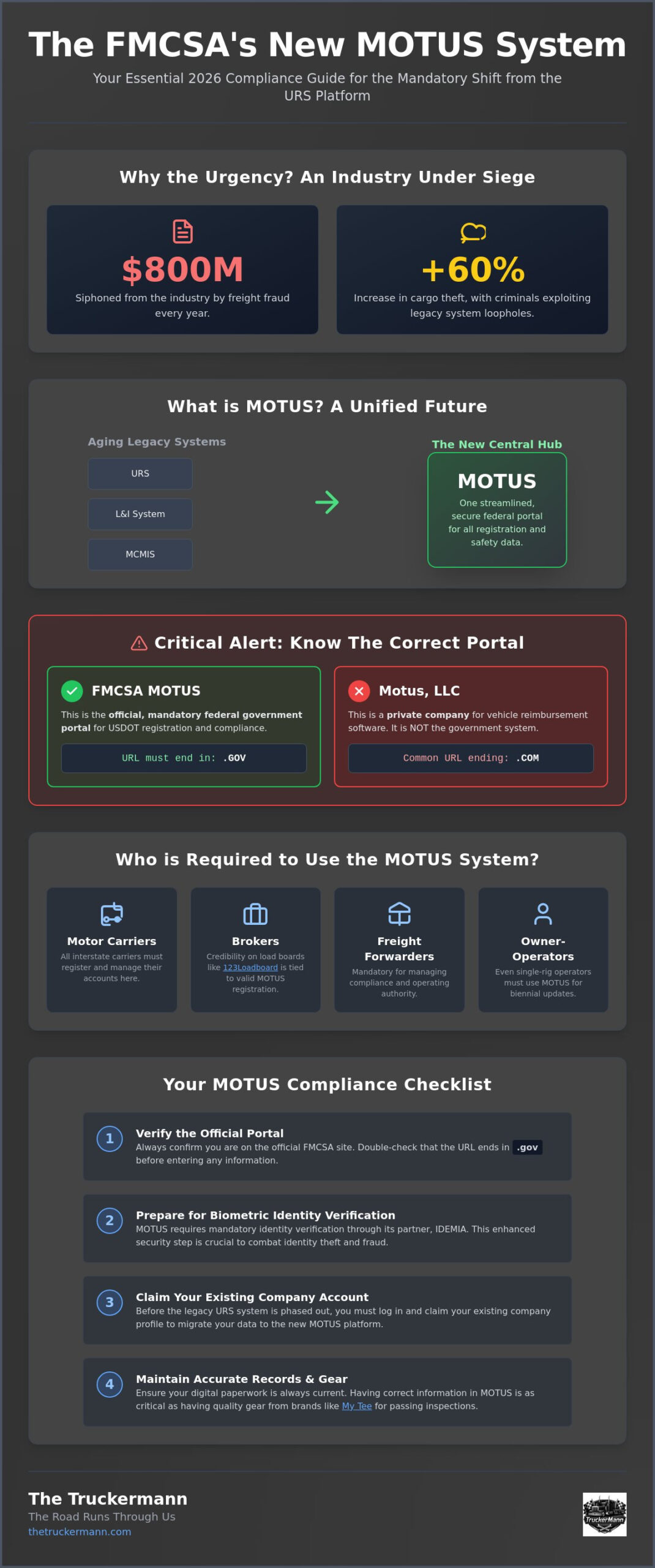
With cargo theft up 60% and freight fraud siphoning $800 million from our pockets every year, the FMCSA finally pulled the trigger on a total system overhaul. You’ve probably heard the name Motus floating around the yard or seen the alerts on your dashboard. If you’re feeling a bit of dread about another government portal, you aren’t alone. It’s frustrating to deal with more digital red tape when you just want to keep the wheels turning, especially when there’s so much confusion between this federal mandate and private vehicle reimbursement apps.
We’re here to cut through the noise and show you exactly how this new USDOT registration system works so you don’t get sidelined by a registration suspension. This isn’t just another website; it’s a mandatory shift that launched on May 14, 2026, to replace the aging URS platform. We’ll explain the new IDEMIA identity checks, provide a clear checklist for moving your company account, and give you the confidence to know you’re fully compliant for 2026 and beyond. Consider this your briefing to stay road-ready while the industry changes around us.
Key Takeaways
- Clarify the confusion between the official government Motus registration system and private reimbursement apps to ensure you are filing with the correct entity.
- Learn how to navigate the mandatory biometric identity verification process required by the FMCSA to protect your business from the rising tide of freight fraud.
- Follow our streamlined checklist for claiming your existing company account before the legacy Unified Registration System is permanently phased out.
- Identify the specific documentation and professional gear you need to stay compliant and road-ready during inspections in this new digital era.
What is Motus? Understanding the New USDOT Registration Framework
The Federal Motor Carrier Safety Administration (FMCSA) didn’t just give the old system a facelift; they built an entirely new engine from the ground up. Motus is the 2026 replacement for the aging Unified Registration System (URS) that has felt like a relic of the 1990s for far too long. This platform now serves as the central hub for your USDOT numbers, operating authority, and vital safety data. By integrating multiple legacy databases like the Licensing and Insurance (L&I) system and the Motor Carrier Management Information System (MCMIS) into one streamlined, secure portal, the government aims to kill off the fragmented mess of the past. Motus is the mandatory federal portal for all interstate commercial motor vehicle registration.
To better understand this concept, watch this helpful video:
Motus FMCSA vs. Motus.com: Clearing the Confusion
There is a massive point of confusion you need to watch out for before you start typing in your credentials or opening your wallet. If you search for the name online, you’ll likely find Motus, LLC, which is a private company specializing in vehicle reimbursement and fleet management software. While they are a legitimate business in the private sector, they aren’t the government. To stay legally compliant, you must ensure you are accessing the official .gov domain. Keep a sharp eye out for “copycat” sites that look official but try to charge you a premium for registration services that the FMCSA provides for free. If the URL doesn’t end in .gov, it isn’t the federal portal you’re looking for, and you might be handing your data to a third party instead of the DOT.
Who is Required to Use the Motus System?
This isn’t an optional upgrade that you can ignore until your next inspection. If you’re moving freight across state lines, you’re in the mix. The Motus system is the new requirement for motor carriers, brokers, and freight forwarders alike. Even if you’re a single owner-operator with one rig, you’ll use this portal to manage your biennial updates and compliance filings. Brokers using platforms like 123Loadboard will find that their Motus registration is the backbone of their credibility on the board. For those operating strictly intrastate, your state-level requirements might still apply, but any move toward interstate authority goes straight through this new portal. It’s about centralizing the industry’s digital footprint to make sure everyone on the road is who they say they are. When you’re heading out with a fresh load secured by high-quality gear from My Tee, having your digital paperwork in order is just as critical as having your tarps tight.
Why the FMCSA Built Motus: Tackling Fraud and Modernizing Logistics
Strategic cargo theft has increased by a staggering 1,500% since the first quarter of 2021. Criminals have turned identity theft into a high-profit business model, registering fake carriers to intercept expensive loads before disappearing into the digital ether. Motus is the FMCSA’s heavy-duty response to this epidemic. By moving away from paper-heavy, slow-moving legacy systems, the agency can now implement real-time digital verification. This shift ensures that every carrier, broker, and forwarder on the road is a legitimate, verified entity. It’s a protective shield for the honest professionals who keep the country moving, ensuring that your hard-earned reputation isn’t tarnished by bad actors.
Data accuracy is no longer just a clerical preference; it’s a survival requirement. When you are sitting at a weigh station, the officer is looking for consistency across every digital record. Having your information correctly logged in Motus is the first step in clearing a DOT inspection level 1 checklist. If your registration is suspended or your details are mismatched, you’re looking at an immediate out-of-service order. This system is the foundation for the FMCSA’s 2026 safety enforcement initiatives, focusing on removing “chameleon” carriers before they can cause harm on the highway.
Enhanced Security and System Entry
The gatekeepers have stepped up their game. Motus introduces mandatory multi-factor authentication (MFA) for all accounts to prevent unauthorized access and account hijacking. This is critical because a compromised account can ruin your CDL rankings and business reputation overnight. The system now requires company officers to undergo identity verification using facial scans and government-issued IDs. It’s a rigorous process, but it’s the only way to ensure the person behind the keyboard is the same person responsible for the rig. Brokers using 123Loadboard benefit from this because they know the carriers they hire have passed these new, stringent verification hurdles.
Streamlining the Registration Pipeline
Efficiency is the other side of the coin. Standard processing for a complete application in Motus now takes between 3 and 21 business days, a significant improvement over the old manual methods. The system integrates directly with insurance providers for automatic filing updates, reducing the manual workload for owner-operators. It also provides much-needed clarity for those deciding between interstate vs intrastate operations. While the FMCSA focuses on registration, many professional fleets look to private software for expense management, which must adhere to the IRS rules for fixed and variable rate (FAVR) allowances. Staying compliant is easier when you have the right tools, like the high-visibility gear found at My Tee Products. For more help navigating these shifts, you can always find resources at The Trucker Mann.
Moving into Motus: Essential Steps for Carriers and Brokers
Don’t let the transition catch you sleeping. The move from the legacy Unified Registration System to the new Motus portal is more than just a change of address; it’s a migration of your entire business history. Before you even think about clicking that “Claim Account” button, you need to gather your gear. You’ll need your current USDOT Number, your existing FMCSA Portal credentials, your Federal Tax ID, and the legal name of your business exactly as it appears on your current filings. If these details don’t match up during the migration, the system will flag your account, potentially leading to a registration suspension that grounds your fleet before you can even pull out of the yard.
Once you’re inside the new interface, the first mission is “claiming” your company account. This isn’t just about logging in. It’s about verifying that the data migrating from the MCS-150 is 100% accurate. This is the time to assign specific “User Roles” to your team. You don’t want every driver having the same administrative access as your safety officer or fleet manager. Setting these permissions early prevents administrative chaos down the road. Amidst this massive digital shift, we’ve seen Motus’s strategic expansion into broader fleet management, showing how deeply these digital tools are becoming woven into our daily operations. Keeping your digital house in order is now just as important as keeping your rig maintained with gear from My Tee.
Setting Up Your Individual User Profile
Linking your personal identity to a company USDOT number is a high-stakes move. In the new system, your individual profile is tied directly to your professional credentials. Every driver needs to understand that their digital footprint here can impact their Motor Vehicle Record (MVR) if compliance issues arise. A common pitfall is using a personal email that you might lose access to, or failing to complete the biometric identity verification on the first try. Get it right the first time so you can get back to what matters: hauling freight and getting paid. If you’re looking for more loads to fill that schedule after your profile is live, check out 123Loadboard.
Managing Registrations and Authority
The Motus dashboard is where you’ll handle the heavy lifting of compliance. Need to update your “Scope of Operation”? This is where you do it. Whether you’re moving from intrastate to interstate or adding new cargo classifications, the real-time updates here are what the DOT officers see at the scale. Don’t wait for your biennial update deadline to check your status. Logging in once a month to verify your authority is active can save you from a roadside headache that ruins your week. Staying ahead of the curve means you’re always ready for the next haul without the regulatory stress.
Motus vs. Legacy Systems: What Every Owner-Operator Needs to Know
The old Unified Registration System (URS) was like that one piece of equipment you keep around because you know its quirks, even if it’s rusted through and barely holds air. It was clunky, fragmented, and required you to jump between different portals just to keep your authority active. But as of 2026, the FMCSA has officially moved those legacy systems to the scrapyard. Motus is the new standard, and it’s a complete departure from the way we’ve handled paperwork for decades. You might be asking, “Why change what wasn’t broken?” The reality is that the old system was broken; it just happened to be broken in ways that criminals exploited while honest drivers suffered through the inconvenience. Motus centralizes what used to require three different logins into a single, secure interface.
This shift is about more than just a cleaner dashboard. It is about security. The legacy portals lacked the robust identity verification needed to stop modern fraud. While it might feel like more digital red tape, the transition to Motus ensures that your business identity is locked down. It saves you time in the long run by putting your insurance filings, safety data, and registration renewals under one roof. When you’re out there securing a load with high-quality straps from My Tee, you shouldn’t have to worry about whether a technical glitch in an outdated government database is going to get you red-tagged.
Improved Transparency for Small Fleets
Small fleets and owner-operators often feel like they’re the last to know when something is wrong with their record. Motus changes that by providing real-time access to your safety scores and violation history. If a mistake happens during a roadside stop, you can now use the portal to more efficiently dispute incorrect data on a driver vehicle examination report. This level of transparency is a game-changer. Brokers on 123Loadboard also gain the ability to verify carrier authority faster, which means less time waiting for a “clear” and more time getting your wheels turning toward the next drop-off.
The Role of Technology in Compliance
The digital evolution doesn’t stop at registration. Motus is designed to be the foundation for a more connected regulatory environment. We are moving toward a future where your registration data feeds directly into ELD and roadside software, creating a seamless link between your office and the cab. Keeping your digital house in order is no longer optional; it is the price of admission for the modern highway. If you want to stay ahead of these changes and master the new system, take control of your compliance today by visiting The Trucker Mann for the latest regulatory deep dives and professional resources.
Staying Road-Ready: Gear and Resources for the New Regulatory Era
You have mastered the portal, claimed your account, and verified your data. That is a massive win, but don’t let it go to your head. Administrative compliance is only half the battle when you are out on the asphalt. You can have a pristine digital record in the Motus system, but if an officer sees frayed straps or a leaky hub, your perfect paperwork won’t save you from a violation. Think of your digital profile as your resume and your rig as your handshake. Both need to be solid. If the digital side is the “why” of your operation, the physical gear is the “how.” Staying road-ready means ensuring there is no gap between what the FMCSA sees on a screen and what an inspector sees on the shoulder.
Professional Gear for Professional Drivers
When you pull into a scale house, the officer is already sizing you up before you even roll down the window. A well-maintained rig sends a clear message: you are a professional who respects the trade. Investing in high-quality securement from My Tee ensures that your physical load matches the clean record you have worked hard to maintain in the new system. Using reliable gear from My Tee isn’t just about safety; it’s about projecting authority. Likewise, keeping heavy-duty recovery and towing equipment from Truck n Tow on board is essential for passing those rigorous Level 1 inspections. When you use gear from Truck n Tow, you show that you are prepared for the worst the road can throw at you. That psychological advantage is real. An officer who sees a driver using top-tier equipment from My Tee is far more likely to believe that the rest of your operation is just as disciplined.
Mastering Your Career Path
Now that your authority is active and verified through Motus, it is time to put that credibility to work. Shippers and brokers are increasingly looking for carriers with verified, clean histories to mitigate their own risks. You can use your status to negotiate better rates, proving that you are a low-risk, high-reliability partner. Capitalize on your active authority by finding the best-paying freight on 123Loadboard. The integration of modern data means that having a clean record leads directly to better CDL rankings and, ultimately, better pay. When you are consistent on 123Loadboard, you build a reputation that transcends a simple digital portal. Motus is just a tool in your kit. Learn it, master it, and then get back to what you do best. Keep your paperwork digital, your securement tight, and your eyes on the horizon. We will see you out there.
Taking Control of Your Digital Dashboard
The transition to Motus represents a massive shift in how we manage our authority, but it’s a move that ultimately puts the power back in the hands of honest carriers. By tackling freight fraud through mandatory identity checks and centralizing your filings, the FMCSA is finally cleaning up the digital yard. We’ve covered how to claim your account and why your physical securement must match your digital record to stay truly road-ready. It’s about being prepared before you ever hit the high-side of the ramp and ensuring your business is shielded from regulatory headaches.
As a veteran-owned and operated platform trusted by thousands of professional drivers, we provide direct links to official DOT resources to keep you moving without the hassle. You can find everything you need to master your career path and stay updated on these shifts at The Trucker Mann. If you are ready to put your active authority to work, you can secure your next load and stay compliant with 123Loadboard. The industry is evolving, but your commitment to excellence remains the same. Keep the shiny side up and your paperwork in order.
Frequently Asked Questions
Is the Motus registration system mandatory for all truckers in 2026?
Yes, the Motus system is mandatory for all motor carriers, brokers, and freight forwarders operating in interstate commerce as of May 14, 2026. If you require a USDOT Number or operating authority, you must use this platform. It serves as the new federal standard for all registration and compliance filings, replacing the fragmented legacy portals we used in the past.
How do I log in to the new FMCSA Motus portal for the first time?
You log in by using your existing FMCSA Portal credentials to “claim” your company account in the new interface. Once you’ve initiated the claim, you’ll need to complete a mandatory identity verification process. This involves a facial scan and a government ID upload through third-party partners like IDEMIA or CLEAR. It’s a one-time hurdle to ensure only authorized people control your business data.
Does the Motus system replace my existing USDOT number?
No, the Motus system does not replace your existing USDOT number. Your current number remains valid and stays with your company for its entire lifespan. Motus is simply the new digital environment where you manage that number, submit your biennial MCS-150 updates, and track your safety data. Think of it as a new, more secure office for the same business identity you’ve always had.
What is the difference between Motus and the old Unified Registration System (URS)?
The primary difference is that Motus centralizes all FMCSA registration functions into a single, mobile-friendly portal with enhanced security. While the old URS was a patchwork of aging databases, the new portal requires biometric identity verification and real-time business validation. It’s built to be faster and more secure, cutting down the processing time for new authority to as little as 3 to 21 business days.
Can I still use a third-party service to manage my Motus registration?
Yes, you can still use third-party consultants or service providers to help manage your filings. However, the mandatory identity verification step must be completed by a company officer personally. No third party can bypass the biometric scan requirement. Once the officer is verified, they can grant specific user roles to agents to handle the day-to-day administrative tasks.
What happens if I don’t transition my account to Motus by the deadline?
Failing to transition your account by the required deadline puts you at high risk for a registration suspension. If your authority is marked inactive, an officer will ground you regardless of how well your load is secured with gear from My Tee. It’s better to handle the digital paperwork now than to explain a “Not Authorized” status to an officer while your rig sits idle at the scale.
Is there a fee to “move into Motus” for existing carriers?
There is no specific government fee to move into the system or claim your existing company account. The FMCSA provides the portal as a free service for registration management. You should be wary of third-party sites that charge “transition fees” for basic access. Standard fees for applying for new operating authority still apply, but the migration itself is free of charge.
How does Motus help prevent freight fraud and identity theft in 2026?
The platform prevents fraud by requiring facial recognition scans and government-issued ID verification for every registrant. This makes it much harder for criminals to create “chameleon” carriers or steal a legitimate company’s identity. By validating the legal name and physical address of every business in real-time, the system shuts the door on the strategic theft schemes that have plagued load boards like 123Loadboard in recent years.
Disclaimer
The information provided on The TruckerMann is for general informational and educational purposes only. While every effort is made to ensure the accuracy and reliability of the content, trucking laws, FMCSA regulations, DOT requirements, safety standards, and industry policies can change at any time. Readers are encouraged to verify all information with official government agencies, professional advisors, or qualified industry professionals before making business, legal, financial, safety, or compliance-related decisions.
The content shared on this website reflects personal opinions, experiences, research, and commentary and should not be considered legal, financial, medical, tax, or professional advice. The TruckerMann and its owners, contributors, affiliates, or representatives are not responsible for any losses, damages, violations, penalties, or liabilities resulting from the use or misuse of information found on this website.
Some content on this website may contain affiliate links, sponsored content, or promotional material. This means we may earn a commission at no additional cost to you if you choose to purchase through certain links.
By using this website, you agree that you do so at your own discretion and risk.