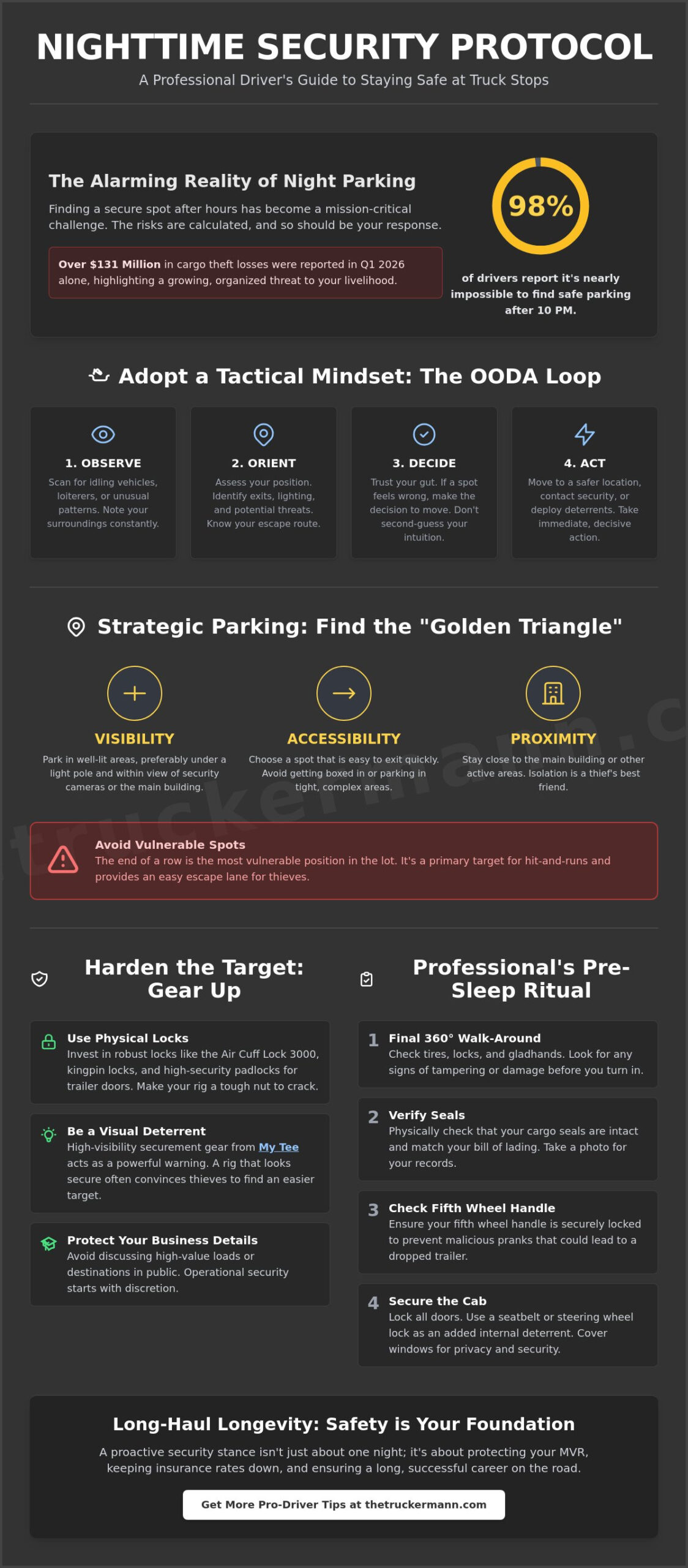
Hey there, driver. Did you know that 98% of professional haulers now report it’s nearly impossible to find a safe parking spot after 10:00 PM? It’s a heavy reality to face, especially when you’re pushing against your 14-hour window and just want to shut down without looking over your shoulder. We’ve all felt that familiar knot in the stomach when the only open slot is in a dark, unlit corner of a high-theft corridor. Mastering the art of staying safe at truck stops at night isn’t just about luck anymore. It requires a tactical approach to your environment and a commitment to professional vigilance.
I understand the frustration of navigating rising cargo theft rates, which saw losses climb to over $131 million in the first quarter of 2026 alone. You deserve to sleep soundly without worrying about aggressive solicitors or cargo thieves. This guide will help you master the tactical mindset and professional habits needed to protect your cargo, your rig, and yourself. We’re going to dive into a repeatable nightly security routine, how to vet parking lots with confidence, and which gear, like the Air Cuff Lock 3000, is actually worth the investment to keep you and your livelihood secure.
Key Takeaways
- Adopt a tactical mindset that transforms every overnight shutdown into a mission-critical security operation rather than just a rest period.
- Learn how to identify the “Golden Triangle” of parking to maximize your visibility and reduce vulnerability when staying safe at truck stops at night.
- Discover why high-visibility securement gear from My Tee acts as a powerful visual deterrent to ward off opportunistic cargo thieves.
- Master a disciplined pre-sleep ritual that includes a final seal verification and a check of your fifth wheel handle to prevent malicious pranks.
- Understand the direct link between a proactive security stance and protecting your MVR, insurance rates, and overall long-haul career longevity.
The Veteran’s Mindset: Why Nighttime Safety is a Tactical Operation
The road in 2026 isn’t the same one your father drove. While the freight still moves, the risks have evolved into something much more calculated. Criminals today aren’t just looking for an unlocked door; they’re using digital tracking and high-stakes fraud to target specific loads. This shift demands that you move from a reactive posture to a proactive, tactical mindset. In the high-stakes world of logistics, truck driver safety starts between the ears long before you ever pull into a lot. Staying safe at truck stops at night requires you to view your rig as a fortress rather than just a place to sleep.
When you’re operating a 70-foot rig, situational awareness takes on a massive physical footprint. It’s about knowing exactly what’s happening at the back of your trailer while you’re sitting in the driver’s seat. The “Hardened Target” concept is your best friend here. Thieves are looking for the path of least resistance. If your truck looks like a professional, secure operation, they’ll likely move on to an easier mark. However, your biggest enemy isn’t always a thief; it’s the fatigue that hits at the end of a grueling 14-hour shift. When you’re exhausted, your brain naturally wants to cut corners. You might skip that final walk-around or ignore a car that’s been circling the lot. Recognizing that your judgment is compromised by the clock is the first step in staying safe at truck stops at night.
To better understand this concept, watch this helpful video:
Understanding the OODA Loop for Drivers
Combat pilots use the OODA Loop to stay alive, and you should too. First, you Observe. Look for unusual patterns, like unmarked vehicles idling near the back of the lot or individuals loitering without a clear purpose. Next, you Orient yourself. Assess your position relative to the nearest exit and the brightest lights. You need to know your escape route before you ever pull the brakes. Then, you Decide and Act. If a spot feels “off,” don’t overthink it. Have a pre-planned protocol to move to a different location or contact site security immediately. Trusting your gut is a professional skill, not a superstition.
Camaraderie vs. Security
Trucking is a brotherhood, but you have to balance that fraternal bond with the need for operational security. It’s tempting to vent about a high-value load or your final destination over a cup of coffee at the counter. Don’t do it. You never know who’s listening in the booth behind you. Developing a “professional distance” means being polite and helpful to your fellow drivers while keeping your business details close to the vest. Using high-quality securement gear from My Tee sends a clear signal that you’re a professional who takes security seriously. When your equipment from My Tee is visible and properly maintained, it reinforces that you aren’t an easy target for opportunistic crime.
Strategic Parking: How to Spot a High-Risk Slot Before You Shutdown
Finding a place to drop the anchors is getting harder every year. With 98% of drivers reporting difficulty finding safe parking after 10:00 PM, the temptation to grab the first available slot is high. However, staying safe at truck stops at night begins with your parking choice. You need to look for the “Golden Triangle” of parking: Visibility, Accessibility, and Proximity. This means choosing a spot that’s well lit, easy to exit, and close enough to the main building or other active drivers. If you’re tucked away in a dark corner, you’re essentially providing a private workspace for a cargo thief.
Avoid the end of the row whenever possible. While it seems convenient for a quick exit, the end slot is the most vulnerable position in the lot. It’s the primary target for hit-and-runs by tired drivers maneuvering in the dark. More importantly, it provides thieves with an easy “escape lane” where they can pull a vehicle alongside your trailer and disappear quickly. An official government study on trucker crime highlights that isolation is a major factor in nighttime incidents. By staying in the middle of a well populated row, you use the collective presence of other drivers as a natural shield. Even in these better spots, using high-visibility security gear from My Tee ensures that anyone looking at your rig knows you’ve taken steps to harden the target.
Always evaluate the “Lot Flow” before you set the brakes. Can you leave moving forward without backing up in an emergency? If a situation turns south or a fire breaks out, you don’t want to be struggling with a blind-side back just to get to safety. Smart drivers use technology like 123Loadboard to scout stops and read recent feedback from other haulers before they ever reach the exit ramp. Planning your shutdown two hours in advance allows you to bypass high-risk areas entirely.
Lighting and Surveillance Assessment
Don’t just look for “bright” lights; look for effective lighting. High-pressure sodium lamps can create deep, pitch-black shadows between trailers that are perfect for hiding. Position your cab so your mirrors have a clear view of the most illuminated areas around your trailer. If the lot has security cameras, try to park within their line of sight. It won’t stop every criminal, but it’s another reason for them to pick a different truck. If you want to keep your operation running smoothly, staying informed on tactical driving tips is the best way to stay ahead of the curve.
Avoiding High-Crime Corridors Without Losing Time
Some areas are notorious for “lot lizards” and aggressive solicitors. Use the “20-Minute Rule.” If you pull into a lot and your gut says something is wrong, you likely have enough time on your clock to find a safer option within 20 minutes. Never settle for a dangerous spot just to save a few miles. While creative parking on on-ramps might seem like a solution, it’s a massive risk for both your personal safety and your DOT compliance. Ramp parking often leads to rear-end collisions and makes you an easy target for cargo heists because there are no witnesses around to help.
Hardening the Target: Cab and Cargo Security Gear You Can Trust
If the tactical mindset is your software, then your gear is the hardware that holds the line. You can’t just rely on a factory door lock and hope for the best. Staying safe at truck stops at night requires a layered defense. This starts with a clear hierarchy of locks. A kingpin lock is your first line of defense against a full trailer theft, while glad hand locks ensure your air system stays immobile. For your rear doors, throw away those cheap hardware store padlocks. You need heavy duty, bolt-cutter resistant steel that forces a thief to make a lot of noise if they want to get inside. Some veterans even invest in a $399 Over-the-Road security kit that includes an Air Cuff Lock 3000 to secure the dash valves.
Visual deterrence is often just as effective as physical barriers. When a “smash and grab” artist walks the lot, they’re looking for the driver who looks sloppy. High-visibility securement gear from My Tee serves as a professional warning sign. It tells anyone watching that you’re a veteran who doesn’t cut corners. This is especially true for those of us hauling open loads, where having the best flatbed trucking gear isn’t just about DOT compliance; it’s about protecting your livelihood from prying eyes and hands.
Inside the cab, security is about simple, effective habits. Many old-school drivers still use the seatbelt trick, looping the belt through the door handle and clicking it in to prevent the door from being pried open from the outside. Pair this with reinforced window screens that allow for ventilation without creating an entry point. These small investments make a massive difference when you’re parked in a high-risk corridor and need to get some real rest.
Cargo Securement as a Safety Feature
Security and securement are two sides of the same coin. Loose straps or flapping tarps are an invitation for “curiosity” tampering. Properly tensioned straps from My Tee keep your load tight and make it obvious if someone has messed with your freight. For high-value loads, specialized tarps are essential to conceal exactly what you’re hauling. If you need to secure machinery or heavy steel, sourcing heavy-duty recovery and security chains from TrucknTow ensures you have the bite to match your bark. When your equipment from TrucknTow is locked down, thieves usually move on to an easier target.
Cab Comfort and Privacy
The Professional’s Pre-Sleep Ritual: A Step-by-Step Security Protocol
Having the right gear is only half the battle. If you don’t use it correctly, you’re still vulnerable. Staying safe at truck stops at night comes down to a disciplined pre-sleep ritual. Think of it as your final “all-clear” before you clock out for your mandatory ten hours. This isn’t just a casual stroll; it’s a tactical inspection of your perimeter. You’re looking for anything that changed since you pulled into the slot and ensuring your rig is a hardened target before you close the curtains.
Start with the “Walk-Around” check. You need to physically touch your trailer seals to ensure they haven’t been tampered with. If you’re hauling a flatbed, verify your My Tee securement one last time. Straps can settle or vibrate loose during the final miles into the lot. A tight, professional load using gear from My Tee is a visual deterrent that says you’re alert and detail-oriented. While you’re back there, grab your fifth wheel handle and give it a firm tug to ensure it’s still locked. The “malicious pull” is a dangerous prank where someone releases your pin while you sleep, causing your trailer to drop the moment you try to pull out in the morning. It’s a safety hazard and a massive professional headache.
Once you’re back in the cab, set your internal “alarms.” You don’t need a high-tech system; simple battery-operated door chimes or wedge alarms work wonders. They provide that extra second of warning if someone tries to breach your space. Finally, check your communication line. Make sure your phone is on the charger and your emergency contacts are pinned to the top of your list. A dead phone is a security failure. For more ways to optimize your professional routine, check out the latest trucking security protocols.
The 360-Degree Perimeter Sweep
As you move around the rig, look for “tailgaters,” specifically people lingering near your trailer tires or hiding in the shadows of neighboring trucks. Wipe down your lights and reflectors while you’re at it. Clean equipment isn’t just about pride; it’s about being seen and staying legal. Before you climb into the bunk, confirm your ELD is correctly set to “Sleeper Berth.” Accidental violations are a headache you don’t need while staying safe at truck stops at night.
Internal Cab Lockdown
The final step is the internal lockdown. Develop a double-check habit for every door lock and window latch. If someone knocks on your door at 2:00 AM, never open it. Use your CB radio to ask what they want or crack the window just enough to talk. Most “emergencies” from strangers are just scams or distractions for a partner to hit your fuel tanks. Keep a high-lumen flashlight and a loud whistle within arm’s reach of your pillow. If things get hairy, noise and light are your best non-lethal tools to end a confrontation before it starts.
Long-Haul Longevity: Why Safety is the Foundation of Your Trucking Career
Safety isn’t just a checkbox on a pre-trip form. It’s the bedrock of your reputation in this industry. When you commit to staying safe at truck stops at night, you aren’t just protecting a trailer; you’re protecting your future ability to earn. A single cargo theft or a preventable security incident can haunt your Motor Vehicle Record (MVR) for years. Insurance companies in 2026 are more aggressive than ever with rate hikes. One bad night can turn a profitable year into a struggle for survival. You’ve worked too hard to let a “lot lizard” or a smash-and-grab artist derail your career path.
Think about the physical toll of being on edge. High stress leads to poor sleep, and poor sleep leads to mistakes on the road. By investing in professional gear from My Tee, you’re buying peace of mind. High-quality straps and securement from My Tee are more than just tools; they are tax-deductible business expenses that guard your health. When you know your rig is locked down tight with gear from My Tee, your cortisol levels drop. You get the deep rest required to handle the challenges of the next 11 hours of driving. A rested driver is a safe driver, and a safe driver stays in the game for the long haul.
Safety as a Competitive Advantage
Shippers and brokers talk. They want the “Secure Driver” who treats every load like it’s their own. This reputation opens doors to high-value, dedicated routes that the average driver never sees. Use your clean safety record as a bargaining chip when negotiating on 123Loadboard. When a broker sees a history of zero claims and elite security protocols, they’re often willing to pay a premium for that reliability. Staying safe at truck stops at night becomes a competitive advantage that puts more money in your pocket. It’s about being the most prepared professional in the lot, every single night.
Continuous Learning and Professional Growth
The regulations never stop shifting. Staying updated on the latest DOT regulations and new safety technology is part of the job. As you master these skills, don’t keep them to yourself. Mentor the new guys you meet at the coffee counter. Teach them the unwritten rules of the lot and why they should invest in quality gear from My Tee. Your safety is ultimately your responsibility, but this community is our collective strength. We’re all in this together, navigating the same miles and facing the same risks. Keep your eyes open, your doors locked, and your head in the game. We’ll see you out there on the blacktop.
Take Command of Your Overnight Security
You’ve put in the miles and done the hard work. Now, it’s time to ensure you and your load make it to the destination without a hitch. Staying safe at truck stops at night isn’t a matter of luck; it’s the result of the tactical choices you make before you ever pull the air brakes. By mastering the “Golden Triangle” of parking and sticking to a disciplined pre-sleep ritual, you transform your rig from an easy target into a professional fortress.
Your career longevity depends on your ability to stay secure and claim-free. Don’t leave your livelihood to chance when you can lead with professional-grade equipment. You can upgrade your rig’s security with professional gear from My Tee. This equipment is built for 2026 logistics standards and comes as a direct referral from The Truckermann veteran community. Thousands of professional owner-operators already trust My Tee to hold the line. Take the next step in your career and secure your future at thetruckermann.com today. Stay sharp, stay vigilant, and keep the shiny side up.
Frequently Asked Questions
Is it safer to park at a rest area or a private truck stop?
Private truck stops generally offer a higher level of security than public rest areas. These facilities typically invest in better lighting, camera systems, and on-site staff who can monitor the premises. While some rest areas have increased police patrols, they often remain isolated and lack the “eyes on the lot” provided by a busy travel center. Staying safe at truck stops at night is easier when you’re in a populated environment where thieves are less likely to operate in the open.
What should I do if someone tries to open my cab door at night?
Never open your door if an unknown person tries to enter your cab. Instead, immediately blast your air horn and turn on all your external lights to draw attention. This sudden noise and visibility will usually send a criminal running. Keep your phone in your hand and dial 911 while staying in the sleeper berth. Your cab is your fortress; don’t give up your high ground for any reason.
Are there specific apps that track truck stop safety ratings?
User-sourced apps like Trucker Path and 123Loadboard are excellent for checking real-time safety reports. Drivers frequently leave detailed reviews about lighting, security presence, and recent incidents at specific locations. Checking these ratings before you arrive allows you to plan your shutdown tactically. By leveraging the collective eyes of the driving community, you can bypass high-risk zones and find the most secure slots on your route.
How can I secure a flatbed load against ‘slash and grab’ theft?
Securing a flatbed requires a combination of high-quality tarps and tightly tensioned straps from My Tee. Tight securement using gear from My Tee makes it significantly harder for thieves to reach in and grab freight. Using specialized tarps from My Tee also conceals the nature of your cargo. If they can’t see what you’re hauling, they’re less likely to take the risk.
Should I keep a weapon in my truck for self-defense?
Self-defense tools are a personal choice, but you must be aware of the varying state laws that change as you cross borders. Many veterans prefer non-lethal options like high-lumen tactical flashlights or bear spray, which are generally more accepted across different jurisdictions. A heavy-duty tire thumper is also a common tool that serves a dual purpose. Always prioritize de-escalation and remaining inside your locked cab whenever possible.
What are the signs that a truck stop is in a high-crime area?
Look for physical indicators like broken window glass in the parking lot, extensive graffiti, or poorly maintained fencing. High-crime areas often have groups of people loitering who aren’t drivers or staff. If you see locals hanging out in the back of the lot or circling in unmarked cars, it’s time to find a new spot. Staying safe at truck stops at night depends on your ability to read these environmental red flags.
How do I report suspicious activity at a truck stop without putting myself at risk?
Use your phone or CB radio to contact the truck stop manager or local law enforcement from the safety of your locked cab. Give clear, concise details about what you’re seeing, including vehicle descriptions or license plates if possible. Never exit your truck to confront a suspicious individual yourself. Let the professionals handle the situation while you maintain your secure position. Your job is to stay safe and protect your load.
Does my ELD help with security if my truck is stolen?
Most modern ELDs provide real-time GPS tracking that can be vital if your rig is stolen. The 2026 communication protocols ensure that these devices sync frequently with fleet management systems. If your truck is moved without authorization, you can provide law enforcement with exact coordinates. While an ELD isn’t a primary security lock, it acts as a reliable backup for recovery. Always ensure your device is properly synced before you shut down.
Disclaimer
The information provided on The TruckerMann is for general informational and educational purposes only. While every effort is made to ensure the accuracy and reliability of the content, trucking laws, FMCSA regulations, DOT requirements, safety standards, and industry policies can change at any time. Readers are encouraged to verify all information with official government agencies, professional advisors, or qualified industry professionals before making business, legal, financial, safety, or compliance-related decisions.
The content shared on this website reflects personal opinions, experiences, research, and commentary and should not be considered legal, financial, medical, tax, or professional advice. The TruckerMann and its owners, contributors, affiliates, or representatives are not responsible for any losses, damages, violations, penalties, or liabilities resulting from the use or misuse of information found on this website.
Some content on this website may contain affiliate links, sponsored content, or promotional material. This means we may earn a commission at no additional cost to you if you choose to purchase through certain links.
By using this website, you agree that you do so at your own discretion and risk.