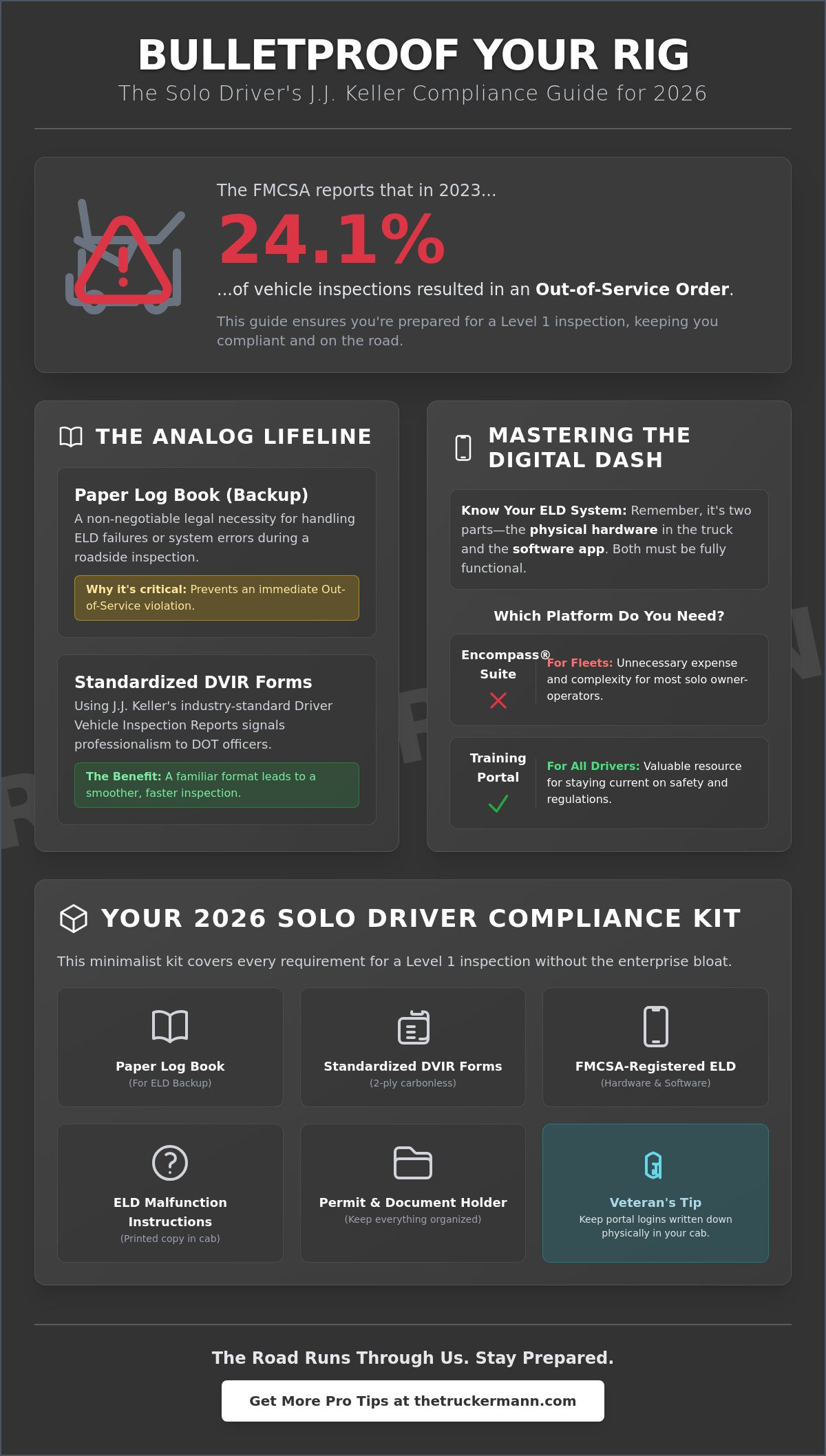
Hey Friend. Your log book is either a ticket to your next load or a neon sign inviting a DOT inspector to tear your cab apart. With the FMCSA reporting that 24.1 percent of vehicle inspections resulted in out-of-service orders in 2023, you already know that “close enough” doesn’t cut it when you’re pulled over. You’re likely tired of the confusion between which physical forms you still need and which digital gadgets are just overpriced overkill for a hardworking driver. It’s a heavy burden trying to stay legal without wasting money on enterprise software meant for a thousand-truck fleet. I’ve spent years watching miles roll, and I know that using jjkeller products the right way can be your best defense against a violation.
I’m going to show you exactly how to pick through the jjkeller catalog to find the tools that actually matter for a Level 1 inspection in 2026. You’ll learn the difference between their digital and physical solutions and get a clear list of the essential gear that keeps you road-ready. We are making sure your compliance is bulletproof so you can keep your focus on the pavement ahead. The road runs through us, and being prepared is how we keep it that way.
Key Takeaways
- Learn why keeping physical paper backup logs remains a legal necessity for handling ELD failures during a 2026 roadside inspection.
- Identify the specific jjkeller log books and standardized DVIR forms that DOT officers recognize as the industry gold standard for compliance.
- Determine if the Encompass platform is right for your operation or if it is an unnecessary expense for a solo owner-operator.
- Discover how to build a minimalist “Solo Driver” starter kit that covers every requirement for a Level 1 inspection without the enterprise bloat.
- Understand the critical differences between ELD hardware and software to ensure your digital records are always accessible to authorities.
The J. J. Keller Ecosystem: Why It Remains the Gold Standard in 2026
Hey Friend, let’s talk about why those yellow books still sit on the dash of nearly every rig from coast to coast. In 2026, the jjkeller ecosystem remains the gold standard because it bridges the gap between confusing government jargon and the reality of the highway. The relationship between this brand and the FMCSA goes back decades; they’ve been translating complex DOT regulations into actionable tools since 1953. When the rules change, they are usually the first to update their forms, making them a defensive shield for your CDL. Staying ahead of the game is vital because the current year has brought new scrutiny toward digital record-keeping and equipment maintenance standards that can trip up even the most careful driver.
To better understand how their training translates to real-world skills on the range, watch this helpful video:
The core strength of this ecosystem is how it filters the massive 49 CFR federal code into simple, check-the-box solutions. You don’t have time to be a lawyer when you’re trying to make a delivery window. By using standardized jjkeller products, you’re using a system that DOT officers have seen thousands of times before. This familiarity breeds a smoother inspection process. When an officer sees that familiar logo, they know they’re looking at a driver who invests in their own compliance rather than someone trying to skate by with generic, outdated printouts.
The Protective Mentor: Why Drivers Trust the Brand
The Seasoned Veteran knows that an inspection starts the moment the officer walks up to your window. If you hand over a crisp, recognized inspection report, you’ve already won half the battle. It signals that you aren’t cutting corners or using “fly-by-night” products to track your life on the road. During a high-stakes “Roadside Inspection Blitz,” which often sees more than 3,000 inspections per day across North America, this professional image can be the difference between a quick “good job” and a two-hour detention. This level of detail is a core part of being a professional, similar to the standards we set in the CDL master guide. By using tools the DOT already trusts, you’re essentially borrowing their credibility to protect your own livelihood and keep your wheels turning.
Navigating the Portals and Platforms
Their digital side can get a bit crowded, so you need to know where to look to save time. The Training Portal is your go-to for safety videos and refreshers that keep you compliant with the latest 2026 safety standards. Meanwhile, the Safety Management Suite is built for the heavy lifting of fleet-wide compliance tracking. For most owner-operators and small fleets, the “Quick Order” section of their website is the fastest way to grab physical supplies without getting lost in enterprise-level software you don’t need. The Truckermann’s tip: keep your login details for these portals written down in your cab office or a secure password manager. When you’re in a dead zone or your tablet dies, you don’t want to be locked out of your own compliance data. Staying organized and staying vigilant is how we ensure the road runs through us.
Essential Physical Compliance Tools: The Driver’s ‘Must-Haves’
Even with the digital push of 2026, the physical world still dictates your legal status at roadside. If your tablet glares at you with a “system error” while an officer waits at your door, you better have a jjkeller paper log book within reach. Per federal regulations for commercial drivers, you’re required to carry backup logs to account for technology failures. This isn’t just a suggestion; it’s a legal necessity to avoid being placed out of service immediately. Keeping a set of paper logs tucked into your visor ensures that a simple software glitch doesn’t turn into a costly tow bill and a black mark on your record.
Beyond logs, you need Driver Vehicle Inspection Reports (DVIR) that leave zero room for interpretation. Standardized forms from jjkeller are built to mirror the exact sequence an officer follows during a walk-around. This alignment makes it easier for you to prove you’ve done your job before the wheels even turned. For those hauling hazardous materials, having the right placards is non-negotiable. Using faded or generic labels is an invitation for a fine. High-quality materials stay legible through wind, rain, and road salt, ensuring you don’t get flagged for a visibility violation that could have been easily avoided during a pre-trip check.
Log Books and Inspection Reports
Carrying the right paperwork is about more than just avoiding a ticket. For flatbedders and heavy haulers, Form 504 remains a common staple in the cab because of its clear, compliant layout. You can use the driver vehicle examination report to stay ahead of what the DOT is looking for during a Level 1 check. A clean log book is the foundation of a spotless MVR. Your driving record is your most valuable asset when you’re negotiating for the best-paying lanes in a tight market.
Securement and Safety Materials
Compliance doesn’t stop at the paperwork; it extends to how your load is tied down. You should always pair your documentation with high-quality cargo securement tools to ensure the physical reality matches your written reports. Investing about $15 in a J. J. Keller cargo securement handbook is one of the smartest moves you can make. It provides quick answers for chain grades and strap ratings that can save you from a violation during a surprise inspection. Whether you’re running interstate or staying within state lines, having the correct placards and reference guides keeps you in the driver’s seat. Part of staying legal on the road also means knowing exactly what the truck sign means at every state line and interchange, since missing a posted restriction can be just as costly as a paperwork violation. If you’re looking to tighten up your operation, check out more pro-level trucking tips to stay profitable and protected.
Digital Solutions: Choosing Between ELDs and Training Portals
Digital tools can feel like a heavy leash if you pick the wrong ones for your rig. The J. J. Keller Encompass® Platform is a powerhouse of data, but for a solo owner-operator, it might feel like bringing a sledgehammer to hang a picture. It’s designed to manage everything from fuel tax automation to complex maintenance alerts across a fleet. If you’re running a single truck, you want the compliance without the digital clutter. Choosing the right jjkeller digital tool depends on whether you’re just looking to satisfy the FMCSA or if you’re trying to build a data-backed reputation that leads to better freight opportunities. In 2026, your digital footprint is your resume.
The shift toward “smart” compliance means that your ELD hardware needs to do more than just record a line on a graph. It needs to be a reliable partner that doesn’t quit when you’re 50 miles from the nearest cell tower. We’ve all seen the cheap “app-only” solutions that crash the moment a DOT officer steps onto the running board. That’s a headache you don’t need. A dedicated hardware solution ensures that your records stay intact and accessible, which is the only way to keep your inspections moving quickly. Before investing in any device, make sure you understand the full scope of ELD compliance requirements in 2026, including which devices have been removed from the FMCSA’s approved list.
The J. J. Keller Training Learning Center
The Training Learning Center is where you sharpen the axe before you head into the woods. If you’re acting as a “Training Coordinator,” you’re likely managing a handful of drivers and tracking their progress. As an individual learner, you’re focused on the specific modules that keep your CDL clean. Focus on the Hours-of-Service and Hazmat refresher courses. These aren’t just “busy work” videos; they provide the verified certificates required for your driver qualification file. When an auditor looks at your records, seeing these formal jjkeller certifications signals that you take your professional standing seriously.
ELD Compliance and ELD Hardware
Let’s talk hardware. The jjkeller ELD stands out because it’s built for the grit of the cab, not the comfort of an office. Unlike cheaper market alternatives that rely entirely on your phone’s processor, dedicated hardware handles the heavy lifting of data collection. This reliability is vital when your device glitches at a scale house. You need a support line that actually picks up the phone to walk you through a reset. Additionally, integrating this data with IFTA reporting tools can save you approximately 4 hours of manual paperwork every quarter. Clean digital records do more than keep the DOT away; they directly impact your CDL rankings and pay because brokers now look at your safety data before offering the premium loads. The road runs through us, and your data is the map that keeps you on the right path.
Buying Guide: Building Your 2026 Compliance Kit
Finding your way through the massive jjkeller catalog can feel like trying to find a specific truck stop in a blizzard. You don’t need every sticker and binder they print to keep your CDL safe. You need a targeted kit that fits your specific operation. Whether you’re a solo owner-operator or managing a small fleet of five trucks, your compliance needs are distinct. In 2026, the cost of being unprepared has never been higher, especially with the FMCSA increasing fines for record-keeping violations. Building a kit is about more than just buying stuff; it’s about building a defensive wall around your livelihood.
| Essential Tool | Solo Driver Kit | Small Fleet (5-10 Trucks) |
|---|---|---|
| Log Books | 1-2 Backup Paper Pads | Bulk Case (10+ Pads) |
| Digital Access | Individual Learner Login | Training Coordinator Portal |
| Reference Guides | FMCSR Pocketbook | Management Safety Suite |
If you’re handling high-risk loads, your kit needs specialized depth. Hazmat haulers must prioritize the 2026 Emergency Response Guidebook and a full set of metal-backed placards. For oversized loads, you need standardized flags and “Oversize Load” banners that meet specific state-by-state dimensions. Buying high-quality placards prevents $1,000 fines that can wipe out your profit for an entire week. When you look professional, you get treated like a professional.
Tiered Recommendations for Every Operation
The Solo Driver Kit is built for minimalism. You don’t need a high-end management suite; you need a box of carbonless jjkeller logs, a sturdy DVIR pad, and a current year FMCSR reference. Budgeting for these items is straightforward. You spend on the items that an inspector will touch, like your log book and your placards. You can save money by avoiding the “bells and whistles” of enterprise software until your fleet grows. For the small fleet owner, the focus shifts to the Training Coordinator portal to ensure all five or ten drivers are hitting their safety marks on time.
Sourcing Your Gear Efficiently
You have choices when it comes to where you buy your gear. Buying direct from the manufacturer is great for the J. J. Keller ‘Quick Order’ system, especially for recurring needs like log books. However, for physical securement supplies and heavy-duty hardware, many veterans prefer using Truck n Tow because they often offer better shipping rates on bulky items. Always check for the latest 2026 updates in your FMCSR pocketbooks before you hit the road for a long haul. If you want to keep your operation lean and legal, you can check out our full guide to mastering road compliance.
Staying Road-Ready: The Veteran’s Verdict on J. J. Keller
Hey Friend. When I say “The Road Runs Through Us,” I’m talking about a standard of excellence that keeps this industry moving. Staying ahead of the DOT isn’t just about avoiding a fine; it’s about protecting the brotherhood of drivers who keep the supply chain alive. My final verdict on jjkeller is simple: brand-name compliance pays for itself. While you can find generic forms at some truck stops, they don’t carry the same weight during a roadside inspection. Officers recognize the yellow books and the clean layout of a professional log. It sets a tone of competence before you even say a word.
You need to keep a sharp eye on the calendar to stay profitable. The 2024 CVSA International Roadcheck resulted in more than 13,500 vehicle out-of-service violations across North America. Many of those were simple paperwork or securement errors that could have been avoided. To make sure you aren’t part of the statistics, stay updated on CVSA Roadcheck dates and prep your cab accordingly. A driver who is surprised by an inspection is a driver who isn’t prepared to win.
Before you pull out of the yard, run this 5-minute pre-trip compliance scan to ensure you’re bulletproof:
- ELD Status: Verify your device is logged in and showing “Ready” with no red error lights.
- Paper Backups: Ensure you have at least 8 days of blank jjkeller paper logs in your side pocket.
- DVIR Signature: Confirm your previous day’s inspection is signed and any defects are cleared.
- Permit Binder: Check that your IFTA, registration, and insurance are current for 2026.
- Placard Check: Walk around to ensure all hazmat labels are clean and securely attached.
Mastering the Logistics of Compliance
Staying organized leads to real-life opportunities that “fly-by-night” drivers never see. When a high-paying broker looks at your safety score, they’re looking for a pattern of professionalism. A clean in-cab presentation during an inspection provides a psychological advantage. It tells the officer that you’re a seasoned veteran who values transparency. This level of preparation keeps you moving while others are stuck on the shoulder. Don’t get caught off guard; get your gear ready today and keep your focus on the miles ahead.
Next Steps for the Professional Driver
The industry moves fast, and regulations shift even faster. Sign up for regulatory alerts through the FMCSA or your preferred safety portal to avoid surprise violations that can tank your rankings. As you tighten up your paperwork, don’t forget the physical side of the job. Part of that physical awareness means being able to instantly decode every commercial vehicle highway sign you encounter, from weight restrictions to truck route designations that vary by state. Check out the latest flatbed securement gear to pair with your J. J. Keller handbooks. The Truckermann knows that the right tools make the difference between a long day and a successful run. Stay safe, stay legal, and keep those wheels turning.
Take Command of Your Compliance Strategy
Hey Friend. Mastering the logistics of your own cab is how you ensure that your rig stays profitable and your CDL stays clean. We have walked through the necessity of keeping physical backups and how to choose the right digital tools without overspending on enterprise bloat. Relying on jjkeller means you’re using a system trusted by over 90 percent of Fortune 500 fleets. These tools are built on regulatory updates delivered in real-time and have earned the endorsement of veteran drivers across the US for decades. This isn’t just about paperwork; it’s about the professional reputation you build every time you roll through a scale.
When you look professional at a roadside stop, you’re signaling to every DOT officer that you respect the rules of the road. This preparation turns potential high-stakes violations into simple “thank you” handshakes. It’s time to stop guessing about your legal standing and start building a kit that acts as your defensive shield. You can Shop Essential Compliance Gear & Securement Tools to ensure you’re ready for whatever the 2026 inspection season throws your way. The road runs through us, and being prepared is the only way to keep the miles rolling. Stay safe out there.
Frequently Asked Questions
What is the difference between J. J. Keller and the FMCSA?
The FMCSA is the federal agency that writes the laws, while jjkeller is a private company that creates the tools to help you follow those laws. Think of the FMCSA as the referee and the tools as your playbook. Using these professional resources ensures you’re translating the 1,000 plus pages of Title 49 federal code into simple, daily actions that keep you legal and protected.
Do I really need a paper log book if I have an ELD in 2026?
Yes, you are legally required to carry a paper log book as a backup even if you use a digital ELD. If your hardware fails or the screen goes dark, you must be able to produce your current day’s logs and the previous 7 days on paper. Without this backup, an inspector can place you out of service immediately until your records are current.
How do I access the J. J. Keller Training Learning Center?
You can access the Training Learning Center through their dedicated online portal using the login credentials provided by your fleet manager or your individual account. It’s a web-based platform that works on tablets and laptops, allowing you to complete modules while you’re parked. Once finished, you can download certificates directly to your device for your driver qualification file to prove your training.
Are J. J. Keller forms required by law, or can I use generic ones?
Generic forms are technically legal if they meet FMCSA requirements, but using jjkeller products is a strategic choice. Officers are trained to recognize these layouts, which often leads to a faster, less stressful inspection. When you use industry-standard forms, you eliminate the risk that a generic version is missing a required data field that could lead to a fine.
What should I do if my J. J. Keller ELD stops working on the road?
You must immediately switch to paper logs and notify your motor carrier within 24 hours if your ELD malfunctions. Federal law gives you 8 days to have the device repaired or replaced. During this window, keep your paper logs organized and ready for inspection to prove you are still tracking your hours-of-service accurately while the technology is down.
Can I buy J. J. Keller products for intrastate trucking only?
Intrastate drivers can certainly purchase products tailored for their specific state regulations. Many states have unique rules for short-haul exemptions or specific weight limits that differ from federal interstate standards. Choosing these materials ensures you aren’t following more restrictive federal rules when your local haul doesn’t require it, keeping your operation efficient and compliant within state lines.
How often should I update my J. J. Keller FMCSR handbook?
You should update your FMCSR handbook every year to ensure you’re working with the most current regulations. Rules regarding hours-of-service or equipment standards can shift without much fanfare during the annual updates. Having a 2026 edition in your cab shows an inspector that you’re proactive about compliance and not relying on outdated information from three years ago that might be void.
What is the most common J. J. Keller form used for Level 1 inspections?
The Driver Vehicle Inspection Report (DVIR) is the most common form used during a Level 1 inspection. This report proves that you’ve checked your tires, brakes, and lights before hitting the road. Pairing a clean DVIR with your log book provides the documentation an officer needs to see that both the driver and the equipment are road-ready for the long haul.
Disclaimer
The information provided on The TruckerMann is for general informational and educational purposes only. While every effort is made to ensure the accuracy and reliability of the content, trucking laws, FMCSA regulations, DOT requirements, safety standards, and industry policies can change at any time. Readers are encouraged to verify all information with official government agencies, professional advisors, or qualified industry professionals before making business, legal, financial, safety, or compliance-related decisions.
The content shared on this website reflects personal opinions, experiences, research, and commentary and should not be considered legal, financial, medical, tax, or professional advice. The TruckerMann and its owners, contributors, affiliates, or representatives are not responsible for any losses, damages, violations, penalties, or liabilities resulting from the use or misuse of information found on this website.
Some content on this website may contain affiliate links, sponsored content, or promotional material. This means we may earn a commission at no additional cost to you if you choose to purchase through certain links.
By using this website, you agree that you do so at your own discretion and risk.