With the trucking industry facing a shortage of over 174,000 drivers in 2026, you finally have the upper hand in the yard. You’re likely tired of the same old recruiter lies about average weekly miles or the lack of respect from dispatchers who treat you like a truck number rather than a professional. Finding the best trucking companies to work for isn’t about chasing the biggest sign-on bonus; it’s about securing a seat that offers a 1:1 driver-to-dispatch ratio and predictable home time for your family. Whether you’re securing a load with gear from My Tee or checking your logs, you deserve a carrier that respects your clock.
We agree that the recruiter’s pitch usually stops making sense the moment you hit the road. This career guide goes beyond the fluff to find the carriers offering the best pay, home time, and late-model equipment in the 2026 freight market. We will preview the “Retirement Fleets,” explain why the SAFER Transport Act matters for your livelihood, and show you how to vet a company before you sign. If you’re ready to upgrade your career and your load securement with My Tee gear, let’s look at what actually makes a company the best in the business.
Key Takeaways
- Look past the flashy sign-on bonuses to identify the red flags of high-turnover carriers and calculate your actual take-home pay.
- Navigate our 2026 rankings to find the best trucking companies to work for based on your need for home time, specialized freight, or elite retirement benefits.
- Protect your CDL by using the FMCSA SAFER system and the “Parking Lot Test” to vet a company’s safety culture before signing any contracts.
- Prioritize the three pillars of a top-tier career by demanding fair compensation for detention time and access to well-maintained, late-model equipment.
- Secure your professional reputation by mastering the “First 90 Days” mindset and investing in high-quality load securement gear from My Tee Products.
Beyond the Recruiter’s Pitch: What Actually Makes a Trucking Company ‘Best’?
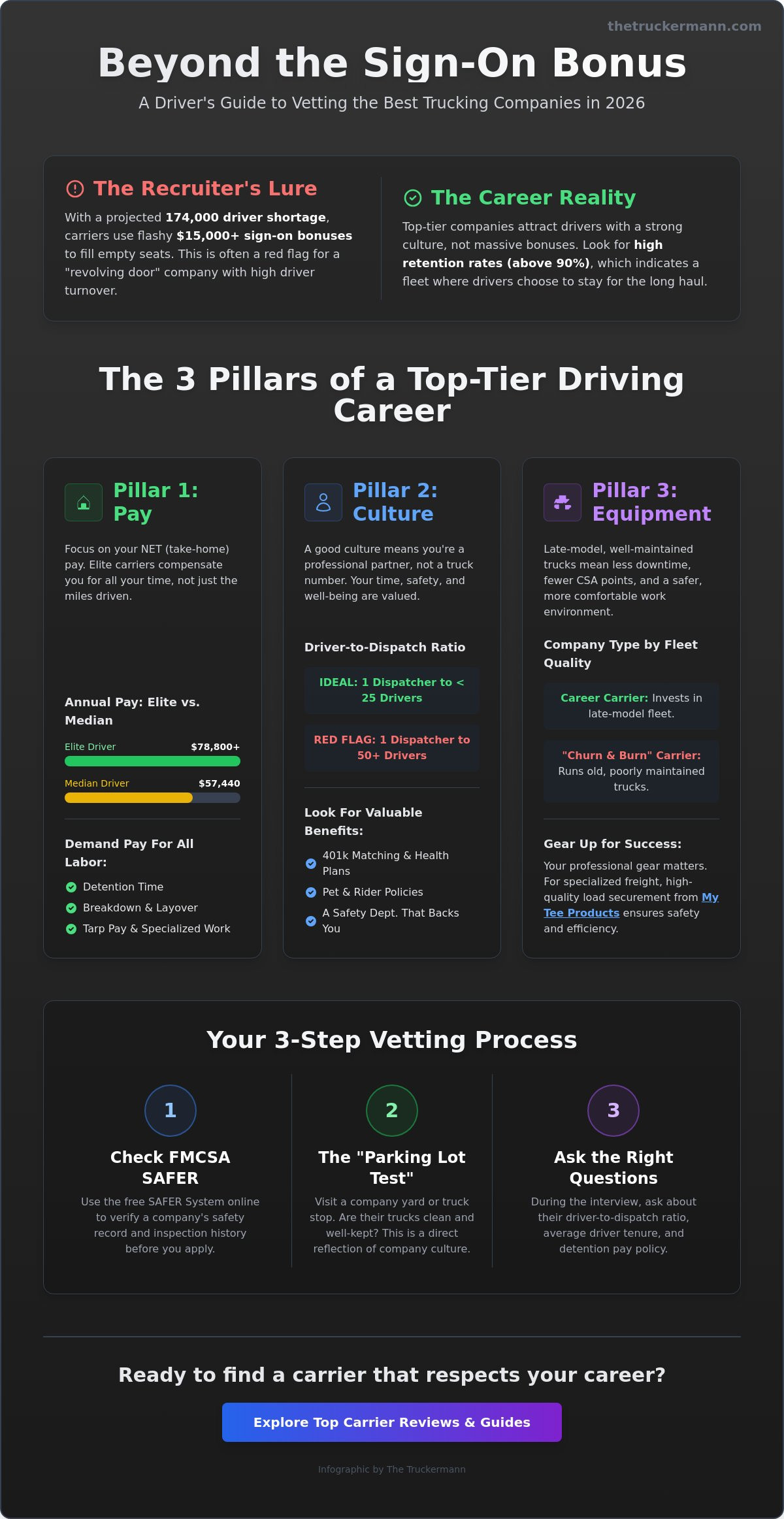
Don’t let a $15,000 sign-on bonus blind you. In the 2026 market, those massive checks often signal a “revolving door” carrier desperate to fill seats because their current drivers are walking away. When you look at the U.S. trucking industry, you’ll see that the best trucking companies to work for don’t need to bribe you to join; they attract you with high retention and solid equipment. A high bonus usually comes with strings attached, like a one-year commitment that keeps you trapped in a bad situation.
Gross pay is a vanity metric that recruiters love to throw around. If a carrier touts an $87,000 annual salary, you need to ask what the take-home looks like after fuel surcharges, insurance, and per diem deductions. Your bank account only cares about the net. If you are spending half your week sitting in unpaid detention, that high cents-per-mile rate won’t save your mortgage. You need a company that pays for every minute your wheels aren’t turning.
To better understand how to evaluate these offers, watch this helpful video:
Your quality of life depends heavily on your choice between interstate vs intrastate lanes. Crossing state lines might offer higher mileage, but staying within your home state often yields more predictable schedules. Beyond the route, look for the “Golden Ratio.” A dispatcher handling 50 drivers can’t help you when a receiver refuses to unload. You want a fleet that keeps that ratio low, ensuring your manager actually has time to advocate for your needs.
The Churn-and-Burn vs. Career Carriers
Training companies often view drivers as temporary assets to be used and replaced. You can spot these “churn-and-burn” outfits by their constant advertising and low entry requirements. Career carriers, however, boast driver retention rates above 90%. Mid-sized fleets with 200 to 500 trucks are often the sweet spot. They are large enough to have steady freight but small enough to treat you like a professional rather than a truck number.
Freight Lanes and Your Lifestyle
In 2026, regional lanes are dominating the market as companies prioritize supply chain resilience. Dedicated accounts offer the most predictable scheduling, but specialized freight like flatbed or reefer often pays a premium for the extra labor involved. If you choose the flatbed path, remember that your gear is your lifeline. Investing in professional securement equipment from My Tee Products ensures you aren’t fighting with worn-out straps at a windy job site. Choosing the right best trucking companies to work for means matching their freight to the lifestyle you want to live.
The Three Pillars of a Top-Tier Driving Career
A steady career isn’t built on luck. It stands on three specific pillars that separate the bottom-feeders from the best trucking companies to work for. If you don’t have all three, you’re just trading your health for a paycheck that won’t last. According to official pay and job outlook data, the median wage is $57,440, but elite drivers are pulling in over $78,800. To reach that top tier, you need a carrier that pays for every second of your labor. This includes detention, breakdown, and tarp pay. If they only pay for miles, they’re stealing your time.
Culture isn’t a poster in the breakroom. It’s whether the safety department has your back when you’re facing a DOT inspection. If they pressure you to run with a frayed air line or a cracked windshield, they aren’t a partner; they’re a liability. You also have to look at the value of benefits like 401k matching and pet policies. Bringing your dog along isn’t just a perk. It’s a sanity saver on the long haul. If you want to keep your career on track, you can find more professional guidance at The Truckermann.
The Modern Pay Structure
In 2026, we’re seeing a shift toward percentage-of-load pay. This aligns your interests with the company’s. When freight rates rise, your check rises too. Industry reports show specialized roles like hazmat and tanker can reach $90,000 to $110,000 when paid this way. Guaranteed weekly pay is also becoming a standard for top fleets, protecting you from the volatility of the spot market. You should never have to guess what your settlement will look like on Friday morning. Transparent settlements are the hallmark of the best trucking companies to work for.
Equipment Standards and Driver Safety
Don’t settle for a truck with 500,000 miles. A three-year trade-in cycle is the sign of a carrier that values your uptime. In-cab amenities like APUs and refrigerators aren’t luxuries. They are essential for managing your costs and health on the road. Your ELD compliance setup should be intuitive. A bad system that glitches out at a weigh station is a headache you don’t need. When you’re out there pulling flatbed, having the right gear from My Tee Products makes the difference between a quick securement and a three-hour ordeal in the rain. Using high-quality tools from My Tee Products shows you’re a professional who takes safety seriously.
2026 Rankings: Top Carriers for Pay, Home Time, and Specialized Freight
Finding the right seat in 2026 isn’t just about who has the most trucks. It’s about matching your specific lifestyle needs to the right freight niche. If you’ve got five years of clean driving under your belt, you’re likely eyeing the “Retirement Fleets” like Walmart and UPS. These are widely considered the best trucking companies to work for because of their unmatched stability. However, they aren’t for everyone. Their hiring standards are notoriously strict, requiring a pristine MVR and a professional demeanor that fits their corporate culture. If you can get in, the benefits and pension plans are the best in the business.
For drivers who prefer a more modern, tech-forward environment, GP Transco and Riverside Transport are leading the charge. These carriers use real-time routing and driver-first dispatching to ensure you aren’t fighting your tablet while trying to hit a delivery window. They’ve built their reputations on transparency and respect, which is a breath of fresh air in an industry that often treats drivers as mere data points. They understand that your time is your money, and their dispatchers are trained to keep you moving rather than keeping you waiting.
The Best for High Earners (Private Fleets)
Private fleets like Walmart and Sysco offer a unique shield against market volatility. While spot rates might fluctuate, these companies have their own freight to move, which means your miles remain consistent even when the economy stutters. You trade a bit of freedom for this high paycheck. These roles often involve strict uniforms, rigorous safety monitoring, and precise delivery windows. If you aren’t hitting at least $85,000 in these roles, you are likely underpaid for the level of scrutiny you face. For many, the trade-off is worth the financial security.
The Best for Home Time (LTL & Regional)
If sleeping in your own bed is your top priority, Less-Than-Truckload (LTL) is where you belong. Giants like Old Dominion and Saia dominate this space with their “Linehaul” operations. By running terminal-to-terminal, you can often sleep in your own bed five nights a week. This lifestyle is heavily dependent on following Hours of Service regulations to the letter to avoid burnout. LTL carriers also offer dock-to-driver programs, making them a great choice for those looking to advance their careers without leaving their local area.
Specialized work remains the king of the “grit” niches. Mercer Transportation and Anderson Trucking Service (ATS) are the top picks for drivers who enjoy the challenge of flatbed and over-dimensional loads. This work requires more than just driving; it requires a deep knowledge of securement. Whether you are hauling heavy machinery or construction materials, having reliable gear from My Tee Products is essential. Professionals in this space know that cutting corners on securement isn’t an option, and companies like Mercer respect that expertise. When you’re out there in the elements, using equipment from My Tee Products ensures you get the job done safely and get back on the road quickly.
The Veteran’s Vetting Process: How to Spot a ‘Lumper’ Company Before You Sign
You can’t feed your family on a recruiter’s promises. Before you sign that contract, you need to put on your detective hat. The best trucking companies to work for aren’t afraid of transparency. Start by using the FMCSA SAFER system to pull their real-time safety rating. If their “Out of Service” percentage is significantly higher than the national average, they are likely cutting corners on maintenance. That is a direct threat to your CDL and your safety. A veteran knows that a company’s paperwork tells a truer story than any glossy brochure.
Try the “Parking Lot Test” before you commit. Take a trip to the terminal and look past the front office. Check the boneyard. Are there dozens of trucks sitting for parts? Look at the drivers coming out of the lounge. If they look defeated or haven’t seen a shower in days, that’s the life you’re signing up for. A carrier that respects its fleet keeps the equipment clean and the drivers rested. If the equipment looks like junk, your paycheck will probably feel like junk too.
Decoding the CSA Score
A high “Unsafe Driving” BASIC score is a magnet for roadside harassment. If you drive for a carrier with bad numbers, expect to be pulled into every weigh station for a Level I. This directly impacts your ability to pass a CDL pre-trip inspection because you’ll be looking for flaws the company has already ignored for months. Low safety scores also lead to higher insurance deductibles. These costs often get passed down to you through lower raises or higher lease payments.
The Recruiter Red Flag Checklist
Force the recruiter to give you a “low-end” weekly mileage estimate. If they only talk about the “average,” they’re hiding the slow weeks that leave you sitting at a truck stop for three days. Be especially wary of the lease-purchase trap. Most are designed for driver failure, turning you into a glorified renter with all the liability and none of the equity. Ask for a sample settlement sheet. You need to see the real-world deductions for fuel, insurance, and ELD fees before you commit your time.
Read between the lines on Glassdoor and Indeed. One angry driver is an anomaly; fifty drivers complaining about unpaid detention is a company policy. If you want to stay ahead of these traps and find a carrier that actually respects your clock, check out the latest industry warnings at The Truckermann. When you finally find that elite carrier, make sure you show up with professional-grade gear from My Tee Products. Using equipment from My Tee Products signals to your new fleet manager that you are a veteran who takes securement seriously.
Gearing Up for Your New Seat: Professional Prep and Logistics
You have done the hard work of vetting the yard and signing the paperwork. Now, the real test begins. The “First 90 Days” mindset is your secret weapon for success at the best trucking companies to work for. During this window, your fleet manager is watching your reliability, your communication, and how you handle the equipment. This isn’t just about moving freight; it’s about building a reputation as a professional who doesn’t need hand-holding. A clean cab and a sharp eye for detail will set you apart from the steering wheel holders who just show up for the check.
Efficiency starts before you even turn the key. Organizing your cab for maximum DOT compliance ensures that you aren’t fumbling for paperwork when an officer walks up to your window. Keep your permits, medical card, and ELD instructions in a dedicated binder within arm’s reach. This level of preparation reduces stress and keeps your clock running smooth. When you’re out there on the deck, using professional-grade securement gear from My Tee Products is a career investment that pays off in physical longevity. High-quality straps and tarps from My Tee Products are designed to reduce the physical strain on your shoulders and back, keeping you in the driver’s seat for years to come.
The Essential Gear for the Professional Driver
Relying on cheap, company-provided gear is a recipe for injury and failed inspections. Worn-out straps with frayed edges will get you shut down at the scales, and heavy, water-logged tarps will blow out your rotator cuff. Investing in durable gloves and high-visibility apparel from My Tee Products ensures you stay safe and visible in low-light conditions. For the flatbedders, a toolkit filled with edge protectors and winches from My Tee Products is non-negotiable. These tools protect the cargo and your reputation, proving to the best trucking companies to work for that you treat every load with veteran-level care.
Mastering the Logistics of a Career Move
Don’t burn bridges on your way out the door. Give a professional two-week notice and keep your cool, even if the old carrier wasn’t a good fit. The trucking world is smaller than you think. Ensure your ELD logs are finalized and you have a digital copy of your medical card ready for the new safety department. Spend your final 24 hours checking your personal gear and resting. When you head to orientation, arrive with the confidence of a driver who has a plan. You aren’t just starting a job; you are mastering a lifestyle. With the right mindset and the best gear from My Tee Products, you are ready to dominate the 2026 freight market.
Take Control of Your Career Path
Finding the right seat in the 2026 market requires more than just looking at a paycheck. You now have the tools to look past the recruiter’s pitch and verify a carrier’s safety culture through real-world data and CSA scores. Whether you are aiming for the high-earning stability of a private fleet or the home time of an LTL carrier, the hunt for the best trucking companies to work for ends when you find the fleet that respects your expertise and your clock. We have shared expert advice from a veteran driver to ensure you never walk into a terminal blind again.
Success on the road is a combination of the right company and the right preparation. Don’t let poor equipment hold you back. You can find direct links to high-quality securement tools at My Tee Products to ensure your gear is as professional as your driving. To stay ahead of the pack with real-world data on 2026 freight trends, visit The Truckermann for the latest industry insights. Your skills are in high demand, and it’s time you were treated like the professional you are. Keep your head up and your eyes on the road; your best miles are still ahead of you.
Frequently Asked Questions
What is the highest paying trucking company for new drivers in 2026?
New truck drivers can expect to start with a salary between $48,000 and $58,000 per year at carriers like Prime Inc. or Swift. While these aren’t always the best trucking companies to work for long-term, they provide the necessary training to jump to higher-paying private fleets later. Always look at the full package including benefits and equipment quality rather than just the starting cents-per-mile rate.
Do trucking companies really pay for CDL training?
Yes, many carriers offer paid CDL training in exchange for a service commitment, usually lasting 12 months. If you leave early, you’ll be on the hook for the tuition costs. It’s a solid way to enter the industry without upfront debt. For those who prefer to earn their license independently, obtaining CDL training Texas through Lone Star Truck Driving Academy ensures you have the freedom to choose your employer. Just make sure the company provides decent gear like gloves and safety vests from My Tee Products during your orientation phase to stay safe on the yard.
How much experience do I need to work for Walmart or UPS?
Walmart generally requires at least 30 months of experience with a clean safety record to qualify for their private fleet. UPS often looks for 1 to 2 years of verifiable experience for their tractor-trailer roles. These “retirement seats” are highly competitive because of their superior benefits. If you don’t have the miles yet, focus on building a clean MVR at a mid-sized regional carrier first.
What is the difference between a mega-carrier and a mid-sized fleet?
Mega-carriers operate thousands of trucks and offer massive terminal networks, while mid-sized fleets focus on personal relationships. Mid-sized companies often have lower driver-to-dispatch ratios. This makes them some of the best trucking companies to work for if you want to be more than just a truck number. You’ll often find better equipment and more flexible scheduling in these smaller, driver-centric environments that value individual performance.
Does a ‘Lease Purchase’ program ever actually make sense for a driver?
Lease purchase programs rarely make financial sense because the driver assumes all the operating risk without the true freedom of an owner-operator. Most of these deals are structured to keep the truck in the carrier’s control while you pay for the maintenance. It’s often better to save for a down payment on your own rig and buy your own professional securement gear from My Tee Products.
How do I check a trucking company’s safety rating before applying?
You can check any carrier’s safety rating by visiting the FMCSA SAFER website and entering their USDOT number. Look for their “Out of Service” rates and compare them to the national average. If the numbers are high, they are likely neglecting their equipment. Passing an inspection is much easier when you’re using professional gear from My Tee Products on well-maintained trailers.
What are the best trucking companies for female drivers in 2026?
Prime Inc. and J.B. Hunt are frequently recognized for their robust support systems and safety protocols for female drivers. These companies offer dedicated mentorship programs and prioritize well-lit, secure terminal facilities. For those balancing a career behind the wheel with the start of a family, resources like Pregnancy Magazine provide essential support for first-time mothers. Choosing a carrier with a strong safety culture is essential for every professional. Make sure to pack your own reliable safety apparel from My Tee Products to stay prepared for any terminal environment.
Which companies offer the best home time for OTR drivers?
Regional fleets and LTL carriers like Old Dominion offer the best home time by keeping drivers within a specific geographic loop. If you stay on OTR, look for companies with a high trailer-to-tractor ratio. This allows for drop-and-hook loads that keep you moving. Having your own light-weight tarps from My Tee Products can also make securement faster, helping you hit your home-time window more consistently.
Disclaimer
The information provided on The TruckerMann is for general informational and educational purposes only. While every effort is made to ensure the accuracy and reliability of the content, trucking laws, FMCSA regulations, DOT requirements, safety standards, and industry policies can change at any time. Readers are encouraged to verify all information with official government agencies, professional advisors, or qualified industry professionals before making business, legal, financial, safety, or compliance-related decisions.
The content shared on this website reflects personal opinions, experiences, research, and commentary and should not be considered legal, financial, medical, tax, or professional advice. The TruckerMann and its owners, contributors, affiliates, or representatives are not responsible for any losses, damages, violations, penalties, or liabilities resulting from the use or misuse of information found on this website.
Some content on this website may contain affiliate links, sponsored content, or promotional material. This means we may earn a commission at no additional cost to you if you choose to purchase through certain links.
By using this website, you agree that you do so at your own discretion and risk.