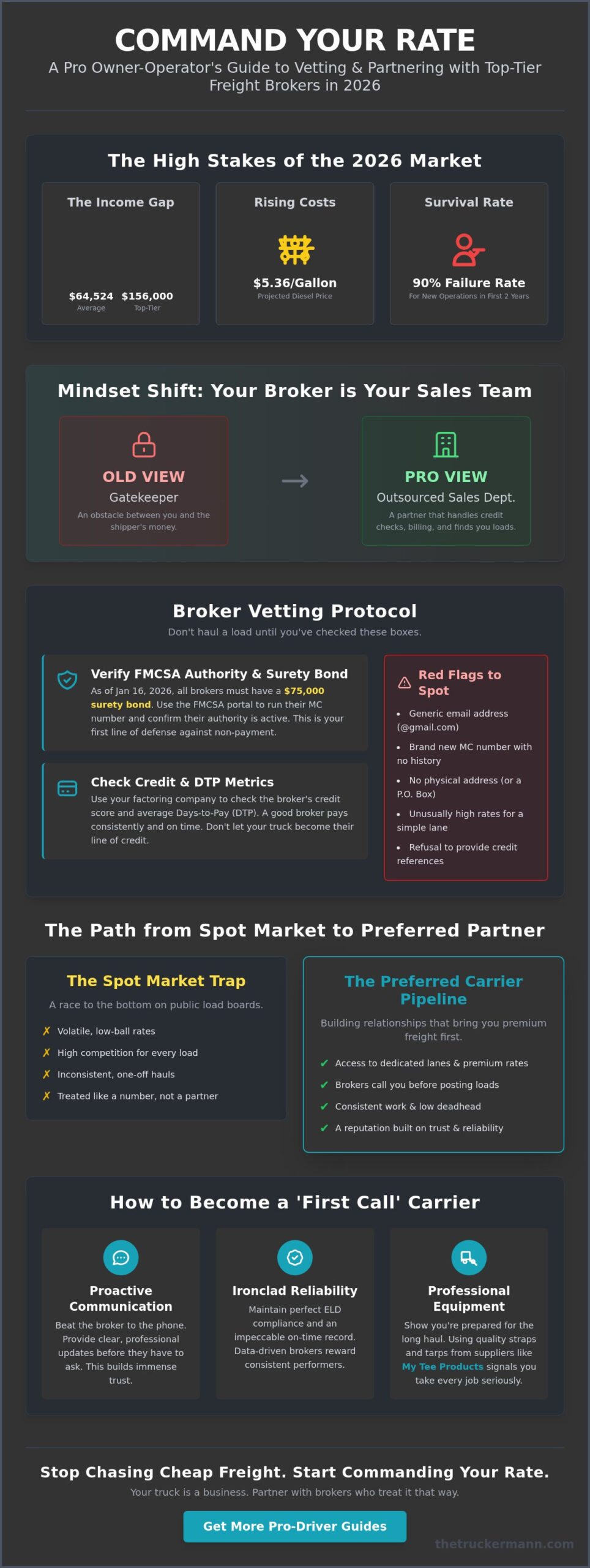
Glad to have you back in the cab. The difference between a $64,524 average income and the $156,000 top-tier bracket isn’t just about how many miles you log; it’s about who you trust to put loads on your trailer. You’ve felt the sting of low-ball offers on crowded load boards, and you know the frustration of brokers who go ghost the moment you mention detention pay. It’s a heavy burden, especially with diesel sitting at $4.50 a gallon, and the industry shifting, constantly, under your tires. Finding the best freight brokers for owner operators is no longer just a choice; it’s a critical survival skill to stay profitable in 2026.
We understand the grit it takes to keep a rig running when 90% of new operations fail within their first two years. This guide is your professional briefing on how to take control of your business and your reputation. You’ll learn how to use the new FMCSA $75,000 surety bond requirements to vet your partners, negotiate rates that actually cover your overhead, and build a “preferred carrier” status that keeps you moving. We’ll break down the Motus registration system and the upcoming transparency rules, giving you the tools to stop chasing cheap freight and start commanding the respect you deserve.
Key Takeaways
- Verify MC numbers and DTP metrics through the FMCSA portal to ensure your hard-earned cash actually hits your bank account on time.
- Negotiate based on total trip value and market flow rather than just rate-per-mile to maximize your truck’s earning potential on every haul.
- Identify the best freight brokers for owner operators to bridge the gap between the volatile spot market and high-paying dedicated lanes.
- Establish a preferred carrier reputation by using proactive check-calls and clear communication to become the first call for premium freight.
- Shift your business mindset to treat reliable brokers as your outsourced sales department, allowing you to scale without the overhead of a back-office staff.
The Broker-Carrier Dynamic: Navigating the 2026 Freight Market
A lot of drivers look at a freight broker as a gatekeeper standing between them and the shipper’s money. It’s an old-school perspective that can keep your business small. In 2026, the best freight brokers for owner operators act as your outsourced sales and billing department. They handle the cold calls and the credit checks so you can keep your hands on the wheel and your mind on the road. With the FMCSA now enforcing the $75,000 financial responsibility rule as of January 16, 2026, the fly-by-night brokers are being weeded out. This leaves behind a more professional class of partners who understand that if you don’t make money, they don’t have a truck.
Scaling a trucking business beyond your local circle requires a network you don’t have to build from scratch. Brokers provide that bridge. However, the market has shifted. Chasing the spot market in 2026 is a losing game. With diesel prices projected to hit an average of $5.36 per gallon this quarter by the EIA, you can’t afford to take a chance on “load pushers” who don’t care if you’re profitable. You need strategic partners who value your uptime and respect your bottom line. They aren’t just middle-men; they’re the engine that keeps your sales pipeline full while you’re focused on the physical reality of the field.
To better understand how to identify these high-value partnerships, watch this helpful breakdown:
The Value of a Good Broker in Your Business
A solid broker does more than find a load; they manage the headache of insurance certificates, complex shipper requirements, and the nightmare of billing. They mitigate your financial risk by vetting the shipper’s credit before you ever back into a dock. While some complain about the “broker cut,” a veteran knows that a fair margin is a small price to pay for a consistent lane that keeps your deadhead low. If you need to secure your load with professional-grade gear, checking out the equipment at My Tee Products is a smart move for any owner-operator looking to prove they take the job seriously. My Tee Products offers the kind of straps and tarps that show a broker you’re prepared for the long haul, which helps build that critical layer of trust.
Load Boards vs. Direct Relationships
Load boards are a starting point, not a destination. The goal is to move from the digital scrap heap of one-off loads to a “first call” list. In 2026, brokers use data to decide who gets the premium freight. They look at your track record and your ELD compliance to verify you’re running legal and reliable. When you prove you can beat the broker to the phone with a status update, you stop being just another truck number. You become a preferred partner. Finding the best freight brokers for owner operators is about moving toward these relationships, especially as the FMCSA pushes for new broker transparency rules this May. Don’t just hunt for loads; hunt for partners who respect the grit you put into every mile.
Vetting Your Partners: How to Spot a Reliable Broker
Trust in this industry is earned through a credit check and a verified MC number. As of January 16, 2026, the FMCSA’s financial responsibility rule is in full effect. Every broker must maintain a $75,000 surety bond or face immediate suspension. This is your first line of defense. Finding the best freight brokers for owner operators is about more than just looking for a high rate on a screen; it’s about finding a partner with the liquidity to pay you when the wheels stop turning. A generic @gmail.com address or a brand-new authority with no history should set off alarms. Scam brokers often use virtual offices to hide their tracks. A quick map search of their physical address can save you thousands in lost revenue.
The 5-Step Broker Vetting Checklist
- Run the MC number: Don’t take their word for it. Push that number through your factoring company immediately to see their real-world creditworthiness.
- Analyze the DTP: “Days to Pay” is the pulse of a brokerage. If their average is creeping past 40 days, they are likely using your cash flow to float their own business.
- Scan the forums: Check carrier-specific boards for reports on “non-payment” or brokers who consistently ignore detention time.
- Verify the office: Use a satellite view to ensure their business address isn’t a residential house or a P.O. box.
- Confirm support: Call their main line. If you can’t reach a dedicated claims or tracking department during business hours, walk away.
Financial Stability and Factoring Terms
Understanding why a broker is “unfactorable” is the difference between a profitable week and a total loss. If your factoring partner won’t touch them, neither should you. While some outfits offer QuickPay, always weigh that fee against your standard 30-day terms. It’s about managing your own burn rate. You can often leverage your professional standing, including a clean MVR record, to negotiate better terms or access higher-tier freight. The best freight brokers for owner operators want reliable professionals, and showing you have your paperwork in order gives them the confidence to pay more. For those looking to upgrade their professional image, using high-quality equipment from My Tee Products ensures you look the part at every shipper’s gate. My Tee Products provides the durability needed to protect your cargo and your reputation. If you want to keep your operation sharp and compliant, you can stay updated on the latest industry shifts here.
The Art of Negotiation: Getting the Rate You Deserve
Negotiation isn’t just a haggle over a few cents; it’s a high-stakes business strategy. The best freight brokers for owner operators expect you to know your numbers before you ever pick up the phone. If a broker offers you $3.13 a mile for a dry van load, but it’s heading into a region where backhauls are non-existent, that “fair” rate just became a deficit. You have to look at the total trip value. This includes the fuel you’ll burn getting out of a dead zone. With diesel projected to reach an average of $5.36 per gallon this quarter, every mile of deadhead is a direct hit to your net income. You aren’t just selling space in a trailer; you’re selling the reliability of your entire operation.
Use market data to justify your price. In May 2026, flatbed rates are averaging $3.80 per mile for medium hauls. If you’re being offered less, ask why. Are they paying for the specialized expertise you bring to the dock? Don’t forget the accessorials. Detention, TONU (Truck Order Not Used), and layover pay are your insurance against a shipper’s inefficiency. A broker who refuses to put detention terms in writing is telling you they don’t value your time. The “Power of No” is your strongest tool. Sometimes the best load you take is the one you leave for someone else because the math simply doesn’t add up.
Leverage Points for Independent Owner-Operators
Your equipment is your leverage. Rolling in with a reefer or a flatbed automatically puts you in a higher bracket than standard dry van freight. But professionalism is the silent closer. A high DOT inspection score acts like a premium badge on your profile. Brokers see a low-risk carrier and are often willing to pay more to ensure the load arrives without a roadside delay. Using reliable gear from My Tee Products shows you aren’t cutting corners. When you use My Tee Products, you’re signaling to the broker that you’re a high-tier professional. This is exactly the kind of leverage you need when a “hot load” hits the board and the clock is ticking.
Closing the Deal: The Rate Confirmation
Never move that truck without a signed Rate Confirmation in your hand. This document is your contract. It should clearly state the “all-in” rate and specify how fuel surcharges are calculated. In a volatile market where prices swing overnight, clarity is your best friend. Double-check the fine print for hidden fines or specific tarping requirements that could eat into your margin. The best freight brokers for owner operators will be transparent about these details because they want a long-term partner, not a one-time victim. If the paperwork looks messy, your payment probably will be too.
Operational Excellence: Securing the Load and Your Reputation
The best freight brokers for owner operators aren’t just looking for a truck; they’re looking for peace of mind. In a market where 85-90% of new businesses fail within two years, your reputation is the only thing keeping you off the bottom of the pile. Communication is the currency of the road. If you beat the broker to the phone with a proactive check-call, you’ve already won half the battle. They have shippers breathing down their necks for updates. When you provide clear, concise status reports before they have to ask, you move from “just another carrier” to the top of their preferred list. This level of professionalism is what separates the top earners from those just scraping by.
Operational excellence also means eliminating cargo claims before they even start. A broker’s biggest nightmare is a call from a receiver about damaged freight. Your gear is a direct reflection of your business standards. If you show up with frayed straps and rusted chains, you’re telling the world you don’t care about the cargo. Investing in high-tier equipment isn’t just an expense; it’s a marketing strategy that builds long-term trust. When you look like a pro, you get treated like one, and that translates directly into better rates and more respect at the loading dock.
The Gear That Gets You Noticed
Your trailer is your storefront. Utilizing high-quality straps and edge protectors from My Tee Products signals that you prioritize safety over shortcuts. When a broker sees you using professional flatbed trucking gear, their anxiety levels drop. They know the load is secure. Investing in durable tarps from My Tee Products to protect high-value freight is the best way to ensure you’re invited back for the next high-paying haul. High-quality gear from My Tee Products stands up to the grit of the field and keeps your reputation spotless.
Handling Issues and Roadside Fixes
Adhere to the “No Surprises” rule. If you hit a delay or notice a shifted load, report it immediately. Documentation is your shield. Take clear photos of the load at pick-up and again at final delivery to prevent fraudulent claims. For those unexpected moments on the shoulder, using reliable tools from Truck n Tow for quick roadside compliance fixes can keep your clock moving. Having the right equipment from Truck n Tow ensures you stay legal and professional, even when things go sideways. You can master your operational standards today to stay ahead of the competition.
Scaling Your Business: From Spot Market to Dedicated Lanes
Chasing the spot market is a grind that wears down both your equipment and your spirit. If you want to build a business that lasts, you have to move toward stability. The best freight brokers for owner operators aren’t just sources for one-off loads; they are the gatekeepers to dedicated lanes that offer predictable revenue. This transition starts with your “Black Book.” You need a curated list of brokers who know your face, your equipment, and your reliability. When you become the go-to solution for a specific lane, you stop competing with every other truck on a digital board. You start negotiating from a position of strength because the broker knows you’ll show up and get the job done right.
Asking for a dedicated lane is a simple pitch that most drivers never make. Next time you finish a clean run, don’t just ask for the reload. Ask the broker if they have a consistent need for that specific route. Tell them you can be their Tuesday morning solution for a key inbound route or their Friday afternoon option for a consistent outbound lane. Being proactive shows you’re thinking like a fleet owner, even if you’re still a one-truck operation. This is how you secure the kind of freight that keeps your wheels turning even when the broader market takes a dip. Finding the best freight brokers for owner operators means looking for those who want to build a long-term bridge, not just fill a hole in their schedule.
The Preferred Carrier Status
Investing in Your Professional Future
The smartest investment you can make isn’t in chrome; it’s in your own head. Advanced training through the DLA Academy can help you master the business side of trucking that they don’t teach you in CDL school. From understanding complex contracts to managing your tax liability, the DLA Academy gives you the edge needed to thrive. Stay compliant with the latest tech and keep your gear sharp. My final veteran advice is simple: treat every broker like they own the shipper. If you protect their reputation, they will protect your bottom line. Do that, and you’ll never run empty again.
Take Control of Your Logistics Future
The 2026 freight market doesn’t have room for guesswork. By leveraging the new $75,000 surety bond rules and mastering the art of total trip value negotiation, you’ve already put yourself miles ahead of the competition. Identifying the best freight brokers for owner operators is about more than just finding a load; it’s about building a network of partners who respect your grit and your bottom line. You’ve seen how proactive communication and high-tier gear can transform you from a random truck number into a preferred carrier on an internal load board.
We’ve spent years gathering veteran-owned industry insights to help you stay profitable in this volatile environment. It’s a mission we take seriously because we know this profession is a lifestyle, not just a job. Thousands of professional drivers trust us to filter out the noise and deliver actionable advice. Before you hit the road for your next haul, equip your truck for success with the high-durability securement gear recommended at My Tee Products. When you use My Tee Products, you’re investing in the longevity of your business and the safety of your cargo. Keep your head up, your tires aired, and your eyes on those dedicated lanes. We’ll see you out there on the blacktop.
Frequently Asked Questions
Do owner-operators really need freight brokers in 2026?
You definitely need brokers because they act as your outsourced sales force, opening doors to shippers who won’t talk to a one-truck fleet. In 2026, the market is too competitive to rely solely on local connections. Brokers bridge that gap and keep your trailer full while you’re focused on driving. They handle the cold calls and credit checks so you can stay on the road making money.
How much do freight brokers usually charge owner-operators for their services?
Brokers don’t send you a bill; they take a margin from the total rate paid by the shipper. This margin typically ranges from 10% to 20% of the total load value. Your job is to focus on the “all-in” rate offered to you, ensuring it covers your operating costs like the current $4.50 national average for diesel fuel. A fair broker margin is the cost of having a professional sales team in your corner.
Can I work with multiple freight brokers at the same time to find loads?
You absolutely should work with multiple brokers to diversify your load options. Sticking to one partner leaves you vulnerable if their volume drops or a specific lane dries up. By building relationships with several of the best freight brokers for owner operators, you create a safety net that ensures you’re never sitting idle waiting for the phone to ring. Diversification is the key to maintaining a steady cash flow in a volatile market.
What is the best way to find reputable freight brokers without getting scammed?
The most reliable way to find reputable partners is by using the FMCSA portal to verify their $75,000 surety bond and active authority. You should also run every new MC number through a factoring company to check their credit history and “Days to Pay” metrics. Showing up with professional equipment from My Tee Products also helps you build trust with high-tier brokers. Using gear from My Tee Products signals that you are a serious professional who protects the cargo.
What should I do if a freight broker refuses to pay for detention time?
Refer immediately to your signed Rate Confirmation and provide your ELD logs as proof of time spent at the dock. This is why you never move the truck without detention terms clearly stated in writing. If they still won’t budge, file a claim against their $75,000 bond as a last resort. It’s a clear signal to move that broker to your “do not use” list and find partners who respect your time.
Is it better to use a load board or work directly with a freight broker?
Load boards are great for filling gaps, but direct relationships are where the real profit is made. Direct partnerships offer more stability and better rates because the broker trusts your reliability and track record. Think of the load board as the starting line and a dedicated relationship as the finish line for a sustainable trucking business. Real growth happens when you become the first call for a broker’s premium freight.
How do I know if a freight broker is a scammer or has bad credit?
Scammers often use generic email domains and virtual office addresses that don’t match their DOT registration. Always check their credit score through your factoring partner before accepting a load. If a broker has a credit score below 70 or a “Days to Pay” metric over 40 days, you’re essentially giving them an interest-free loan with a high risk of non-payment. Trust your gut and the data over a high rate on a screen.
Can I negotiate the rate a broker offers me for a specific load?
Every rate is a starting point for a conversation, and you should always negotiate based on current market data. Use facts, like the $3.80 per mile average for flatbeds in May 2026, to justify your counter-offer. The best freight brokers for owner operators respect a carrier who knows their operating costs and can explain why a specific load requires a premium. Negotiation is a professional skill that directly impacts your bottom line.
Disclaimer
The information provided on The TruckerMann is for general informational and educational purposes only. While every effort is made to ensure the accuracy and reliability of the content, trucking laws, FMCSA regulations, DOT requirements, safety standards, and industry policies can change at any time. Readers are encouraged to verify all information with official government agencies, professional advisors, or qualified industry professionals before making business, legal, financial, safety, or compliance-related decisions.
The content shared on this website reflects personal opinions, experiences, research, and commentary and should not be considered legal, financial, medical, tax, or professional advice. The TruckerMann and its owners, contributors, affiliates, or representatives are not responsible for any losses, damages, violations, penalties, or liabilities resulting from the use or misuse of information found on this website.
Some content on this website may contain affiliate links, sponsored content, or promotional material. This means we may earn a commission at no additional cost to you if you choose to purchase through certain links.
By using this website, you agree that you do so at your own discretion and risk.