Hey there, driver. The trucking industry loses over $3 billion annually to unpaid detention time; that’s a staggering amount of cash left on the table while we sit staring at warehouse walls. We’ve all felt that familiar bite of frustration when a two-hour window turns into a six-hour ordeal. It’s more than just lost wages. It’s the mental fatigue of cab fever and the collapse of your daily routine. Because your time is your most valuable asset, managing layover time effectively is the only way to protect your bottom line when the wheels stop spinning.
We know the struggle of keeping your head straight and your business profitable when you’re stuck in a lot. This isn’t just a job; it’s a lifestyle that demands you stay one step ahead of the clock. This veteran-led guide from The Truckermann will help you transform those stagnant hours into professional growth and personal recovery. We’ll dive into the current 2026 detention pay standards, look at essential gear for your sleeper berth, and provide a blueprint for maintaining your health while you wait for the green light.
Key Takeaways
- Learn the critical legal distinctions between detention and layover to ensure you’re collecting every dollar you’re owed in the 2026 market.
- Discover how veteran owner-operators are managing layover time effectively by scouting high-paying hazmat and specialized niches while the wheels are stopped.
- Master the art of cab organization to turn your sleeper berth into a dual-purpose hub for both professional work and deep recovery.
- Beat the mental fog of isolation with specialized truck-stop wellness routines designed to keep you sharp for your next 11-hour shift.
- Gain a competitive edge on load boards by positioning yourself to be the first caller for premium rates while the competition is still sleeping.
Defining Layover vs. Detention: Why Every Minute Counts
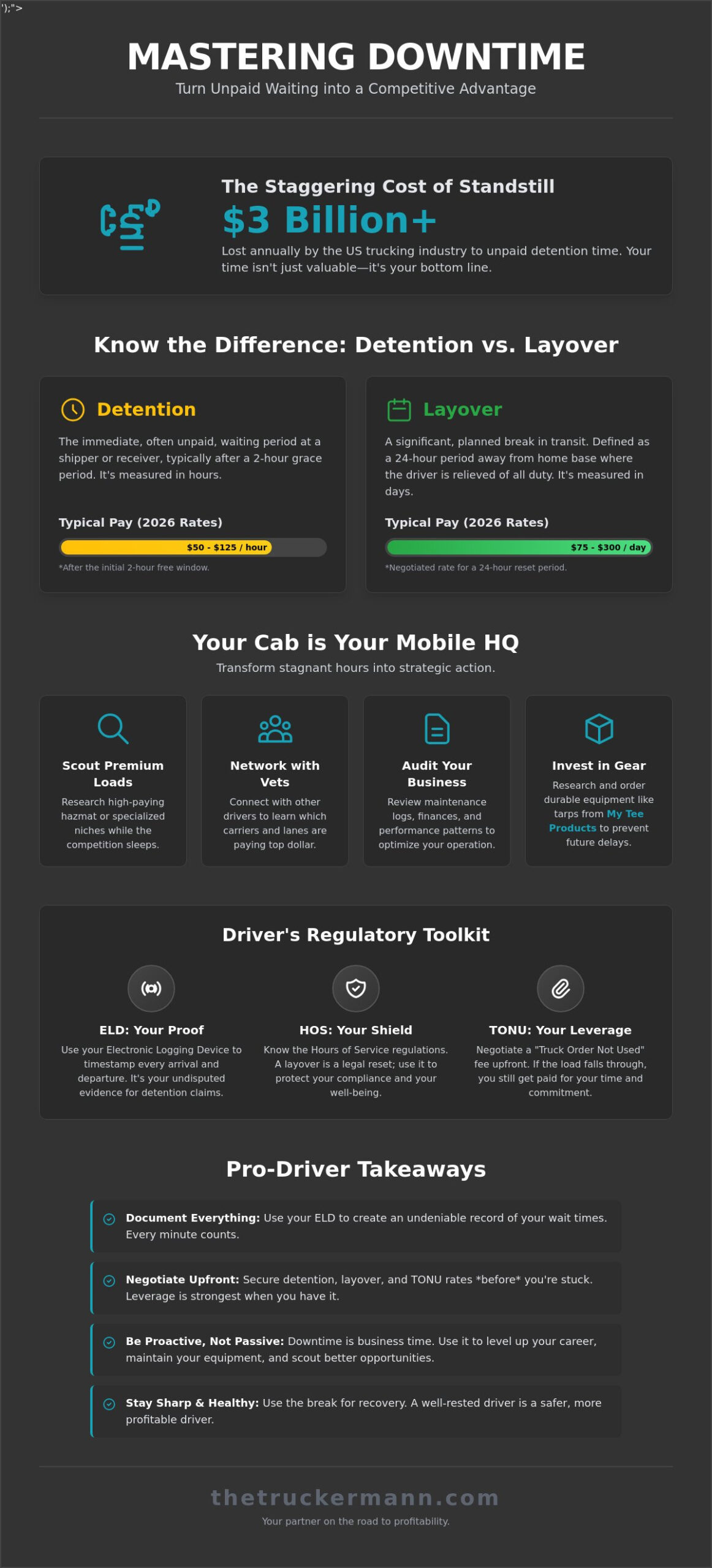
You’ve been there: the dock light stays red, the warehouse manager is nowhere to be found, and your 14-hour clock is bleeding out. In the 2026 market, the line between detention and layover isn’t just semantics; it’s the difference between a profitable week and a loss. Managing layover time effectively starts with understanding that detention is the immediate, often unpaid waiting period at a shipper or receiver. Industry data shows that the trucking sector loses over $3 billion annually to unpaid detention time. A layover, however, is a more significant break in the action. To protect your paycheck, you must document every minute. Use your ELD to timestamp your arrival and departure, and don’t be afraid to push for detention pay, which currently ranges from $50 to $125 per hour after the initial two-hour window.
To better understand how different transport sectors calculate delay times, watch this helpful video:
The Economics of the Sleeper Berth
Think of your cab as your mobile headquarters. An hour spent idling isn’t just burning fuel; it’s a missed opportunity to refine your business strategy. Successful owner-operators use this downtime to audit their maintenance logs or research high-quality tarps and straps from My Tee Products to ensure their next specialized load is secure. Investing in durable gear from My Tee Products ensures you aren’t wasting downtime on equipment repairs later. Always keep your logs clean during these periods. A clean inspection is money in the bank, and a tidy logbook makes it much easier to justify layover pay to a skeptical broker. Remember that layover pay in 2026 typically ranges from $75 to $300 per day. If you wait until you’re already stuck to negotiate your detention rate or a Truck Order Not Used (TONU) guarantee, you’ve already lost your leverage.
Regulatory Impacts on Layover Management
Your strategy for the day is often dictated by ELD compliance. These devices are the ultimate truth-tellers for when your duty status changes. It’s vital to stay within the strict Hours of Service (HOS) regulations while utilizing personal conveyance where legal to find better amenities. Layover is a 24-hour period away from home base where the driver is relieved of all duty. Knowing this legal threshold helps you stand your ground when dispatch tries to force a load before you’ve had a proper reset. By managing layover time effectively, you pivot from a driver who is stuck to a business owner who is prepared. Viewing this downtime as a business maintenance window keeps your mind sharp and your business moving forward.
Professional Growth: Using Layovers to Level Up Your Career
Managing layover time effectively isn’t just about catching up on sleep; it’s about out-earning the guy in the next lane. While the FMCSA provides an official definition of detention time, they don’t tell you how to profit from it. The most successful owner-operators I know treat a layover like a high-stakes strategy session. They’re digging into market research, looking for those high-paying hazmat loads or specialized flatbed hauls that the average driver avoids because they require more effort. If you want the big checks, you need the right credentials and the right connections. Use this quiet time to network. Walk into the truck stop, grab a fresh cup of coffee, and talk to the guys pulling the oversized loads. They’ll tell you which carriers are treating drivers right and which lanes are currently paying the best rates.
Success in this industry isn’t just about miles; it’s about knowledge. When the wheels stop, the learning shouldn’t. You can’t control the freight market, but you can control your readiness to tackle it. Use these pauses to audit your own performance. Are you seeing patterns in where you get stuck? Is there a specific niche that seems to keep moving when others are dry? This is the time to find those answers. It’s about the hustle. Staying stationary doesn’t mean staying stagnant.
Investing in Specialized Training
Don’t let your certifications gather dust while you wait for a load. Use your downtime to sharpen your edge by completing courses at the DLA Academy. Whether you’re looking to master cargo securement or just want to brush up on the latest regulations, the DLA Academy provides the tools you need to stay ahead. It’s also the perfect time to review the CDL pre-trip inspection. Mastering this checklist ensures you don’t get sidelined by a DOT officer for something as simple as a frayed belt or a leaking valve. When you’re proactive, you’re profitable.
Market Analysis and Load Planning
Your 10 or 34-hour reset is the perfect window to analyze capacity rates and freight trends. Don’t just wait for a call from dispatch. Get on the boards and see where the volume is moving. Managing layover time effectively means you’re already setting up alerts for backhaul opportunities before you even reach the receiver. Look for those gaps in the market where capacity is tight; that’s where you find the leverage to negotiate better rates. It’s about working on your business, not just in it. For more tips on mastering the road, you can explore further insights at The Truckermann.
The Essential Layover Gear: Turning Your Cab into a Productive Hub
When you’re stuck in a lot, your cab is your whole world. Managing layover time effectively requires more than just a good attitude; it requires the right setup to keep you from going stir-crazy. If your sleeper berth looks like a bomb went off, you’re never going to feel rested or productive. You need to draw a hard line between your “office” and your “bedroom.” Even in a tight space, small adjustments like a dedicated laptop stand or a portable desk can flip the switch in your brain from waiting around to getting business done. This isn’t just about comfort. It’s about maintaining your sanity during a long 34-hour reset. High-quality securement gear from My Tee Products saves you time during your next pre-trip because you aren’t fighting with tangled or damaged equipment.
Think of your cab as a mobile cockpit. Everything should have a place, and every tool should serve a purpose. When your environment is organized, your mind stays clear. This clarity is what allows you to transition from a driver who is merely surviving the road to a professional who is mastering it. Using your downtime to organize your space means you’re ready to roll the second that load is ready. It’s about being prepared for the next opportunity without the clutter of the last one holding you back.
In-Cab Comfort and Productivity Tools
You can’t run a business on a dead battery. A high-quality power inverter is non-negotiable for running your laptop and cooking your own meals, which saves you a fortune compared to truck stop fast food. While you’re stationary, take a look at your seating and bedding. Ergonomic upgrades are an investment in your career longevity because they prevent the chronic back pain that sidelines so many good drivers. For those small but critical cab repairs, having professional-grade tools from Truck n Tow in your side box means you won’t be waiting for a service truck for a simple fix. Keeping your rig in top shape with gear from Truck n Tow keeps you moving and keeps your CSA score clean.
Flatbed Securement and Tarping Prep
For the flatbedders out there, downtime is the best time to prep for your next haul. Don’t wait until you’re at the shipper to struggle with your equipment. Use the layover to inspect your flatbed trucking gear for any signs of wear that could cause a failure on the road. I always recommend pre-folding your tarps from My Tee Products while the weather is clear and you have the space. It’s a simple move that shaves significant time off your loading process. High-quality gear from My Tee Products is built to last, but you still need to check your straps and chains. Replacing a worn strap now is much cheaper than failing a DOT inspection later. When you use your layover to maintain your equipment from My Tee Products, you’re ensuring your next haul is safe and compliant.
Health and Wellness Strategies for Extended Downtime
Hey, driver, let’s talk about the most important piece of equipment you own: yourself. Managing layover time effectively means taking care of the engine under your own hood, specifically your body and your mind. It’s easy to fall into the trap of sitting in the driver’s seat for ten hours only to move to the sleeper for another ten. That’s a recipe for burnout and long-term health issues that can end a career. You don’t need a fancy gym membership to stay fit on the road. A simple truck-stop workout using your own body weight or resistance bands can keep your blood pumping. Think about doing push-ups against the tire or squats while you’re waiting for your paperwork. These small bursts of activity counteract the mental fog that sets in when you’re staring at the same four walls for too long.
Nutrition is the other half of the battle. We all know the siren call of the truck stop roller grill when you’re tired and hungry. But those processed snacks are just fuel for a mid-afternoon crash. Use your downtime to meal prep in the cab. Even a small 12-volt slow cooker or a portable grill can help you whip up real food like chicken and vegetables. This keeps your energy stable and your wallet full. When you eat better, you sleep better. High-quality sleep during a layover is non-negotiable; it’s the only way to ensure you’re fully alert when it’s finally time to pull that next load.
Physical Maintenance for the Long Haul
Mental Resilience and Community
Isolation can weigh heavy on your spirit when the road is lonely. Managing layover time effectively involves keeping your mental gears turning. Use these hours to reconnect with your family through video calls. Seeing those faces back home reminds you why you’re out here grinding. Don’t be a stranger at the truck stop, either. Engaging with the driver community to share war stories and advice can provide a much-needed sense of camaraderie. Set personal goals for your week, whether it’s finishing a book or learning a new skill. Having a sense of purpose beyond the next delivery keeps your mind sharp and your morale high. For more strategies on staying healthy and sharp on the road, check out the driver wellness guides at The Truckermann.
Maximizing Your Next Haul: Prep and Load Boards
The difference between a driver who survives and an owner-operator who thrives is what they do while the clock is ticking down on a reset. Managing layover time effectively means you stop being a passenger in your own career. Don’t sit back and wait for a dispatcher who might not have your best interests at heart. You need to be the one hunting for the premium freight. While the competition is asleep or complaining on social media, you should be eyes-on the boards, positioning yourself for the best possible rate. Being the first to call on a hot load is often the only way to secure the margins you need in this volatile 2026 market.
Preparation isn’t just about the truck; it’s about the trailer and the paperwork. Use those final hours of downtime to ensure your trailer is spotless. A clean deck or a swept out box makes the next inspection a breeze and shows the shipper you’re a pro. Move your paperwork into a digital format. Having your BOLs and permits scanned and ready for the next scale house prevents the kind of fumbling that draws unwanted attention from DOT officers. When you’re organized, you’re efficient. When you’re efficient, you’re profitable.
Mastering the Load Board
Your phone is your most powerful tool for ending a layover on your own terms. I recommend using 123Loadboard to scout for premium freight in your immediate area. Don’t just look for the highest rate; use 123Loadboard to filter for “quick pay” options that keep your cash flow healthy. Managing layover time effectively involves booking your next load at least 24 hours in advance. This eliminates “dead time” after your reset and ensures you’re moving the moment your 10 or 34 is up. By staying proactive on 123Loadboard, you control the lane and the paycheck.
Ready for the Road
Before you ever hit “On Duty,” perform a 5-minute pre-pre-trip. This isn’t your formal inspection, but a quick walk-around to ensure no new issues cropped up while you were parked. Check your securement inventory and make sure your winches and binders from MyTee Products are staged and ready for use. Having your gear from MyTee Products organized means you’re loaded and strapped while other drivers are still digging through their side boxes. Finally, give the cab one last sweep. A professional environment leads to professional interactions with customers. When you look like you have it together, people treat you like a master of the road.
Take Command of Your Clock and Your Career
The road doesn’t have to be a place where your time and money disappear into the ether. By understanding the legal nuances of detention, investing in your professional skills, and keeping your mind and body sharp, you turn every forced stop into a strategic advantage. Managing layover time effectively is the hallmark of a veteran who knows that the wheels don’t always have to be turning to make progress. It’s about preparedness; that means everything from your clean cab to your well-maintained gear from My Tee Products.
Stop letting the market dictate your worth. Join over 100,000 professional drivers who use real-time freight market data to stay ahead of the curve. You can even access exclusive discounts on securement gear from My Tee Products to keep your overhead low. Find your next high-paying load on 123Loadboard and start running on your own terms today. Keep your head up and your eyes on the horizon. We’ll see you out there.
Frequently Asked Questions
Is layover time paid in the trucking industry?
Yes, layover time is typically paid, though the specific rate depends on whether you’re a company driver or an owner-operator. In the 2026 market, standard layover pay ranges from $75 to $300 per day. This usually kicks in when you’re stuck for a full 24-hour period due to circumstances beyond your control, such as a missed appointment by the shipper or an unexpected equipment delay at the terminal.
How do I distinguish between layover and detention pay?
You distinguish the two by the duration and the trigger of the delay. Detention pay is an hourly rate, often between $50 and $125, that starts after a standard two-hour waiting period at a dock. Layover pay is a flat daily rate applied when you are relieved of all duty for a 24-hour period away from home. Managing layover time effectively requires knowing which clock is running to ensure you’re billed correctly.
What are the best apps for truck drivers to use during a layover?
The best apps for managing downtime include 123Loadboard for proactive load hunting and Trucker Path for finding high-quality amenities. For professional development, the DLA Academy app offers courses to sharpen your industry knowledge while you wait. Utilizing these tools helps you stay productive and ensures you aren’t just wasting hours scrolling through social media while your truck is stationary and your clock is ticking.
Can I leave my truck during a layover at a shipper’s facility?
You generally cannot leave your truck while parked inside a shipper’s facility due to strict liability and safety regulations. Most warehouses require drivers to remain in the cab or a designated break room. If you need to leave for food or supplies, you must check out with security and use personal conveyance to reach a safe parking area or local amenities outside the facility gates.
How do I stay healthy while stuck at a truck stop for 24 hours?
Staying healthy requires a commitment to movement and conscious eating. Aim for a 20-minute walk around the perimeter of the lot to keep your circulation moving and reduce the risk of Deep Vein Thrombosis. Avoid the high-sodium traps of the truck stop deli; instead, use your in-cab appliances to prepare fresh meals. Small choices like choosing water over soda can significantly impact your energy levels during an extended reset.
What gear from MyTee Products is best for making a sleeper berth more comfortable?
For a more restorative berth, look into specialized cab organizers and storage solutions from My Tee Products. Keeping your workspace separate from your rest area is easier when your securement gear, like tarps and straps from My Tee Products, is stored neatly in external boxes. A clean, clutter-free cab is the foundation of managing layover time effectively because it allows for deeper rest and better mental focus.
How does managing layover time effectively impact my HOS logs?
Managing layover time effectively ensures your Electronic Logging Device (ELD) accurately reflects your “Off Duty” or “Sleeper Berth” status. Proper management prevents you from accidentally burning through your 14-hour on-duty window while you’re actually resting. This precision protects your CSA score and ensures you have a full clock available the moment you’re ready to roll, giving you a competitive edge when high-paying loads appear on the boards.
What should I do if a shipper refuses to pay detention for a long layover?
If a shipper refuses to pay, your first step is to provide meticulous documentation from your ELD and arrival timestamps. Contact your broker or carrier immediately to report the delay while it is still happening. Most detention and layover policies are outlined in the rate confirmation; if the shipper won’t budge, having a paper trail allows you to escalate the claim through your company’s billing department or legal channels.
Disclaimer
The information provided on The TruckerMann is for general informational and educational purposes only. While every effort is made to ensure the accuracy and reliability of the content, trucking laws, FMCSA regulations, DOT requirements, safety standards, and industry policies can change at any time. Readers are encouraged to verify all information with official government agencies, professional advisors, or qualified industry professionals before making business, legal, financial, safety, or compliance-related decisions.
The content shared on this website reflects personal opinions, experiences, research, and commentary and should not be considered legal, financial, medical, tax, or professional advice. The TruckerMann and its owners, contributors, affiliates, or representatives are not responsible for any losses, damages, violations, penalties, or liabilities resulting from the use or misuse of information found on this website.
Some content on this website may contain affiliate links, sponsored content, or promotional material. This means we may earn a commission at no additional cost to you if you choose to purchase through certain links.
By using this website, you agree that you do so at your own discretion and risk.