Hey Friend. Imagine it’s a Tuesday morning at a weigh station on I-80, and the inspector is walking toward your trailer with a flashlight and a focused stare. During the 2023 CVSA Roadcheck, cargo securement issues accounted for 19.3 percent of all vehicle out-of-service violations in North America, proving that a single frayed strap can end your day early. We all know that consistent flatbed gear maintenance is the only thing standing between a profitable haul and a costly “red tag” on your windshield. It is exhausting to watch your equipment wear out before its time, especially when you’re the one footing the bill for replacements while watching miles roll by.
You take pride in your rig, and you deserve gear that works as hard as you do. The Truckermann is here to share the professional secrets for inspecting, cleaning, and storing your equipment to ensure maximum cargo security. We will walk through the exact steps to help you pass a DOT Level 1 inspection with zero violations while extending the life of your expensive tarps and straps. It’s time to stop worrying about the next roadside blitz and start mastering the tools of the trade, because the road runs through us.
Key Takeaways
- Protect your bottom line and avoid the sting of a DOT out-of-service order by mastering proactive flatbed gear maintenance.
- Discover the professional secrets to cleaning winch straps and tarps without stripping the fibers that keep your cargo secured.
- Learn how to keep your chains and binders in fighting shape by identifying the specific lubrication points that prevent hard-iron failure.
- Tighten up your routine with a systematic inspection workflow that focuses on the critical first 50 miles of every long-haul trip.
- Stop “passive damage” in its tracks with professional storage tips for your headache rack that keep your gear ready for the next load.
The High Stakes of Flatbed Gear Maintenance
Hey Friend. When you’re out there under the sun or in the freezing rain, your gear is your lifeline. Proper flatbed gear maintenance is the proactive inspection and care of every strap, chain, and binder you own. It’s about spotting a problem before it becomes a tragedy. If you ignore a fraying strap, you aren’t just risking a load shift; you’re inviting a DOT officer to hand you an out-of-service (OOS) order. According to 2023 FMCSA data, cargo securement issues remain a top reason for roadside failures. These violations don’t just cost you time; they hit your wallet through higher insurance premiums and lost freight opportunities.
To better understand how a quick bit of care keeps your hardware moving, watch this helpful video:
Taking ownership of your equipment is the core of “The Road Runs Through Us.” You can’t master the highway if your tools are falling apart. This commitment starts long before you pull onto the scales. It’s a fundamental part of your CDL pre trip inspection checklist. By understanding the foundational principles of load securing, you ensure that every pound of pressure is handled by gear that’s up to the task.
Maintenance vs. Replacement: Knowing the Difference
The Trucker Mann philosophy is simple: respect the tools that provide your livelihood. You need to know when a chain just needs some lube and when it belongs in the scrap pile. Cosmetic wear, like light surface rust or grease, is part of the job. Structural failure points, like bent links or deep gouges in a binder handle, are non-negotiable. Proper flatbed gear maintenance preserves the Working Load Limit (WLL) of your equipment. Once a strap’s integrity is compromised, that WLL rating is effectively zero in the eyes of an inspector.
The Legal Reality: FMCSA Securement Standards
FMCSA 393.100 sets the ground rules for every cargo securement device. You might think one small nick in a 4-inch strap is fine, but the “10% rule” says otherwise. If the sum of all cuts and frays exceeds 10% of the strap width, you’re looking at a violation. A single frayed strap is often the “probable cause” an inspector needs to trigger a full Level 1 inspection. Don’t give them a reason to crawl under your truck. Keeping your gear clean and inspected keeps the “bears” at bay and ensures you keep rolling toward that next payday.
Maintaining Soft Goods: Winch Straps and Tarps
Hey Friend, your soft goods are the literal lifeline between your trailer and the freight that pays your bills. While steel chains feel invincible, your polyester winch straps and vinyl tarps are fighting a constant battle against the elements. Mastering flatbed gear maintenance means recognizing that the road is trying to eat your equipment every single mile. Three primary enemies lead the charge: UV rays, road salt, and friction. UV radiation breaks down polyester fibers at a molecular level, while winter de-icing brines act like sandpaper inside the weave. Friction, however, is the most immediate danger, often resulting in “strap burn” that can snap a 4-inch strap under tension.
Protecting your investment requires more than just a quick visual check. You need to use edge protectors on every sharp corner, no exceptions. This practice ensures you remain compliant with the FMCSA cargo securement rules, which dictate that tie-downs must be protected from abrasion. Before you buy new gear, consulting a thorough flatbed product reviews checklist for securement gear can help you evaluate which straps and tarps will actually hold their Working Load Limit after months of road salt and freezing rain. If you’re looking for high-quality replacements to keep your kit DOT-ready, you can find the latest flatbed products designed for the long haul.
The Proper Way to Wash and Dry Webbing
Pressure washers should never be used on winch straps because the high-velocity water forces grit deep into the polyester weave and physically tears the individual filaments. To clean your gear correctly, follow these steps:
- Fill a large bin with warm water and a mild dish soap; avoid bleach or harsh degreasers that strip protective coatings.
- Soak the straps for 20 minutes to loosen road grime and corrosive salt.
- Use a soft-bristle brush to gently scrub away stubborn debris.
- Rinse thoroughly with a low-pressure hose.
Always air-dry your straps completely before rolling them up for storage. Storing wet webbing invites mildew and rot, which can reduce the break strength of a strap by as much as 15% in a single season of neglect. The Truckermann knows that a little patience in the yard saves a lot of money at the scale house.
Tarp Repair and Patching Techniques
Heavy-duty 18oz lumber and steel tarps take a beating from the wind and sharp cargo edges. Inspect your common failure points, specifically the corners, D-rings, and grommets, after every drop. When you find a puncture, don’t rely on duct tape. Use HH-66 vinyl cement for a professional-grade field repair. This adhesive creates a chemical weld between the patch and the tarp, ensuring it stays put at 75 mph. Keep your D-rings free of rust by wiping them down with a light lubricant, and inspect the webbing stitched to the tarp for any fraying that could lead to a catastrophic failure during a blow-out. Consistent flatbed gear maintenance is the difference between a profitable week and an expensive insurance claim.
Chains, Binders, and Winches: The Hard-Iron Routine
Hey Friend, let’s talk about the heavy metal that keeps your load where it belongs. When you’re hauling 45,000 pounds of steel coils, your Grade 70 transport chains and ratcheting binders are the only things standing between a successful delivery and a catastrophic DOT report. Proper flatbed gear maintenance isn’t just a chore; it’s a survival skill for the professional driver who values their CDL and their life. You need to treat your iron with the same respect you give your engine because when a binder snaps under tension, there are no second chances.
Lubrication Strategies for Winches and Binders
Lubrication is the lifeblood of your securement system. If you’re running through the salt-heavy corridors of the Midwest, a wet lithium grease provides a thick barrier against corrosion, though it tends to attract road grit like a magnet. In contrast, drivers hitting the dusty plains of West Texas often prefer dry graphite lubricants that won’t turn into a grinding paste. You must keep your winch tracks clear of debris to ensure they slide and lock without a fight. A quick spray of penetrant isn’t enough; you need to physically clear the track of road grime and ice buildup before every trip.
The Trucker Mann tip is simple: a frozen binder is a safety hazard, not just an annoyance. When internal gears seize, you lose the ability to feel the tension, which often leads to over-tightening and gear failure. If you have to use a “cheater pipe” just to get a ratchet to move, you’re already operating in the danger zone. Keeping your gear moving smoothly ensures that your flatbed gear maintenance routine stays efficient and your hands stay safe during the North American Standard Inspection Program procedures.
Inspecting for Metal Fatigue and Deformity
Identifying when a chain has reached its limit is a critical skill. While surface rust is a common sight and rarely a reason for a red tag, deep pitting that reduces the cross-sectional area of a link by more than 10 percent is an automatic failure point. You should look for “shined” spots where links rub together, which indicates excessive vibration or improper tensioning. If you notice links that don’t hinge freely or appear elongated, they’ve likely been “stretched” beyond their yield point and can no longer hold their rated capacity.
- Grab Hooks: Use a caliper to check the throat opening; any expansion beyond 10 percent of the original factory width means the hook is compromised.
- Nicks and Gouges: Any cut or nick deeper than the thickness of a dime is a stress riser that will eventually lead to a snap.
- Ratchet Binders: A ratchet binder must be retired immediately if the handle is bent, the pawl fails to engage securely, or the screw threads show visible stripping or thinning.
The Road Runs Through Us, and it demands gear that works every single time. Don’t let a “good enough” chain be the reason you’re sitting on the shoulder waiting for a recovery team. Keep your iron clean, keep it greased, and stay vigilant during every pre-trip inspection.
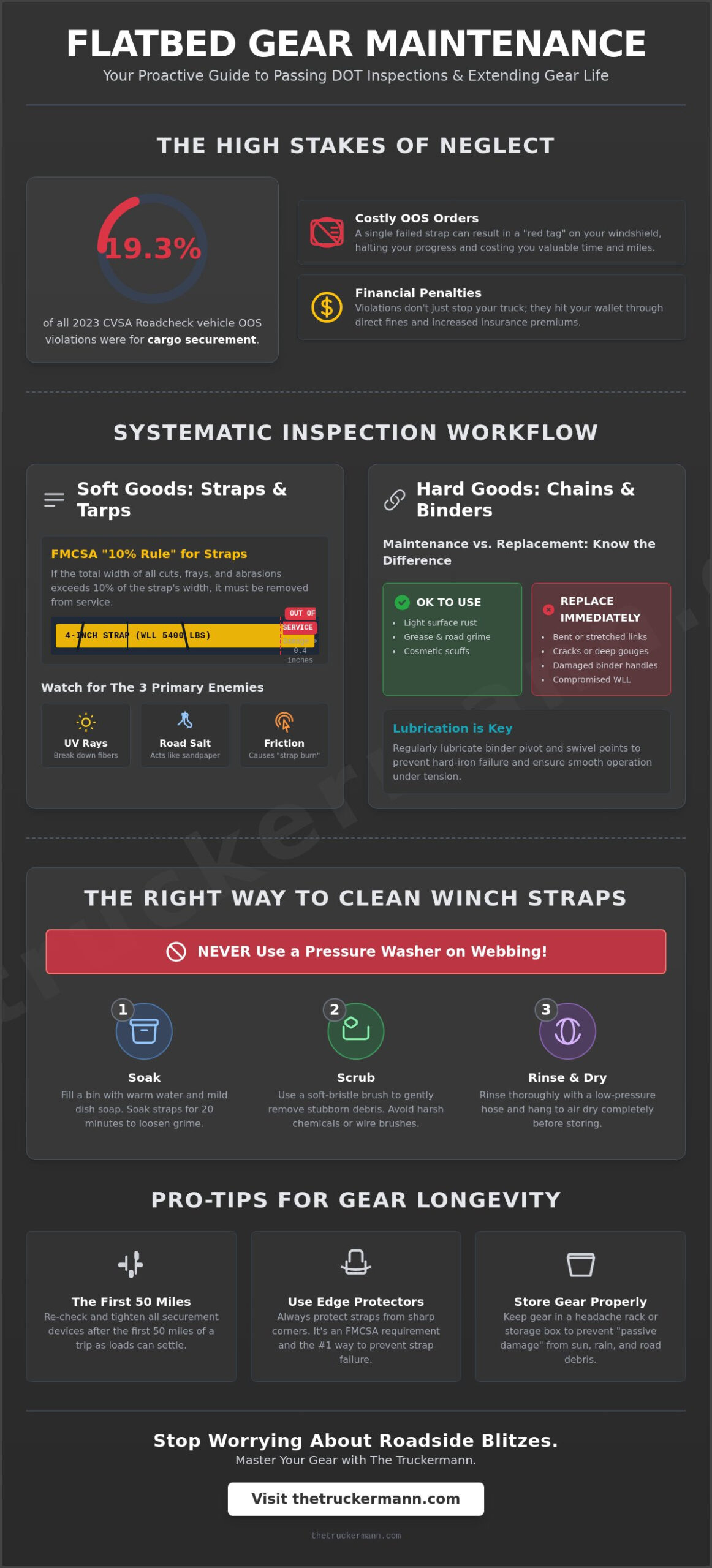
Developing a Systematic Inspection Workflow
Hey friend, the road has a way of shaking things loose that looked perfect when you left the terminal. Effective flatbed gear maintenance isn’t a chore you do once a month; it’s a habit you bake into every pre-trip, post-trip, and fuel stop. If you aren’t looking at your equipment every time you step out of the cab, you’re inviting the DOT to do it for you. Mastering this workflow keeps you moving and keeps your CSA score clean.
The first 50 miles of any haul are your most critical. This is the “settling period” where the load finds its home on the deck. FMCSA 392.9 requires you to check your securement within this window for a reason. Vibration and wind resistance act like a diagnostic tool, revealing which straps are stretching and which winches might be backing off. Use this stop to feel the tension and look for new friction points that didn’t exist at the shipper.
The Pre-Trip Securement Audit
Before you throw a single leg over the side of the trailer, run a mental scan of your kit. Check every strap for “wicking,” which is when moisture and road salt soak into the fibers and freeze or rot them from the inside. Look for nicks larger than a quarter-inch. If you see daylight through a cut, that strap is now a liability. Verify your winch pawls by listening for that crisp, metallic click. If the locking mechanism feels mushy or fails to seat, it needs grease or replacement immediately. Finally, stretch your bungees. If the rubber shows “alligator skin” cracking or the hooks have started to straighten out, throw them in the bin. A snapping bungee at 60 mph is a danger to everyone behind you.
Post-Load Maintenance: The “Clean Down”
Your work doesn’t end when the receiver signs the bills. Reading your gear during unloading tells you how it performed under pressure. Look for fresh abrasions on your edge protectors and straps. Never roll up a wet or mud-caked strap. Trapping moisture inside a tight roll leads to mildew that eats the polyester. Take five minutes to wipe down your chains and spray a shot of lubricant into your winch tracks. This is also the time to document any gear that’s reaching its limit. Staying organized now ensures you’re ready for the CVSA roadcheck 2026, where inspectors will be looking for any excuse to put you out of service.
Before you head for your next pick-up, look at your headache rack. Ensure the welds aren’t cracking and the mounting bolts are torqued. A cluttered rack traps moisture against your aluminum, leading to corrosion. Keep it lean, clean, and organized so you can grab what you need without a fight. The road runs through us, and a disciplined workflow ensures it keeps running smoothly.
Ready to replace that worn-out securement? Shop our professional-grade flatbed gear and stay road-ready.
Storage Solutions and Professional Gear Longevity
Passive damage is the silent killer of securement equipment. It happens when your gear sits between hauls, vibrating against sharp metal edges or soaking in corrosive road spray because it wasn’t stowed correctly. Proactive flatbed gear maintenance doesn’t stop when the load is offloaded; it continues until every strap is rolled and every chain is hung. Using dedicated storage bins for your winches and strap winders for your polyester webbing prevents the tangles and abrasions that lead to premature failure. When you invest in the best flatbed trucking gear, you’re buying quality that should last for hundreds of thousands of miles. Proper storage ensures you get every cent of value out of that investment.
Organizing the Headache Rack Like a Pro
A chaotic headache rack is a safety hazard and a gear destroyer. You should group your equipment by material type to prevent unnecessary wear. Keep your heavy chains and ratcheting binders on one side, while your soft goods like straps and tarps stay on the other. This separation stops metal-on-metal friction during transit, which can vibrate through the rack and slice through expensive fabric. Use these specific tips for a professional setup:
- Install tarp chimneys: These specialized racks keep your heavy lumber tarps elevated off the deck, preventing moisture traps and fabric rot.
- Use edge protector bins: Keep your plastic and rubber protectors in a dedicated bin so they don’t get crushed or lost under heavy steel chains.
- Coil and clip: Never leave loose strap ends flapping in the wind. Use strap winders to keep them tight and store them in a dry side box.
Protecting Your Investment: The Entrepreneurial Edge
For the owner-operator, gear longevity is a direct line to your bottom line. Replacing a full set of 8-foot drop tarps can cost over $1,200, and a single damaged 4-inch strap is a $25 bill thrown out the window. Beyond the money, there is a psychological advantage at the scale house. When a DOT officer sees a clean, organized rig with well-maintained professional trucking gear, it signals that you’re a professional who respects the FMCSA regulations. It can be the difference between a quick wave-through and a grueling Level I inspection blitz. Consistent flatbed gear maintenance proves you’re in control of your business and your safety.
Hey friend, your gear is your lifeline. It’s the only thing standing between a successful delivery and a catastrophic cargo claim. Treat your equipment with the respect it deserves, and it’ll keep you safe for years to come. The Trucker Mann knows that the road is tough, but a prepared driver is tougher. Stay safe out there, and remember that the road runs through us.
Protect Your Profit and Your CDL
Mastering flatbed gear maintenance isn’t just about making your straps last another season; it’s about staying ahead of FMCSA inspectors who look for any reason to sideline your rig. By sticking to a hard-iron routine for your chains and binders and keeping your soft goods out of the sun, you’re protecting your bottom line. Active CDL holders know that a single frayed winch strap can lead to a DOT violation that stays on your record for 36 months. Check it daily. Developing a systematic inspection workflow ensures you never miss a hairline crack in a binder or a pinhole in a tarp, maximizing your gear ROI and keeping you rolling safely through every state line. The road is tough enough without equipment failure holding you back.
Hey friend, if your gear is beyond repair, check out The Best Flatbed Trucking Gear for Logistics & Securement in 2026 to find your next reliable setup. Keep those wheels turning and stay safe out there because the road runs through us.
Frequently Asked Questions
How often should I clean my winch straps?
Hey friend, you should clean your winch straps whenever they’re caked in road salt, oil, or heavy grit. Leaving that grime on your gear allows abrasive particles to settle deep into the polyester webbing, which can reduce the strap’s breaking strength by 15% over a single winter season. Use lukewarm water and mild detergent; never use harsh bleach that eats away at the UV protection.
Can I use a pressure washer to clean my flatbed tarps?
You should avoid using a high-pressure washer on your flatbed tarps because it can strip the protective PVC coating right off the polyester base. A nozzle set above 1,500 PSI is often enough to create pinholes or delaminate the fabric, leading to leaks that ruin your cargo. Stick to a soft-bristle brush and a garden hose to keep your gear in top shape without damaging the material.
What is the “10% rule” for strap damage in a DOT inspection?
The 10% rule means a strap is considered out-of-service if the total width of all cuts, nicks, or holes exceeds 10% of the strap’s total width. For a standard 4-inch winch strap, any combination of damage totaling 0.4 inches will result in a violation during a roadside inspection. The Truckermann knows that keeping a close eye on these measurements is vital for flatbed gear maintenance and avoiding costly fines.
Is it safe to use WD-40 on my ratchet binders?
It’s not a good idea to use WD-40 as a long-term lubricant for your ratchet binders because it’s a solvent that evaporates quickly and attracts dust. Instead, apply a heavy-duty lithium grease or a dry graphite spray to the gears and screw threads. These lubricants stay in place through 500 miles of rain, ensuring your binders don’t seize up when you’re trying to unload in a hurry.
How do I know if my transport chain is stretched?
You can identify a stretched transport chain by measuring the inside length of a section and comparing it to the manufacturer’s original specs, usually found in NACM tables. If a 10-link segment has elongated by more than 3% of its original length, the chain is compromised and must be scrapped. Look for links that bind or don’t pivot freely, as this is a clear sign the steel has reached its yield point.
Does the DOT require a specific storage method for unused straps?
The DOT doesn’t mandate a specific folding style, but FMCSA regulation 393.106 requires all equipment to be secured so it doesn’t fall from the vehicle. Storing your straps in a weather-tight tool box prevents UV degradation, which can weaken webbing by 20% over six months of sun exposure. Keeping them rolled and dry is the best way to ensure they pass every inspection when you pull them back out.
Can I repair a cut winch strap by sewing it?
You cannot legally repair a cut winch strap by sewing it yourself, as any modification voids the original WLL rating and CVSA certification. Field-repaired straps are an automatic out-of-service violation because the stitching won’t match the industrial 7,000-pound break strength required for heavy hauls. When a strap gets a deep nick, it’s time to retire it. Use it for padding sharp edges instead of risking a cargo spill.
What should I do if my winch is seized up on the road?
Hey friend, if your winch is seized, apply a high-grade penetrating oil like PB Blaster and let it sit for 20 minutes before attempting to move it. This gives the chemicals time to break down the rust that binds the mandrel to the frame. Consistent flatbed gear maintenance involves spraying these pivot points every 30 days to prevent this headache during a roadside reload in freezing temperatures. When it’s time to replace seized or worn equipment, use a professional flatbed product reviews checklist to choose securement gear that meets 49 CFR Part 393 standards before your next haul.
Disclaimer
The information provided on The TruckerMann is for general informational and educational purposes only. While every effort is made to ensure the accuracy and reliability of the content, trucking laws, FMCSA regulations, DOT requirements, safety standards, and industry policies can change at any time. Readers are encouraged to verify all information with official government agencies, professional advisors, or qualified industry professionals before making business, legal, financial, safety, or compliance-related decisions.
The content shared on this website reflects personal opinions, experiences, research, and commentary and should not be considered legal, financial, medical, tax, or professional advice. The TruckerMann and its owners, contributors, affiliates, or representatives are not responsible for any losses, damages, violations, penalties, or liabilities resulting from the use or misuse of information found on this website.
Some content on this website may contain affiliate links, sponsored content, or promotional material. This means we may earn a commission at no additional cost to you if you choose to purchase through certain links.
By using this website, you agree that you do so at your own discretion and risk.