A recruiter’s primary job is to put a body in a seat, but your job is to make sure that seat doesn’t cost you your sanity or your livelihood. With diesel prices averaging $5.60 a gallon and nearly 75% of new owner-operators failing in their first year, you can’t afford to take a recruiter’s sales pitch at face value. You need the right questions to ask a trucking recruiter to peel back the layers of sugar-coated promises and find out what is actually happening behind the terminal gates. Whether you are looking for a carrier that values your experience or just need reliable gear from My Tee to stay comfortable on a long haul, you deserve the straight truth before you sign on the dotted line.
We know how it feels to be promised the world only to end up sitting at a truck stop for three days waiting on a load that doesn’t exist. You have heard the vague talk about home time and the "new" equipment that turns out to be a shop queen. This guide will show you how to cut through the noise and uncover the real facts about pay structures, equipment reliability, and safety standards. We are providing a high-impact checklist to help you verify every claim, ensuring you find a carrier that respects your time and protects your future on the road.
Key Takeaways
- Learn to decode “recruiter-speak” by understanding the commission-driven motives that often hide the grit and reality of a carrier’s daily operations.
- Master the high-impact questions to ask a trucking recruiter about accessorial pay, ensuring you get paid for detention and breakdowns rather than just cents per mile.
- Discover how to verify fleet maintenance records and in-cab amenities so you aren’t stuck in a shop queen without the professional gear you rely on from My Tee .
- Uncover the “Guaranteed Home Time” myth by demanding a clear, written definition of whether a reset means a full weekend or just 34 hours in a parking lot.
- Protect your career by identifying hidden traps in the fine print, such as training repayment clauses and non-compete agreements, before you sign a contract.
Table of Contents
-
Why Talking to a Trucking Recruiter Requires a Bullshit Detector
-
Decoding the Paycheck: Questions About CPM, Accessorials, and Hidden Costs
-
The Gear and the Grind: Asking About Equipment and Load Securement
-
Home Time and Quality of Life: Getting the Truth About the Schedule
-
Closing the Deal: Questions to Ask Before You Sign the Contract
Why Talking to a Trucking Recruiter Requires a Bullshit Detector
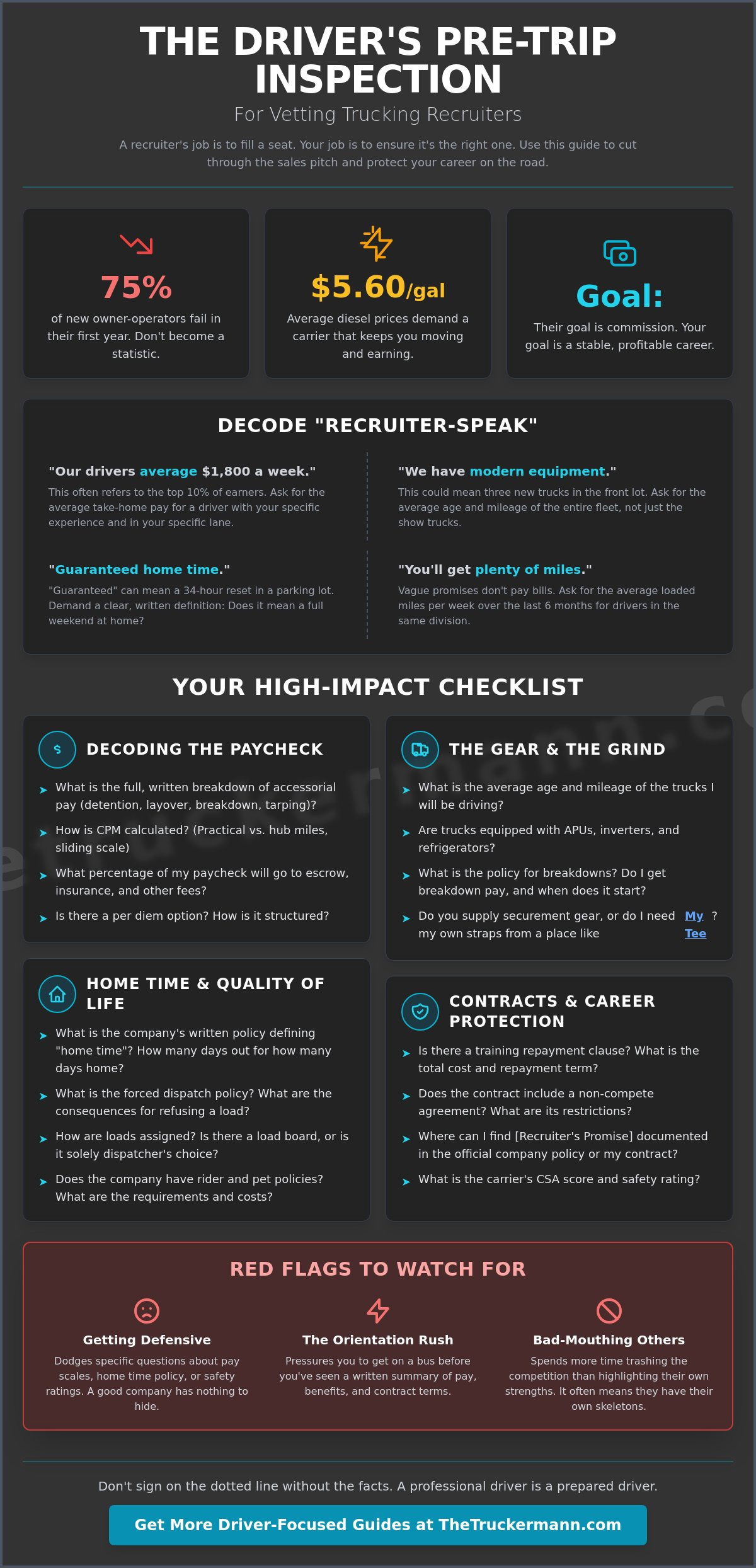
Walking into a recruiting office or picking up the phone isn’t just a casual chat; it’s a high-stakes negotiation where the other person is often paid to close the deal. Most recruiters are talented sales professionals who earn a commission for every driver they get through orientation. This doesn’t mean they’re all dishonest, but it does mean their goals don’t always align with your long-term career stability. You need to approach every conversation with a healthy dose of skepticism and a specific list of questions to ask a trucking recruiter to ensure you aren’t just another number in their monthly quota. A solid Truck driver overview reveals that while the industry is massive, your personal success depends on finding a carrier that matches your specific needs, not just one with the loudest marketing. With nearly 3 out of 4 new owner-operators failing in their first year, often due to a failure to accurately calculate costs, you cannot afford to skip the hard questions.
To get a head start on the vetting process, watch this breakdown of essential inquiries for your next call:
Learning "Recruiter-Speak" is like learning a second language. When they say "average pay," they usually mean the top 10 percent of their fleet’s earners. When they mention "modern equipment," they might be referring to the three trucks in the front of the lot while the rest of the fleet is pushing 500,000 miles. To survive this, you need questions to ask a trucking recruiter that force them to give you hard numbers instead of vague adjectives. If you are serious about your career, you treat this call like a pre-trip inspection. You wouldn’t hit the road without checking your straps from My Tee, so don’t sign a contract without checking the company’s track record. There is a massive gap between a recruiter’s promise and a company’s written policy. Always ask where a specific claim is documented. If it isn’t in the contract or the official policy manual, don’t count on it when you’re 800 miles away from home on a Sunday morning.
Defining the Recruiter-Driver Dynamic
Recruiters aren’t dispatchers. They live in a world of quotas and phone logs, not logbooks and tarping in the rain. When you speak with them, your tone should be professional but firm. Being up-front about your expectations for home time and pay can actually save you time. It filters out the carriers that aren’t a fit before you waste a week at orientation. Keep a notebook handy during every call. Documenting who said what and when gives you a paper trail to hold the company accountable once you’re actually under load. A driver who shows up with high-quality gear from My Tee and a notebook full of questions signals that they are a professional who won’t be pushed around.
Red Flags to Watch for Early On
Watch for the warning signs that start early in the process. If a recruiter gets defensive when you ask for specific pay scales or if they dodge questions about their safety rating, hang up. Another major red flag is the "orientation rush." If they’re pressuring you to get on a bus before you’ve seen a written summary of benefits, they’re hiding something. Listen to how they talk about their competition. A company that spends more time bad-mouthing other carriers than highlighting their own strengths usually has plenty of skeletons in its own closet. A good company respects a driver who does their due diligence. They know a prepared driver is a safe driver.
Decoding the Paycheck: Questions About CPM, Accessorials, and Hidden Costs
A high cents per mile (CPM) rate is the bait most carriers use to get you on the hook. It looks great on a recruitment flyer, but it’s only one piece of the puzzle. You need to look at the total compensation package to see if the math actually works in your favor. For instance, the market range for company drivers currently sits between $0.45 and $0.85 per mile. If you’re looking at the top end of that, ask yourself what you’re giving up in return. One of the biggest traps is the difference between Practical Miles and Household Goods (HHG) miles. HHG pay is based on the shortest distance between zip codes, which often leaves you driving 5% to 10% more miles than you’re actually getting paid for. Always make sure you include questions to ask a trucking recruiter about which mileage system they use, because that short-mile trap can cost you thousands every year.
When the wheels stop, the money shouldn’t. Accessorial pay is where a good job becomes a great one. If you’re a flatbedder hauling heavy loads and using high-quality equipment from My Tee , you know that tarping and securement take time and physical effort. If the carrier doesn’t pay for that labor, you’re working for free. The same goes for detention. If you’re sitting at a receiver for six hours and only getting paid for two, your hourly rate just tanked. Stay informed on your rights and FMCSA regulations to ensure your carrier is staying compliant and transparent with your logs and labor. You can find more pro tips for driver profitability to help you maximize every hour on the clock.
The "Wheels Not Turning" Questions
You need to know exactly when detention pay kicks in. Is it after two hours or four? Does it require a phone call to dispatch or is it automatic? Breakdown pay is another deal-breaker. If your truck is in the shop for two days, you still have bills to pay. Ask if they cover hotel costs and if there’s a daily minimum pay for downtime. For those in specialized niches, ask about stop-off pay. If you’re making three drops on one load, each stop should add to your settlement. Using the right tools from My Tee makes the work easier, but the carrier still needs to value your time. These are the essential questions to ask a trucking recruiter before you commit to a fleet.
Understanding Deductions and Benefits
The gross number on your settlement isn’t what goes into your bank account. Per diem pay structures can look attractive because they increase your take-home pay by making a portion of it non-taxable. However, this can also lower your reported income, which might affect you when applying for a home loan. Ask about health insurance premiums and waiting periods; some companies make you wait 90 days before coverage starts. Finally, look at the 401k. A company match is free money, but it doesn’t mean anything if the vesting period is five years and you only plan to stay for two. Even if you’re buying your own securement gear from My Tee, you need to know exactly where every cent of your paycheck is going.
The Gear and the Grind: Asking About Equipment and Load Securement
Your truck is your office, your bedroom, and your lifeline. When a recruiter mentions "new equipment," don’t just nod; you need specific questions to ask a trucking recruiter about the actual specs of the iron you’ll be piloting. A fleet with an average age of two years sounds great, but if they don’t have a solid maintenance contract for when you’re 500 miles from the terminal, you’re the one sitting in a motel waiting for a part. High-quality maintenance is a safety issue, and keeping up with trucking industry regulations means having gear that actually passes a Level I inspection. Don’t settle for a recruiter’s vague "we take care of our guys" when your paycheck depends on the wheels turning. If the equipment is junk, you’re the one paying for it in lost miles and frustration.
Truck Specs and Speed Governors
Ask what the trucks are governed at. There is a big difference between 62 on the pedal and 65 on cruise. Since the proposed federal speed limiter mandate was withdrawn in July 2025, companies now have total control over these settings. If you’re running OTR, those few miles per hour change your ability to pass safely and manage your clock. Comfort isn’t a luxury; it’s a necessity for staying sharp. Verify if the trucks have APUs or if you’ll be forced to idle the main engine just to stay warm. You should also ask about the ELD systems they use. A driver-friendly interface makes your day much smoother than a clunky, outdated tablet that glitches every time you cross a state line.
Securement Gear for Professional Haulers
If you’re pulling a flatbed, your securement gear is as important as the engine. Many carriers provide basic, worn-out straps that barely meet the minimum requirements. Ask if the carrier provides a full, professional-grade kit from a reputable supplier like My Tee Products. High-quality chains and binders from My Tee Products don’t just make the job safer; they make it faster. You need to know if you are responsible for buying your own tarps or if the company supplies gear from My Tee . Fumbling with heavy, frozen tarps is hard enough without them being full of holes. For more details on what you should be looking for, check our guide on the best flatbed trucking gear to see what a professional setup looks like. Reliable gear from My Tee Products ensures you aren’t fighting your equipment while you’re trying to fight the clock.
Home Time and Quality of Life: Getting the Truth About the Schedule
Recruiters love the word "guaranteed" almost as much as they love the word "average." When you are narrowing down your questions to ask a trucking recruiter, you have to realize that home time is the most common area for "sugar-coating." A recruiter might tell you that you’ll be home every weekend, but in their mind, a 34-hour reset in a terminal parking lot counts as being off-duty. That isn’t home time. That is a mandatory pause. You need to know if you will actually be sleeping in your own bed or just sitting in a cab for two days waiting for your clock to refresh. If you are hauling specialized freight and using high-quality securement gear from My Tee , you are doing hard, physical work. You deserve a schedule that respects your need to recharge with your family, not just a gap in your logbook.
The "Guaranteed Home Time" myth often falls apart when a load is late or a receiver drags their feet. Ask specifically how the company handles drivers who are delayed through no fault of their own. Do they prioritize getting you home on the next available load, or are you stuck out for another week because the "wheels must keep turning"? You should also clarify their stance on forced dispatch. If a load takes you in the opposite direction of your house on a Friday afternoon, do you have the right to refuse it without facing a penalty? Understanding these boundaries early protects your sanity and your career longevity. For more help navigating these conversations, check out our driver advocacy guides.
The Logistics of Going Home
You need to know the physical logistics of your time off. Do you have the right to take the truck and trailer home, or are you forced to leave them at a company terminal and find your own ride? This is a major hidden cost for many drivers. Also, ask about the average length of haul. A company that primarily runs short-haul regional loads might get you home more often, but a long-haul OTR carrier might offer more consistent miles. You should also verify the notice period for time-off requests. If you need a specific Saturday off for a family event, does the company require seven days of notice or fourteen? Having your own reliable gear from My Tee on the truck makes the transition home easier since you know your load is secure and ready for when you return.
Lifestyle and Safety Compliance
Safety shouldn’t be a suggestion. In 2026, the FMCSA has implemented much stricter rules around Driver Vehicle Inspection Reports (DVIRs), with fines for falsification reaching up to $19,000. You need to ask how the company supports you during a roadside inspection. Do they have a clear plan for when a driver fails a DOT inspection level 1 checklist? A carrier that pushes you to drive with "minor" defects is a carrier that doesn’t value your CDL. Finally, verify their passenger and pet policies. Bringing a spouse or a dog on the road can make the lifestyle much more sustainable, but many companies have hidden fees or age restrictions for riders. Whether you are prepping the cab for a passenger or checking your straps from My Tee , make sure the company’s culture aligns with the way you actually want to live your life on the road.
Closing the Deal: Questions to Ask Before You Sign the Contract
Before you pack your bags and head to a terminal, you need to nail down the final details of the orientation process. This is where the last few questions to ask a trucking recruiter come into play. Many drivers assume that orientation is just a formality, but it’s actually a multi-day job interview where you aren’t yet on the payroll. Ask if the company provides orientation pay and exactly how much it is. Some carriers offer a flat fee, while others pay a daily rate. If you are bringing your own professional gear from My Tee , you want to know that your time spent in a classroom is being valued as much as your time behind the wheel.
The contract itself can contain hidden traps that a recruiter might gloss over. Look specifically for training repayment clauses. If the company provides any specialized training, they might try to bill you thousands of dollars if you leave before a certain date. You should also ask about non-compete agreements. These can prevent you from working for a competitor in the same region, which can be a career-killer in a volatile market. Always verify equipment assignment. You don’t want to finish orientation only to be told you’re on a waiting list for a truck. You need the keys on day one so you can get your My Tee equipment organized and start earning.
The Orientation Process
You shouldn’t have to pay out of pocket to start a job. Ask who is responsible for travel and lodging costs during orientation. If they put you in a bed-bug-infested motel, that tells you everything you need to know about their culture. You also need to know the stakes. What happens if you fail the physical or the road test? A professional company will have a clear process for these situations. To make sure you’re prepared, review our CDL pre trip inspection checklist before you arrive. Showing up prepared with your own securement tools from My Tee shows the safety department that you are a serious professional who takes the job seriously.
Final Verification
Drive Your Career Toward a Better Future
Success on the road requires more than just a good contract; it requires the right mindset and the best tools. Gear up for your next haul with professional-grade securement from My Tee Products. For more camaraderie-driven advice and industry updates that keep you safe and profitable, explore our latest driver resources. This profession is a lifestyle, not just a job, and you deserve to be with a company that understands that reality. Keep your eyes on the road and your straps from My Tee tight. You have done the work to vet the company; now go show them what a true professional looks like.
Frequently Asked Questions
Do trucking recruiters lie about pay?
Recruiters don’t always tell outright lies, but they frequently "sugar-coat" the numbers by quoting gross pay rather than net earnings. They might quote a figure that doesn’t account for the $900 to $1,800 monthly insurance costs an owner-operator faces. Always ask for a sample settlement sheet from a real driver in your specific lane to see the actual deductions and take-home pay before you commit.
How much do recruiters make per driver?
Most recruiters earn a commission for every driver who successfully completes orientation and hits the road. This bounty creates a high-pressure environment where their priority is filling a seat rather than finding you a long-term professional home. Because of this incentive, your questions to ask a trucking recruiter must be specific, documented, and focused on verifying every claim they make during the call.
What is the most important question to ask a trucking recruiter?
The most critical question is asking for the names and phone numbers of two drivers who have been with the fleet for over two years. A recruiter can promise you anything, but a driver who is actually out there tarping loads with My Tee gear will give you the straight talk. If the recruiter gets defensive or refuses the request, it is a massive red flag.
Should I ask about the company’s CSA score?
You must ask about their CSA score because their safety record directly impacts how often you get pulled over for inspections. A carrier with a poor score puts a target on your back every time you cross a weigh station. Even if you keep your truck clean and use reliable binders from My Tee , a bad company score makes roadside inspections much more frequent.
Can I negotiate my pay with a trucking recruiter?
Negotiation is possible, especially at mid-sized fleets if you bring specialized skills or your own equipment to the table. If you have a flawless safety record and years of flatbed experience using My Tee products, you have leverage. Ask for a higher base CPM or a shorter waiting period for health benefits. Smaller companies are much more likely to negotiate than mega-carriers.
What happens if a recruiter makes a promise that isn’t in the contract?
If a promise isn’t in the written contract or the official company handbook, it effectively does not exist. Verbal promises are unenforceable once you are 1,000 miles away from the terminal. Always demand that any specific agreement regarding home time or dedicated lanes be added to your offer letter or orientation paperwork. This protects you from being "bait-and-switched" after you have already quit your previous job.
How do I know if a trucking company is "forced dispatch"?
Ask the recruiter directly if the company uses a forced dispatch model and what the specific penalty is for refusing a load. Forced dispatch means you cannot say no to a load, even if it takes you away from home on a holiday. A driver-focused carrier allows for reasonable refusals, especially when safety or legal hours are a concern. Always check their driver handbook for the official policy.
What is the average age of trucks for a good carrier in 2026?
A reputable carrier in 2026 should maintain an average fleet age of 2 years or less. With diesel prices around $5.60 a gallon, newer trucks are vital for fuel efficiency and reducing expensive downtime. Older equipment leads to more frequent breakdowns and failed inspections. Even with the best maintenance and My Tee gear, an old truck is a liability on the road.
Disclaimer
The information provided on The TruckerMann is for general informational and educational purposes only. While every effort is made to ensure the accuracy and reliability of the content, trucking laws, FMCSA regulations, DOT requirements, safety standards, and industry policies can change at any time. Readers are encouraged to verify all information with official government agencies, professional advisors, or qualified industry professionals before making business, legal, financial, safety, or compliance-related decisions.
The content shared on this website reflects personal opinions, experiences, research, and commentary and should not be considered legal, financial, medical, tax, or professional advice. The TruckerMann and its owners, contributors, affiliates, or representatives are not responsible for any losses, damages, violations, penalties, or liabilities resulting from the use or misuse of information found on this website.
Some content on this website may contain affiliate links, sponsored content, or promotional material. This means we may earn a commission at no additional cost to you if you choose to purchase through certain links.
By using this website, you agree that you do so at your own discretion and risk.