Did you know that 31% of fleet compliance violations in 2024 were tied to driver qualification issues like missing endorsements or expired certificates? It’s a heavy burden when you’re just trying to find the best cdl study guide to get your career moving. You’re likely feeling the weight of that 150-page manual while trying to balance a full-time job and family commitments. The fear of failing the air brakes section or the pre-trip inspection is real, but you don’t have to go it alone.
We’re here to tell you that passing your test isn’t about memorizing every dry sentence in a government handbook. You can discover the most effective strategies to master “Driver’s Logic” without losing your mind. We’ll show you how to use interactive tools like My Tee to visualize the mechanical parts you’ll be testing on. This article breaks down the ELDT mandate, explains how to dodge common pitfalls, and provides a clear path to that first-year $78,000 salary. It’s time to stop studying hard and start studying smart.
Key Takeaways
- Stop wasting time on passive reading and learn why the official manual is just the starting point for mastering complex systems like air brakes.
- Discover how to select the best cdl study guide from the latest 2026 digital platforms so you can study effectively during your breaks.
- Break down the pre-trip inspection with a visual point-and-call strategy designed to help you pass the most difficult part of the skills test.
- Implement a 14-day study schedule that balances theory and practice, ensuring you are ready for the General Knowledge exam without the stress of cramming.
- Look beyond the license to the gear you will need on day one, including professional securement tools from My Tee for specialized hauling.
Why the Official DMV Manual Isn’t the Best CDL Study Guide Alone
The official DMV handbook is a necessary evil. It’s the legal baseline for anyone looking to earn their Commercial Driver’s License, but let’s be honest; it often reads like a tax return. If you’re trying to find the best cdl study guide, you need something that translates that bureaucratic jargon into actual driving logic. Passive reading is the fastest way to forget everything you just saw. When you’re staring at a 150-page manual, your brain tends to shut down right around the time you hit the air brakes section. You aren’t just memorizing facts; you’re trying to understand the lifeblood of a massive machine.
To see how a modern approach makes a difference, watch this helpful video about a top-tier study tool:
Relying on random PDFs you found in a Google search is a gamble you don’t want to take. Regulations change, and an outdated guide could leave you studying rules that don’t even exist anymore. A high-quality guide bridges the gap between the dry text and the grit of the field. It prepares you for the reality of the road, not just the four walls of a testing center. You need a companion that understands the physical reality of the job, much like the durable equipment you’ll eventually use from My Tee to secure your loads.
The Role of the FMCSA and ELDT Requirements
Since February 2022, the Entry-Level Driver Training (ELDT) mandate has changed the game. You can’t just wing it anymore. You must complete training from a provider on the FMCSA’s Training Provider Registry. Your study materials have to align with these federal standards to ensure you aren’t wasting time on obsolete info. The best cdl study guide acts as a sentinel for your career, filtering complex government rules into advice you can actually use in the classroom and behind the wheel.
Identifying High-Weight Topics
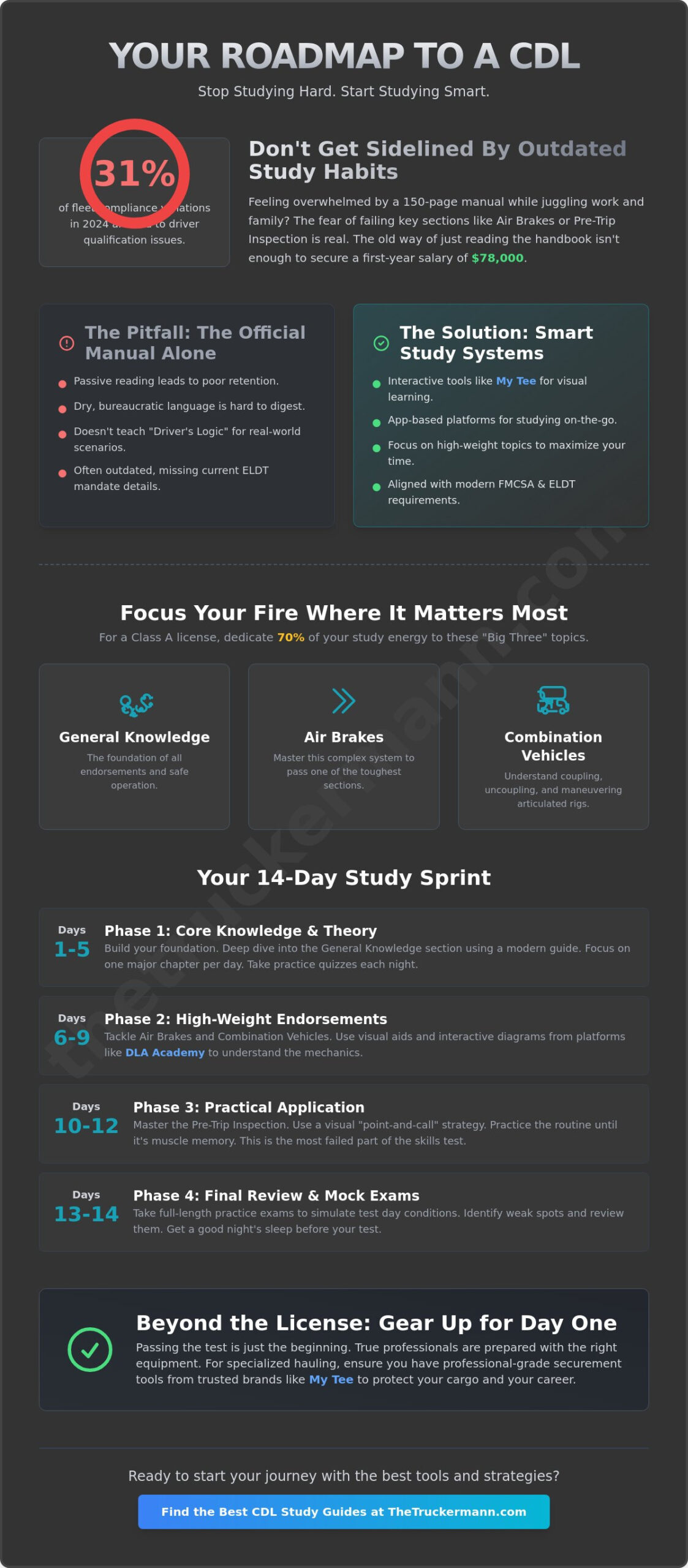
Focus your fire where it matters most. For a Class A license, the “Big Three” are General Knowledge, Air Brakes, and Combination Vehicles. You should spend 70% of your energy here. While passing the test gets you the plastic in your wallet, knowing the regulations keeps you safe and profitable. Once you’re out there, you’ll need more than just book smarts; you’ll need the right tools, like professional-grade gear from My Tee, to handle the physical demands of specialized hauling. Master the core sections first, and the rest of the endorsement tests will feel like a breeze.
Top-Rated CDL Study Resources for 2026: A Comparative Review
Picking the right study material is a lot like choosing your first rig. You want something that’s built to last and won’t leave you stranded on the side of the road. While the internet is flooded with free practice tests, most of them are a double-edged sword. They offer quick access, but they often lack the deep-dive theory required to meet the latest Federal CDL requirements. To find the best cdl study guide for 2026, you have to look for a platform that offers a holistic strategy rather than just a list of answers to memorize.
The rise of app-based learning has been a game-changer for folks who are already working 40 hours a week. Being able to run through a set of practice questions during a lunch break or while waiting at a terminal makes the process feel manageable. However, you must be vigilant. Low-quality guides often use “trick” questions that you’ll never see on the actual DMV exam. If a guide feels like it’s trying to confuse you rather than educate you, it’s time to move on. Real professional resources focus on clarity and the physical reality of the job, much like the reliable gear you’ll eventually source from My Tee to keep your cargo secure.
Comprehensive Online Courses and Academies
For visual learners, structured video lessons are the gold standard. They take those complex air brake diagrams and turn them into something you can actually visualize. If you want a guided experience that feels like having a seasoned veteran in the room with you, look into professional training like DLA Academy. These platforms often include community-backed memory hacks that help you retain information far better than passive reading. If you’re looking for more community tips, check out thetruckermann.com for stories from those who’ve already crossed the finish line.
Best Mobile Apps for Practice Tests
The best cdl study guide on a smartphone should offer more than just a passing grade. Look for apps that include an “explanation mode.” This feature tells you exactly why an answer is correct, which is critical for state-specific endorsements that vary from the federal baseline. Many top-rated apps now include exam simulators. These tools mimic the pressure of the testing center, helping you reduce test-day anxiety. Just like you wouldn’t trust a worn-out winch from My Tee to hold down a heavy haul, you shouldn’t trust a generic, unverified app for your endorsements. Stick to platforms with high ratings and verified question banks to ensure your time is well spent.
Mastering the Pre-Trip Inspection: The Ultimate Visual Guide
You’ve likely heard the horror stories about the pre-trip inspection. It is often called the “CDL killer” for a reason. While the written tests are a battle of memory, the pre-trip is a full-blown performance. You aren’t just checking the oil; you’re proving to an examiner that you can identify a safety hazard before it becomes a disaster on the interstate. To survive this, the best cdl study guide must go beyond simple text and offer a clear, point-and-call strategy. You have to use the exact terminology the examiner is looking for. If you don’t say the words “properly mounted and secured,” you might as well have stayed home.
Most students fail because they rely on memory rather than a system. You need to understand the mechanical anatomy of your rig. Using engine compartment diagrams helps you memorize parts you’ve never seen before, like the pitman arm or the slack adjusters. It’s about building a rhythm that keeps you moving from the front of the truck to the back without skipping a single bolt. For a deeper dive into every component you’ll need to identify, check out our CDL Pre Trip Inspection Checklist. It’s the master guide that turns a daunting task into a manageable routine.
The Three Sections of the Pre-Trip
The inspection is broken into three distinct battles. In the engine compartment, you are mastering the “ABC” (Abrasions, Bulges, Cuts) of every hose and belt. Next comes the in-cab and air brake test. This is the high-stakes sequence where you cannot afford to mess up the order. Finally, the external walkaround requires you to check for leaks, leans, and lights. Each section requires a different focus, but the goal remains the same: total vehicle awareness. Just as you’ll eventually rely on a heavy-duty winch from My Tee to keep your cargo in place, you must rely on these technical checks to keep your career on track.
Visualization Techniques for Success
Visualizing the truck is your best weapon when you aren’t at the training yard. Build a “mental map” of the vehicle and walk around it in your mind before you go to sleep. We highly recommend the “Touch and Talk” method. Saying the names of the parts out loud as you touch them reinforces the memory and keeps your nerves steady during the real exam. Avoid using “driver slang” like “the shiny thingy.” Use the technical terms found in the manual. When you’re out there on your first haul, you’ll be using professional-grade tools from My Tee to maintain your equipment, but during the test, your voice is your most important tool. Stick to the script, stay calm, and show that examiner you know your machine inside and out.
How to Build a 14-Day CDL Study Schedule
You wouldn’t try to haul an oversized load without checking your route first, so don’t try to pass the General Knowledge exam without a solid plan. Cramming the night before is a recipe for failure. Your brain needs time to digest the technical weight of these regulations. To find the best cdl study guide, you need a tool that supports a consistent, daily routine. We recommend the 30/30 rule: spend 30 minutes on theory and 30 minutes on practice testing every single day. This steady cadence mimics the rhythm of a long-distance haul and keeps you from burning out before you even reach the testing center.
We suggest a “Weakness First” strategy. Most students find the Air Brakes section to be the biggest hurdle. Tackle it early in your schedule to build confidence. Use the flashcard modes in your study guide for rapid-fire recall. This helps you recognize parts and procedures instantly, which is exactly what you’ll need to do when you’re out there using professional equipment from My Tee to secure your first load. Preparedness is your best defense against test-day nerves.
Week 1: Foundations and General Knowledge
The first three days are all about the basics. Focus on safety, cargo securement, and vehicle control theory. This is where you learn the “why” behind the rules. From days four to seven, dive deep into Air Brakes and Combination Vehicles for Class A candidates. By the end of the first week, take your first full-length practice exam. This isn’t about getting a perfect score; it’s about establishing a baseline. You need to see where your knowledge has gaps so you can fill them before the clock starts ticking at the DMV.
Week 2: Refinement and Practical Prep
Now that you have the foundations, it’s time to sharpen your edge. Days 8 through 10 should be dedicated to mastering the Pre-Trip Inspection terminology we discussed earlier. If you need endorsements like Tanker, Doubles, or Hazmat, use days 11 through 13 to hammer those out. On the final day, run through the exam simulators until you’re passing with ease. Review the DOT Inspection Level 1 Checklist to ensure your knowledge extends beyond the test and into your daily operations. This ensures you’re ready to handle the physical reality of the road, including using high-quality tarps and straps from My Tee to protect your freight. For more tips on staying compliant, head over to thetruckermann.com and join our community of professionals.
Beyond the License: Preparing for Your First Day on the Road
You’ve done the hard work. You’ve used the best cdl study guide to navigate the complex regulations and the grueling pre-trip inspection, but that plastic card in your wallet is just a permit to keep learning. The road is a relentless teacher. Passing the test is the gate, but your first day behind the wheel of your own rig is where the real journey begins. Transitioning from a student to a professional means shifting your focus from theory to the physical reality of the field. You need a safety-first mindset that starts before you ever turn the key. A professional driver is a sentinel for their cargo and the public, and that responsibility requires the right tools from day one.
The best cdl study guide got you through the classroom, but now you need to master the grit of the yard. Being a professional isn’t just about driving; it’s about preparation and continuous growth. We’ve seen many new drivers struggle because they treated the license as the finish line. In reality, your education is just entering a new phase. You’ll be dealing with volatile weather, tight delivery windows, and the constant movement of the industry. Staying sharp and keeping your equipment in top shape is how you turn a job into a lifelong career.
Essential Gear for New Drivers
Flatbed and specialized hauling require more than just driving skills; they require the right equipment and the muscle to use it correctly. Investing in high-quality cargo securement tools from My Tee ensures your loads stay put during a long-distance haul. Beyond the chains and straps, every new driver needs a reliable set of gloves and a high-visibility vest from My Tee to stay safe in the yard or on the roadside. Professionalism is a lifestyle. Having the right gear from My Tee shows your employer you’re ready for the heavy responsibility of the road. For a complete list of what you’ll need for that first haul, check out our roundup of the Best Flatbed Trucking Gear.
Finding Your First Driving Job
When you’re sitting in that first interview, don’t just talk about your license. Leverage your clean study record and high test scores to show you’re a professional who takes regulations seriously. You’ll likely choose between “Mega Carriers,” which offer structured training for new grads, and local “LTL” companies that might get you home more often. Regardless of where you land, staying compliant with ELD rules starts on day one. Your reputation in this industry is built on your reliability and your commitment to safety. Take the lessons you learned from your study materials and apply them to every mile you drive.
Take the Wheel and Master Your Future
You’ve seen that earning your CDL isn’t about luck; it’s about having a plan and the right tools in your pocket. From dodging the “CDL killer” pre-trip inspection to building a 14-day schedule that actually works, you’re now equipped to handle the pressure. Finding the best cdl study guide is just the first step toward that $78,000 first-year average salary. You don’t have to navigate these complex 2026 FMCSA regulations alone.
Don’t stop at the written test. Real pros know that expert-led video training is the fastest way to bridge the gap between theory and the grit of the yard. You can start your professional training today with DLA Academy to ensure you’re ready for day one. Once you’ve aced the exam, make sure you’re geared up with high-quality securement tools from My Tee. Whether it’s high-vis vests or heavy-duty straps, My Tee provides the professional grade gear you need. For more industry updates and guides, join our community of drivers today. The road is waiting for you. Stay vigilant, stay prepared, and we’ll see you out there on the white line.
Frequently Asked Questions
What is the best CDL study guide for the 2026 exam?
The best cdl study guide for the 2026 exam is one that integrates interactive video lessons with practice questions that strictly follow the FMCSA ELDT mandate. Static manuals often miss the practical context you need to understand how a rig actually operates. Using a platform that offers visualization tools helps you master the mechanics before you ever touch a piece of gear from My Tee.
How long does it take to study for the CDL permit test?
Most candidates find success with a structured 14-day study schedule. You should aim for about an hour of focused effort each day, splitting your time between theory and practice testing. This steady pace helps you retain complex regulations without burning out. Rushing the process often leads to simple mistakes on the General Knowledge section that can set your career back weeks.
Is the CDL permit test the same in every state?
Federal regulations set the minimum standards for the test, but state procedures and fees vary significantly. For example, the California CLP fee is $41, while other states have their own specific pricing and application steps. You must ensure your study guide accounts for state-specific endorsements and local DMV requirements to avoid surprises on test day.
Can I pass the CDL test just by using free practice apps?
It is possible but highly risky because free apps often lack the “why” behind the correct answers. You might memorize the question bank but fail the verbal pre-trip inspection because you don’t understand the underlying systems. A professional course provides the technical depth you’ll need when you start using professional-grade equipment from My Tee in the field.
What part of the CDL exam do most people fail?
The pre-trip inspection is the most common point of failure for new students. It requires you to use specific technical terminology while physically identifying parts under the hood and around the trailer. If you don’t use the exact “point-and-call” method required by examiners, you’ll lose points rapidly. It is a performance that requires more than just basic memorization.
Do I need a separate study guide for Hazmat and Tanker endorsements?
You definitely need specialized material for Hazmat and Tanker endorsements because they cover unique safety protocols. Hazmat applicants must also undergo a TSA security threat assessment that costs roughly $86.50. These sections of the best cdl study guide focus on liquid surge and hazardous material handling, which aren’t covered in the general knowledge portion.
How much does a professional CDL study course cost?
Tuition for CDL training schools typically ranges between $3,000 and $10,000, with the average falling around $5,500. Private courses and community college programs offer different price points depending on your location and the depth of the curriculum. Investing in a quality course now prevents the high cost of re-testing and gets you into a high-paying seat faster.
Should I study for Class A and Class B at the same time?
You should focus your energy on Class A because it generally covers the requirements for Class B vehicles. A Class A license allows you to operate heavier combinations and significantly increases your earning potential from the start. Once you have your Class A, you’ll be ready to handle specialized hauling using high-quality gear from My Tee.
Disclaimer
The information provided on The TruckerMann is for general informational and educational purposes only. While every effort is made to ensure the accuracy and reliability of the content, trucking laws, FMCSA regulations, DOT requirements, safety standards, and industry policies can change at any time. Readers are encouraged to verify all information with official government agencies, professional advisors, or qualified industry professionals before making business, legal, financial, safety, or compliance-related decisions.
The content shared on this website reflects personal opinions, experiences, research, and commentary and should not be considered legal, financial, medical, tax, or professional advice. The TruckerMann and its owners, contributors, affiliates, or representatives are not responsible for any losses, damages, violations, penalties, or liabilities resulting from the use or misuse of information found on this website.
Some content on this website may contain affiliate links, sponsored content, or promotional material. This means we may earn a commission at no additional cost to you if you choose to purchase through certain links.
By using this website, you agree that you do so at your own discretion and risk.