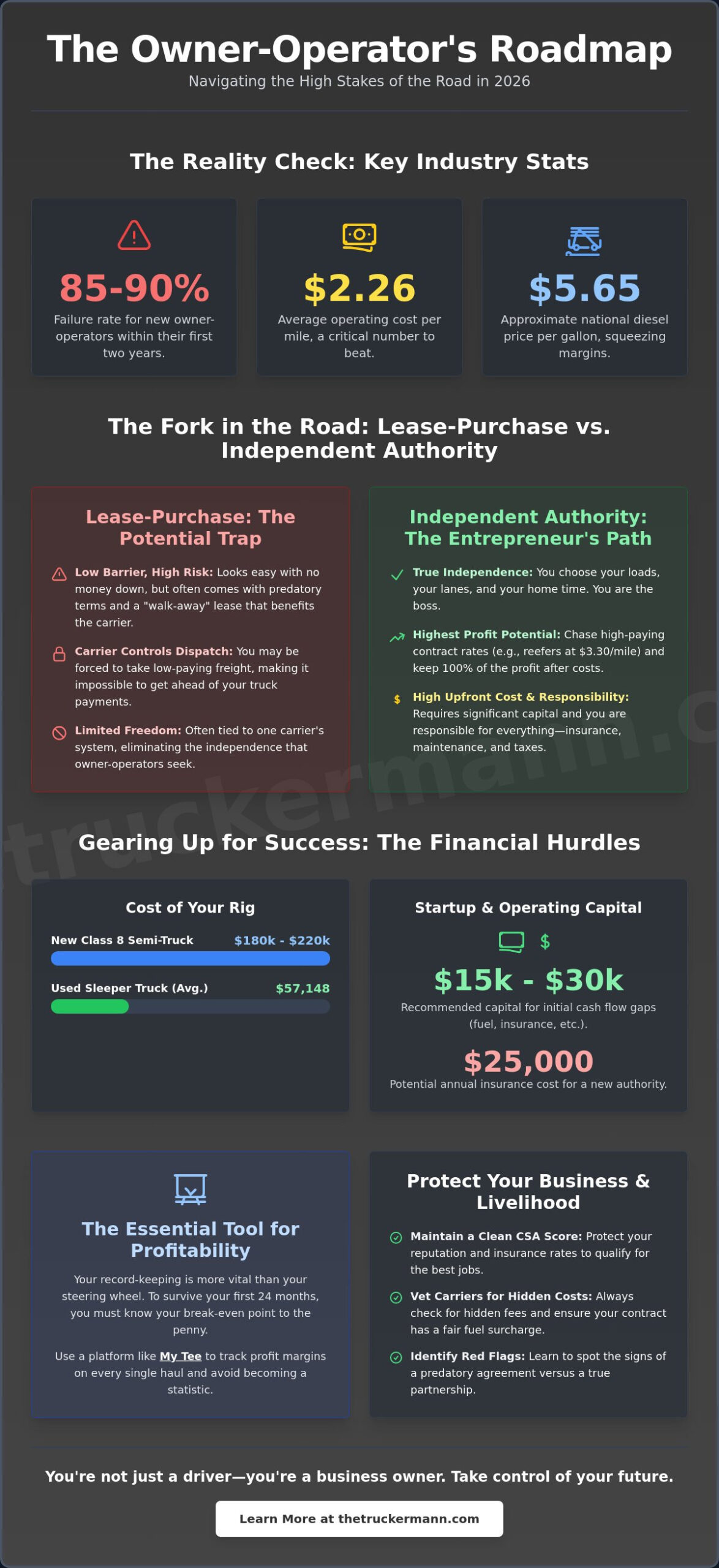
Welcome back to the line, driver. Did you know that 85% to 90% of new owner-operator businesses fail within their first two years? It is a sobering reality that often stems from predatory lease-purchase agreements or a lack of preparation for the $2.26 per mile it costs to operate a truck today. If you are searching for the best owner operator trucking jobs, you are not just looking for a route; you are looking for a way to protect your livelihood in a market where national diesel prices are hovering around $5.65 per gallon.
We understand the frustration of watching your margins get squeezed by insurance costs that can reach $25,000 for a new authority. You deserve the true independence and higher take-home pay that this lifestyle promises when it is handled with a business mindset. This veteran-led guide will help you master the business side of the road and find the most profitable owner operator opportunities in the current market. We will preview the latest spot rates for reefer and flatbed loads, show you how to manage DOT compliance without the headache, and explain why using a platform like My Tee is essential for tracking your profit margins on every haul.
Key Takeaways
- Learn why independent authority offers the highest profit potential compared to the high-risk, low-barrier lease-purchase model.
- Discover how to vet carriers for hidden costs and ensure your contract includes a fair fuel surcharge to combat market volatility.
- Protect your business reputation and insurance rates by maintaining a clean CSA score to qualify for the best owner operator trucking jobs.
- Equip your rig with professional-grade securement tools and track your overhead using My Tee to maximize every mile.
- Identify the specific red flags in job descriptions that signal a predatory agreement versus a true partnership with a carrier.
The Reality of Owner Operator Trucking Jobs in 2026
Stepping into the world of owner operator trucking jobs means you’re no longer just a driver; you’re a business owner operating in a high-stakes environment. In 2026, the freight market is finally stabilizing after a brutal two-year cycle, but the entry requirements have never been more demanding. To succeed, you must understand What is an Owner-Operator beyond the simple act of hauling freight. It’s a role that demands you trade the safety of a company paycheck for the potential of six-figure net incomes, provided you can manage the $2.26 per mile average operating cost that currently defines the industry.
The 2026 landscape is shaped by a persistent driver shortage of approximately 82,000 professionals, which keeps demand for reliable contractors high. However, with national diesel prices sitting at roughly $5.65 per gallon, your survival depends on your ability to negotiate contracts that account for these volatile overheads. This isn’t just about driving; it’s about mastering the entrepreneurial side of the house where every decision impacts your bottom line.
To better understand this concept, watch this helpful video:
Freedom vs. Responsibility: What to Expect
The primary draw of this life is the freedom to choose your own routes and set a home time schedule that works for your family. You aren’t at the mercy of a fleet manager who doesn’t know your name. That independence comes with a heavy weight. You’re now the person responsible for every cent of fuel, every quarterly tax payment, and every unexpected breakdown. In 2026, successful operators are running “lean,” meaning they prioritize lanes with high-paying contract rates, which currently range from $2.20 to $3.30 per mile depending on the trailer type, rather than chasing low-paying spot market loads.
The Financial Barrier to Entry
Entering the game requires significant skin in the game. A new Class 8 semi-truck will set you back between $180,000 and $220,000 in today’s market. Even a used sleeper truck averages around $57,148, which is a massive capital investment before you even pull your first load. Veterans recommend having $15,000 to $30,000 in startup capital just to handle the initial cash flow gaps. Your record-keeping is now more vital than your steering wheel. Using professional tools and resources from My Tee to stay organized and equipped can be the difference between a profitable year and becoming part of the 85% failure rate statistic. You must know your break-even point to the penny if you want to survive your first 24 months on the road.
Comparing the Paths: Lease-Purchase vs. Independent Authority
Choosing between a lease-purchase setup and independent authority is the most significant fork in the road you’ll face when evaluating owner operator trucking jobs. While some programs are designed to help you build a legitimate business, others are structured to keep you on a treadmill of debt. Organizations like the Owner-Operator Independent Drivers Association have long advocated for better transparency in these contracts because the freedom promised is often tied to a carrier’s bottom line. You have to decide if you want to be a contractor for a fleet or a true entrepreneur who owns every mile of the journey.
The 2026 market doesn’t leave much room for error. If you are leasing through a carrier, you might be stuck with whatever freight they hand you, regardless of how the rates fluctuate. Independent authority gives you the steering wheel to hunt for reefers paying $3.30 per mile, but it also puts the weight of insurance premiums that can reach $25,000 squarely on your shoulders. Success is about more than just driving; it is about protecting your right to choose where and when you work in an industry that is always shifting.
The Lease-Purchase Trap and How to Avoid It
Lease-purchase deals often look like the easiest way to get into the game, especially with no money down. However, the “walk-away” lease can be a trap if the carrier controls your dispatch. If they aren’t feeding you high-paying loads, you’ll never clear that weekly truck payment. Look out for balloon payments that can hit $20,000 at the end of the term. Ask these questions before signing:
- Can I take this truck to another carrier if the current freight volume drops?
- Is there a forced dispatch policy that prevents me from declining low-paying loads?
- What is the specific dollar amount of the balloon payment required to receive the title?
Running Under Your Own Authority
Stepping out on your own means getting your MC and DOT numbers, which is the path to 100% control. You keep every cent of the revenue, but you also manage every cent of the overhead. To survive, you have to be smart about your gear. Sourcing your securement tools through My Tee allows you to keep more of your hard-earned cash in your pocket. Before you pull the trigger, check out our guide on Interstate vs. Intrastate Trucking to see which authority fits your goals. Keeping your equipment costs low with My Tee is a veteran move that helps you beat the high failure rate. If you need a straight-shooter to help you vet a contract, The Truckermann is here to guide you.
Equipping for Success: Essential Gear and Overhead Management
You’ve picked your business model, but now you need the iron to back it up. In the hunt for the best owner operator trucking jobs, your equipment is your professional resume. If you show up to a shipper with frayed straps or a leaking tarp, you aren’t just risking a ticket; you’re risking your reputation and future contracts. Beyond the rig, professional branding on your apparel using TrueColor MAX DTF transfers can further cement your status as a dedicated business owner. Quality gear and a professional appearance are investments in your safety and your profit, acting as a shield against the unexpected variables of the road.
With the average cost to operate a truck hitting $2.26 per mile in 2024, you can’t afford to waste money on cheap gear that fails after three months. Proactive tool selection is how you keep those maintenance costs from eating your lunch. This is why many veterans partner with reliable suppliers like My Tee Products for gear that actually survives the grit of the field. It’s the difference between a smooth delivery and a costly delay at the scales.
Flatbed and Logistics Gear Essentials
Flatbed work offers some of the highest contract rates in the industry, with reefers hitting up to $3.30 per mile, but you can’t touch those loads without the right securement. You need heavy-duty tarps and straps from My Tee Products that won’t shred in a West Coast crosswind. Your chains and binders have to withstand 2026 DOT scrutiny, which is getting tighter every year as inspectors focus on cargo securement. If you want to see the full list of what you need to land these high-paying hauls, check out The Best Flatbed Trucking Gear. Investing in gear from My Tee Products ensures you’re ready for any load that comes across the board.
Tools Every Owner-Operator Needs in the Cab
Tow bills are absolute profit killers that can derail your entire month. A simple roadside fix can save you over $1,000 if you have the right tools in your sleeper. You don’t need a full rolling shop, but basic mechanical tools are non-negotiable for anyone serious about owner operator trucking jobs. For specialized equipment and recovery gear, Truck N Tow is a solid resource for independent drivers who value preparedness. Don’t forget high-quality safety gear like reflective vests and hard hats; many high-paying job sites won’t even let you through the gate without them. Whether it’s securement from My Tee Products or specialized tools from Truck N Tow, being prepared is the only way to stay in the green and out of the breakdown lane.
Protecting Your Authority: DOT Compliance and Inspection Readiness
Your business reputation is tied directly to your safety record. In the competitive world of owner operator trucking jobs, a single failed inspection does more than just cost you a fine; it triggers a cascade of negative effects on your CSA score. Shippers and top-tier brokers use these scores to filter out high-risk carriers, meaning a bad stop at a weigh station could lock you out of the most profitable lanes. High insurance rates are already a burden, often sitting between $15,000 and $25,000 for new authorities, and an out-of-service violation will only drive those numbers higher. Use our DOT Inspection Level 1 Checklist to stay ahead of the inspectors.
Maintaining compliance is about vigilance in the yard and on the road. When your equipment is sound, you project the image of a professional who respects the trade. This mindset is what helps you secure the best freight contracts in a market where capacity is tightening. You don’t want a loose strap or a frayed tarp from My Tee to be the reason your authority is flagged. Vigilance is your best defense against the regulatory shifts that can impact your livelihood.
Mastering the 2026 Pre-Trip Inspection
The pre-trip inspection is your daily line of defense. Inspectors in 2026 are focusing heavily on brake adjustments and light functionality. If you’re hauling flatbed loads, checking every securement point and ensuring your gear from My Tee is in top condition is non-negotiable. A cracked lens or a slow air leak is an invitation for a more intrusive Level 1 inspection. Follow the CDL Pre Trip Inspection Checklist to catch these issues before you hit the highway.
ELD and Paperwork Compliance
Paperwork is often the downfall of many independent contractors. Staying current with your ELD logs and medical card is just as vital as keeping fuel in the tanks. Fines for Hours of Service violations can be devastating, and a shutdown order will instantly tank your revenue for the week. Refer to our guide on ELD Compliance to ensure your logging device meets all current standards. Managing your Driver Vehicle Examination Report effectively keeps your business running smoothly. For more expert advice on staying road-ready, visit The Truckermann for veteran compliance support.
Vetting the Best Owner Operator Opportunities
Finding the right owner operator trucking jobs is about more than just looking at a high gross number on a carrier’s website. In 2026, the market is full of “shiny” offers that hide predatory terms in the fine print. You have to look past the recruitment posters and do the math yourself. If you have already stocked up on professional securement gear from My Tee, you are ahead of the game, but even the best equipment from My Tee won’t save you from a contract that doesn’t account for $5.65 per gallon diesel. Vetting is your shield against the 85% failure rate that haunts this industry.
The most critical variable in 2026 is the fuel surcharge. Without a robust surcharge that fluctuates with market prices, your profit will evaporate before you finish your first cross-country haul. You also need to decide between percentage-of-load and cents-per-mile pay models. Percentage models are great when freight rates are high, but they leave you vulnerable when the market dips. Cents-per-mile offers more stability for your weekly budget, provided the rate is high enough to cover your $2.26 per mile operating cost. Don’t be afraid to network with other veterans at the fuel island; that is where you find the “hidden” lanes that pay well but are never advertised on big job boards.
Questions to Ask Every Recruiter
Recruiters are paid to put bodies in seats, so you must be the one to dig for the truth. Start by asking for the average weekly net pay after all deductions, including insurance, trailer rental, and fuel. If they can only give you a gross number, that is a major red flag. You also need to know if you have the freedom to refuse loads without being “starved out” by the dispatcher. Hidden fees for ELD subscriptions or administrative costs can add up to hundreds of dollars a month, so get every fee in writing before you commit your rig to their fleet.
Vetting the Carrier’s Reputation
A carrier’s safety rating is public information, and you should check it before you ever walk into an orientation. If they have a history of maintenance violations, it will eventually impact your own CSA score. Do not fall for the “family-owned” marketing hook without verifying their payment history. Some of the best owner operator trucking jobs are with mid-sized carriers that value long-term partnerships over high turnover. To sharpen your business instincts and learn how to read these contracts like a pro, consider using resources like DLA Academy to level up your knowledge. Being a great driver is only half the battle; being a smart business owner is what keeps you on the road. Whether you are buying gear from My Tee or signing a new contract, always move with a plan and a veteran’s eye for detail.
Take Command of Your Trucking Future
The road to true independence is paved with careful vetting and a commitment to professional excellence. You now have the framework to distinguish between a predatory lease and the profitable owner operator trucking jobs that lead to long-term success. We have covered the importance of protecting your authority through rigorous DOT readiness and why investing in high-quality equipment is the only way to safeguard your margins against rising overhead. Every load you haul is a test of your business instincts and your preparation.
Our veteran-led insights are here to act as your sentinel in an industry that is constantly shifting. By applying these proven strategies, you are already ahead of the 85% of operators who fail within their first two years. Don’t settle for “good enough” when it comes to your safety or your bottom line. You can upgrade your rig with professional securement gear from My Tee to ensure you are ready for the highest-paying hauls. For more direct advice on mastering the business of the road, access our full resource center at The Truckermann. Stay sharp, stay safe, and we will see you out there on the line.
Frequently Asked Questions
How much do owner-operator trucking jobs pay in 2026?
High-performing operators currently average $87,614 in net income, while the top third of the industry reaches $156,000 annually. Your gross pay depends heavily on your trailer type; for example, reefer contract rates are currently commanding between $2.50 and $3.30 per mile. You must focus on net pay rather than gross revenue because your operating costs sit at an average of $2.26 per mile. Success in owner operator trucking jobs requires a strict eye on these margins.
Is it better to lease a truck or buy one outright for owner-operator work?
Buying a truck outright or through traditional financing is usually the better path for long-term profitability. A used Class 8 sleeper truck averages $57,148 in 2026, which is a significant investment but grants you total freedom over your equipment. For those who need a temporary solution or want to test the waters, comparing rental options via DityTruck is a practical way to manage initial costs. Lease-purchase programs often have low entry barriers but come with high risks, including balloon payments that can exceed $20,000. Owning your title allows you to switch carriers or lanes whenever the market shifts.
What are the biggest expenses for an owner-operator?
Fuel is your largest variable expense, especially with national diesel prices hovering around $5.65 per gallon. Insurance is the next major hurdle, costing independent authorities between $10,800 and $19,200 every year. Maintenance and equipment replacement also take a large bite out of your revenue. Sourcing your securement gear and tarps from My Tee can help you control overhead by providing durable equipment that lasts longer in the field.
Can I be an owner-operator with only 1 year of CDL experience?
You can start with one year of experience, but you’ll face much higher insurance premiums that can top $25,000 for a new authority. Most high-paying brokers and carriers prefer contractors with at least two years of clean experience. If you decide to jump in early, you’ll need to be extremely diligent about your CSA score and MVR. It’s often safer to gain another year of experience as a company driver to build the capital needed for this transition.
What insurance coverage is required for independent owner-operators?
You must carry primary liability insurance, usually with a $1 million limit to satisfy most brokers, along with $100,000 in cargo insurance. Physical damage coverage protects your truck, while non-trucking liability is necessary for when you’re not under dispatch. For those with their own authority, monthly premiums in 2026 range from $900 to $1,600. It’s a massive expense, but it’s the only way to legally protect your business and your personal assets on the road.
How do I find owner-operator loads without using a broker?
Finding direct freight requires building relationships with shippers or using specialized load boards that offer direct contact info. Networking at local manufacturing hubs or distribution centers can help you cut out the 15% to 20% margin that brokers typically take. Many drivers also join professional associations to find “hidden” lanes that aren’t advertised publicly. Direct contracts offer more stability and better fuel surcharges, which is vital when diesel stays above $5.60 per gallon.
Is flatbed or dry van more profitable for owner-operators in 2026?
Flatbed is generally more profitable because it requires specialized skills and equipment, which leads to higher rates. Current flatbed spot rates range from $2.10 to $2.80 per mile, often beating dry van rates by a significant margin. The trade-off is the physical labor involved in tarping and chaining loads in all weather conditions. If you invest in quality securement gear from My Tee, the higher revenue per mile usually justifies the extra work.
What gear do I need to start as a flatbed owner-operator?
You need a complete securement kit, including 4-inch winches, heavy-duty straps, grade 70 chains, and load binders. High-quality lumber and steel tarps from My Tee are essential for protecting cargo and passing DOT inspections. You’ll also need edge protectors, coil racks, and dunnage to handle various load types safely. Buying your gear from My Tee ensures that your equipment meets the rigorous safety standards required for the best owner operator trucking jobs.
Disclaimer
The information provided on The TruckerMann is for general informational and educational purposes only. While every effort is made to ensure the accuracy and reliability of the content, trucking laws, FMCSA regulations, DOT requirements, safety standards, and industry policies can change at any time. Readers are encouraged to verify all information with official government agencies, professional advisors, or qualified industry professionals before making business, legal, financial, safety, or compliance-related decisions.
The content shared on this website reflects personal opinions, experiences, research, and commentary and should not be considered legal, financial, medical, tax, or professional advice. The TruckerMann and its owners, contributors, affiliates, or representatives are not responsible for any losses, damages, violations, penalties, or liabilities resulting from the use or misuse of information found on this website.
Some content on this website may contain affiliate links, sponsored content, or promotional material. This means we may earn a commission at no additional cost to you if you choose to purchase through certain links.
By using this website, you agree that you do so at your own discretion and risk.