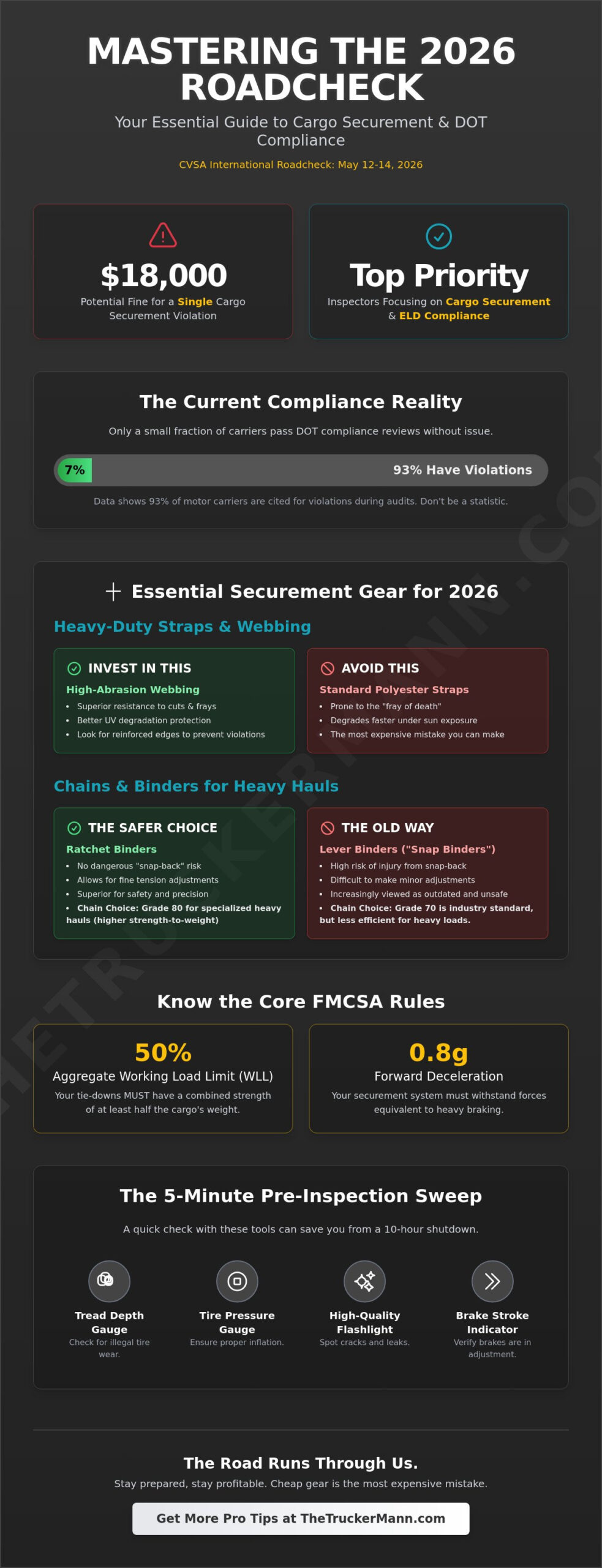
Did you know that a single cargo securement violation in 2026 can now drain your bank account by up to $18,000? Hey Friend, I know the frustration of staring at a rusted ratchet binder or a frayed strap while the clock is ticking on a tight delivery. With the CVSA Roadcheck 2026 scheduled for May 12-14, the FMCSA is making it clear that cargo securement and ELD compliance are the top priorities for inspectors this year. It’s a tough reality when you realize that only 7% of motor carriers are currently passing DOT compliance reviews without any violations. You work too hard to let a cheap wrench or a snapped tie-down sideline your rig and your paycheck.
I believe that having the best trucking tools in your side box is the difference between a profitable haul and a costly roadside nightmare. This guide is designed to help you build a one-and-done toolkit that meets the latest 49 CFR Part 393 requirements and stands up to heavy use. We are going to break down the essential gear for 2026, from high-tensile securement systems to the latest AI-powered in-cab technology. Because at the end of the day, the road runs through us, and being prepared is the only way to master it.
Key Takeaways
- Learn why high-abrasion webbing is replacing standard polyester and how to stay ahead of the $18,000 cargo securement fines.
- Master the five-minute pre-inspection tool sweep that can save you from a 10-hour shutdown during the 2026 Roadside Blitz.
- Discover the best trucking tools for your “get home” repair kit, including why a high-quality 3/8″ drive socket set is a driver’s best friend.
- Explore the 2026 “Connected Cab” tech that turns your rig into a high-efficiency mobile office without sacrificing your comfort.
- Understand The Truckermann’s hierarchy of gear to identify which tools are worth the splurge and where you can safely save your cash.
Essential Securement & Cargo Logistics Gear
Hey Friend, when you are pulling into a scale house during the CVSA Roadcheck from May 12 to 14, 2026, the inspector isn’t looking at your paint job. They are looking at your securement. Cargo securement violations are currently the fourth most common reason for out-of-service orders, and with a single violation potentially costing you up to $18,000, the stakes have never been higher. The FMCSA is cracking down on the 50% aggregate working load limit (WLL) rule, meaning your tie-downs must handle at least half the weight of your cargo. If your gear looks weathered or fails to meet the 0.8 g forward deceleration requirement, you aren’t just getting a ticket; you are getting parked.
I’ve seen too many drivers try to save a few bucks on “bargain” straps only to lose thousands in fines and downtime. The Truckermann knows that cheap gear is the most expensive mistake you can make. Investing in the best trucking tools for securement isn’t about luxury; it’s about survival in a 2026 market where only 7% of carriers pass audits without a hitch. To get a better handle on the gear you need, watch this helpful video:
The evolution of strap technology has moved fast. We’ve seen a massive shift from standard polyester to high-abrasion webbing. This newer material resists cuts and UV degradation much better than the old school stuff. If you’re confused by some of the technical jargon inspectors throw at you, it’s helpful to check a trucking industry glossary to understand exactly what they mean by WLL or direct securement. For a deep dive into what currently hits the mark, you can check out my latest flatbed product reviews to ensure your setup is bulletproof.
Heavy-Duty Straps and Winch Bars
When you’re choosing 4-inch winch straps, look for reinforced edges. These are the best trucking tools for preventing the “fray of death” that triggers an immediate DOT violation. Pair these with a high-quality combination winch bar. It offers an ergonomic advantage that saves your shoulders and joints when you’re tightening down a dozen loads a week. You can find a professional-grade selection of this gear at Mytee Products, where the quality actually matches the demands of the road.
Chains and Binders for Heavy Hauls
For the heavy stuff, you need to know the difference between Grade 70 and Grade 80 transport chains. Grade 70 is the industry standard, but Grade 80 is becoming more common for specialized heavy hauls due to its higher strength-to-weight ratio. When it comes to binders, the safety debate is over: ratchet binders are the superior choice. They don’t have the “snap-back” danger of lever binders and allow for much finer tension adjustments. Keep your chains clean and lightly oiled; a rusted chain is an invitation for an inspector to start digging deeper into your logs. The road runs through us, so let’s make sure we’re hauling safely.
DOT Inspection Prep: Tools to Pass the Level 1 Roadcheck
Hey Friend, the DOT isn’t looking for reasons to pass you; they’re looking for reasons to park you. A Level 1 inspection is the most comprehensive check you’ll face, covering everything from your documentation to the components under your chassis. In 2026, the average penalty for an out-of-service violation has climbed to $4,200, a cost that can easily wipe out your profit for the week. Performing a 5-minute pre-inspection sweep with the best trucking tools in your side box can be the difference between a clean CVSA decal and a 10-hour shutdown.
Inspectors are trained to find the small defects that suggest a larger pattern of neglect. If your tire tread is low or a brake stroke is out of adjustment, they’ll dig until they find a reason to put you out of service. By mapping your toolkit to the CDL pre trip inspection checklist, you’re taking a proactive stance against roadside enforcement. You need to ensure every component of your rig adheres to the FMCSA cargo securement rules, especially since securement and ELD compliance are the primary focus areas for the 2026 Roadside Blitz.
Measurement and Diagnostic Tools
Accuracy is your best defense when you’re facing an inspector with a badge and a clipboard. While the old tire thumper is a classic, a digital tire pressure gauge is one of the best trucking tools for the modern driver. In 2026, fuel efficiency and tire longevity depend on precise PSI levels that a wooden stick simply cannot measure. Similarly, a dedicated tread depth gauge is non-negotiable. Eyeballing your rubber is a fast track to a bald tire citation. Don’t forget a set of brake stroke indicators; these simple markers allow you to verify that your slack adjusters are functioning correctly without needing a second person to pump the brakes. It’s a small investment that keeps you compliant and moving.
High-Visibility and Safety Lighting
You can’t fix what you can’t see, and neither can you spot a violation before it becomes a ticket. A rechargeable LED work light with a magnetic base is essential for conducting thorough under-chassis inspections in the early morning or late at night. It allows you to use both hands to check for cracks in the frame or leaks in the air lines. Keeping a stash of spare fuses and bulbs that actually match 2026 truck models is equally vital. A single burnt-out marker lamp can be the trigger that leads an officer to conduct a full Level 1 inspection. You can find reliable replacement lighting and electrical tools at Truckntow to ensure you’re never caught in the dark. For more tips on staying road-ready, take a look at our latest gear reviews to keep your rig in top shape.
Roadside Maintenance: The “Get Home” Repair Kit
Hey Friend, there’s a certain pride that comes with being a “Roadside Surgeon.” It’s that moment when something goes sideways at 2 AM, and instead of reaching for your phone to call for a $500 service truck, you reach for your tool box. Being prepared to handle minor repairs yourself isn’t just about saving money; it’s about keeping your clock running and staying in control of your schedule. In 2026, where every minute of drive time is tracked by AI-powered systems, a simple fix that takes twenty minutes can save your entire week’s profit. You don’t want to be the driver waiting four hours for a mechanic to tighten a single hose clamp.
Building a “get home” kit requires a balance between capability and cab space. You don’t need a rolling chest that takes up half your sleeper. You need a curated selection of the best trucking tools that address the most common roadside failures. I always recommend starting with a high-quality 3/8″ drive socket set. It’s the perfect middle ground for torque and portability, handling everything from interior trim to battery terminals. Pair this with what I call the “Big Three”: a three-pound sledgehammer, a 24-inch pry bar, and a massive pair of tongue-and-groove pliers. These three items alone can solve a massive percentage of the mechanical headaches you’ll face behind the wheel.
The Mechanical Core
While adjustable wrenches have their place, they have limits. They’re notorious for rounding off bolt heads when you’re applying real pressure. When things get serious, reach for the real deal. I also swear by heavy-duty zip ties and high-grade duct tape for temporary fixes that actually work. Whether it’s securing a loose mudflap or pinning back a dangling air line, these are the unsung heroes of the highway. For those of us pulling open decks, staying ahead of wear is critical. You can learn more about keeping your hardware in top shape by reading our guide to mastering flatbed gear maintenance. It’s better to maintain your gear in the yard than to fight it in the rain.
Emergency Recovery Gear
Sometimes the road turns against you despite your best efforts. Every professional driver needs to carry a high-tensile tow strap. Even if your rig isn’t the one being pulled, having the right gear to help a brother out or get yourself out of a slick spot is part of the code. Safety lighting is just as crucial for your survival. Federal regulations require every commercial motor vehicle to be equipped with at least three bidirectional emergency reflective triangles to mark your position if you’re disabled on the shoulder. Don’t forget a set of flares for those low-visibility nights. Being seen is the first step to getting home safe. Using the best trucking tools to stay visible and mobile is the mark of a true professional. The road runs through us, so let’s make sure we have the gear to keep it moving.
In-Cab Tech and Comfort: The Lifestyle Tools
Hey Friend, let’s talk about the space where you spend 70 hours a week. The road runs through us, but it doesn’t have to run over our comfort. In 2026, the “Connected Cab” is more than just a buzzword; it’s a survival strategy for the modern highway. With the FMCSA doubling down on ELD compliance in 2026, your cab has evolved into a high-functioning command center. The best trucking tools for your interior must bridge the gap between regulatory necessity and personal well-being. Whether you are managing data-driven insights from an AI-powered TMS like McLeod 25.2 or just trying to stay awake during a night haul, your environment dictates your performance.
Physical fatigue is a silent killer in this industry. The “trucker’s hunch” is a real medical issue that sidelines thousands of veterans every year. Investing in high-quality memory foam seat cushions and adjustable lumbar supports is a proactive move for your career longevity. To keep your mobile office powered, a 2000-watt pure sine wave inverter is now the gold standard. It provides the clean power required for sensitive laptops and medical devices without the risk of surging. Cheap power management is a gamble that usually ends with a fried motherboard or a dead battery when you’re parked in the middle of nowhere. Keeping your electronics safe is just as vital as keeping your cargo secure.
Communication and Navigation
Clear communication is a safety requirement, especially when navigating tight receivers or calling in a breakdown. The best Bluetooth headsets in 2026 feature advanced noise-canceling technology that cuts through the roar of a high-decibel haul. When it comes to navigation, I always suggest a dedicated truck GPS unit paired with a reliable smartphone app. Why both? Dedicated units are programmed for bridge heights and weight limits, while apps often provide faster real-time traffic updates. Staying hands-free isn’t just about avoiding a ticket; it’s about keeping your focus on the road while managing your digital logs. If you’re looking to upgrade your dash setup, check out our latest tech recommendations to see what the pros are using.
Climate and Sleep Quality
If you’re running a rig without an APU, portable 12V fans and heaters are lifesavers during those long nights at the truck stop. Sleep is the foundation of safety, and you can’t get quality rest if you’re fighting the sun or the streetlights. Heavy-duty blackout curtains are a critical tool for any driver who needs to catch their 10 hours during the day. For a deeper look at what to pack for your sleeper berth, take a look at our ultimate guide to professional trucking gear. The best trucking tools for comfort are the ones that ensure you wake up refreshed and ready for the next 600 miles.
Building Your Kit: Quality Over Quantity in 2026
Hey Friend, don’t let a $10 tool stand in the way of a $10,000 load. It’s a hard lesson I’ve seen too many drivers learn on the side of the road while waiting for a service truck. When you’re choosing the best trucking tools, you have to think like a business owner. The Truckermann’s hierarchy of tool purchases is simple: splurge on anything that keeps you compliant or keeps your rig moving. You can save your pennies on cab decorations and fancy seat organizers, but never compromise on your binders, straps, or diagnostic gear. A cheap strap that snaps under a 0.5 g lateral load doesn’t just cost you a ticket; it costs you your reputation and potentially your livelihood.
Organization is just as critical as the quality of the steel. Your side box should be set up for rapid deployment. When an inspector asks to see your spare fuses or your securement ratings, you need to produce them in seconds. Fumbling through a mountain of loose hardware sends a signal that you’re unprepared, and that’s when they start looking for more reasons to park you. If you’re a rookie preparing for your first solo run, here are the top 10 must-haves for your kit:
- Digital tire pressure gauge: For fuel efficiency and safety.
- Tread depth gauge: To avoid the “bald tire” out-of-service order.
- 3/8″ drive socket set: The versatile core of your repair kit.
- High-abrasion 4-inch straps: Durable enough for 2026 standards.
- Ratchet binders: The safest way to secure heavy loads.
- Magnetic LED work light: For hands-free night inspections.
- Noise-canceling Bluetooth headset: To stay hands-free and focused.
- Blackout curtains: To protect your 10-hour rest period.
- Heavy-duty zip ties and duct tape: For the “get home” temporary fixes.
- 2000W Pure Sine Wave Inverter: To safely power your modern gadgets.
Sourcing Professional Gear
When it comes to the best trucking tools for securement, specialized retailers like Mytee Products beat the big-box stores every single time. They understand the WLL requirements and the grit of the highway. Building a relationship with a dedicated supplier can often lead to bulk discounts on straps and chains, which helps your bottom line. I also look for gear with solid warranties. The Truckermann only carries tools with a guarantee because if a manufacturer won’t stand behind their product, I won’t stand behind it on my trailer.
The Road Ahead
The industry is moving fast, and your kit needs to move with it. As truck technology shifts and regulations like the 2026 drug testing panel updates take effect, staying prepared is the only way to stay professional. Being a driver is about more than just steering; it’s about mastering the machine and the mission. Keep your tools sharp, your logs clean, and your head up. Ready to upgrade? Shop the best flatbed and securement gear at Truckntow. Remember, the road runs through us, and we’re the ones who keep the world moving.
Master the Road with a Professional Edge
Hey Friend, navigating the 2026 landscape means staying one step ahead of the FMCSA and the constant wear of the highway. We’ve explored how high-abrasion straps and precise diagnostic tools turn a daunting Level 1 inspection into a routine pass. Equipping yourself with the best trucking tools isn’t just about convenience; it’s about guarding your CDL and ensuring every mile you roll contributes to your bottom line. You now have the blueprint to transform your rig into a masterclass in efficiency and comfort.
By prioritizing trucker-tested durability and using our direct access to industry leaders like Mytee and Truckntow, you’re choosing a path of preparedness over the risk of costly violations. Safety isn’t a suggestion in this industry; it’s the foundation of our brotherhood. Don’t let a single rusted binder or a failed sensor be the reason you miss your next load or a weekend at home. Our focus remains on DOT compliance and your safety every time you climb behind that wheel.
Upgrade your rig today with professional-grade gear at Mytee Products
Stay vigilant, stay professional, and keep those wheels turning toward your next opportunity. The Road Runs Through Us.
Frequently Asked Questions
What are the most essential tools for a new truck driver in 2026?
Hey Friend, if you’re just starting out, your first purchases should be a digital tire pressure gauge and a tread depth gauge. These are the best trucking tools for preventing the most common “driver observed” violations that lead to out-of-service orders. You should also carry a high-quality 3/8″ drive socket set and a reliable LED flashlight to conduct thorough pre-trip inspections every morning before you hit the road.
Are cordless impact wrenches worth the investment for roadside tire changes?
Cordless impact wrenches are great for mudflaps or minor bracket repairs, but they usually don’t have the torque required for a full commercial tire change. Most 1/2 inch impacts top out around 1,400 foot-pounds, while lug nuts on a heavy-duty rig often require much more force or specialized equipment. They’re a fantastic convenience tool for your kit, but they won’t replace the need for a service truck during a high-speed blowout.
What tools do I need to stay compliant with DOT Level 1 inspections?
To pass a Level 1 inspection, you need tools that allow you to verify your rig’s safety components. This includes a tread depth gauge to ensure you meet the 2/32″ and 4/32″ requirements and a digital PSI gauge for accurate tire pressure readings. A magnetic LED work light is also vital for checking the undercarriage for frame cracks or air leaks, showing the inspector that you are proactive about FMCSA safety standards.
Where can I buy professional-grade flatbed securement tools online?
You should source your heavy-duty gear from specialized retailers like Mytee Products or Truckntow. These suppliers understand the specific WLL requirements and the harsh conditions of the open road. Buying your best trucking tools from industry leaders ensures that your straps and chains come with the necessary DOT-compliant tags required to pass a roadside inspection blitz without any headaches.
How do I organize a small truck tool box for maximum efficiency?
Efficiency in a small space is all about rapid deployment and accessibility. Place your most frequently used items, like your tire gauge and work light, in the top tray or a side pouch. Use labeled bags or clear containers for smaller hardware like fuses and zip ties so you don’t waste time digging through a mountain of steel when an inspector is standing over your shoulder.
Can I use standard hardware store straps for commercial cargo securement?
Standard hardware store straps are not built for the demands of the logistics industry and usually lack the required WLL tags. Commercial securement systems must be able to withstand 0.8 g of forward deceleration, a standard most consumer-grade straps cannot meet. Using non-compliant gear is a fast track to an $18,000 fine and an immediate out-of-service order during the 2026 Roadside Blitz.
What is the best way to maintain trucking tools to prevent rust and wear?
Keeping your gear clean and lightly oiled is the only way to ensure it survives the road. Wipe down your chains and ratchet binders after driving through snow, salt, or heavy rain to prevent corrosion. You should also store your winch straps in a dry, dark side box to prevent UV degradation, which can significantly weaken the webbing and lead to a failed inspection.
Do I need specialized tools for ELD maintenance or troubleshooting?
You don’t need heavy mechanical tools for your ELD, but you should carry spare connection cables and electronic contact cleaner. Since ELD tampering and falsification are major focus areas for 2026, keeping your diagnostic port connection clean and secure is vital for staying compliant. A simple microfiber cloth is also helpful for keeping the screen clear and readable for any officer conducting a roadside check.
Disclaimer
The information provided on The TruckerMann is for general informational and educational purposes only. While every effort is made to ensure the accuracy and reliability of the content, trucking laws, FMCSA regulations, DOT requirements, safety standards, and industry policies can change at any time. Readers are encouraged to verify all information with official government agencies, professional advisors, or qualified industry professionals before making business, legal, financial, safety, or compliance-related decisions.
The content shared on this website reflects personal opinions, experiences, research, and commentary and should not be considered legal, financial, medical, tax, or professional advice. The TruckerMann and its owners, contributors, affiliates, or representatives are not responsible for any losses, damages, violations, penalties, or liabilities resulting from the use or misuse of information found on this website.
Some content on this website may contain affiliate links, sponsored content, or promotional material. This means we may earn a commission at no additional cost to you if you choose to purchase through certain links.
By using this website, you agree that you do so at your own discretion and risk.