Hey Friend, what if the very trucking gear you’re relying on today is actually a magnet for a DOT inspector’s flashlight during your next roadside check? We’ve all felt that knot in our stomach when a cheap winch bar slips or a strap frays right before a weigh station. It’s frustrating to deal with equipment that fails when you’re racing a clock, and it’s even worse when that failure leads to a violation that hits your CSA score. You’re likely tired of fighting with poor cab ergonomics that leave your back aching after a long haul through the heartland.
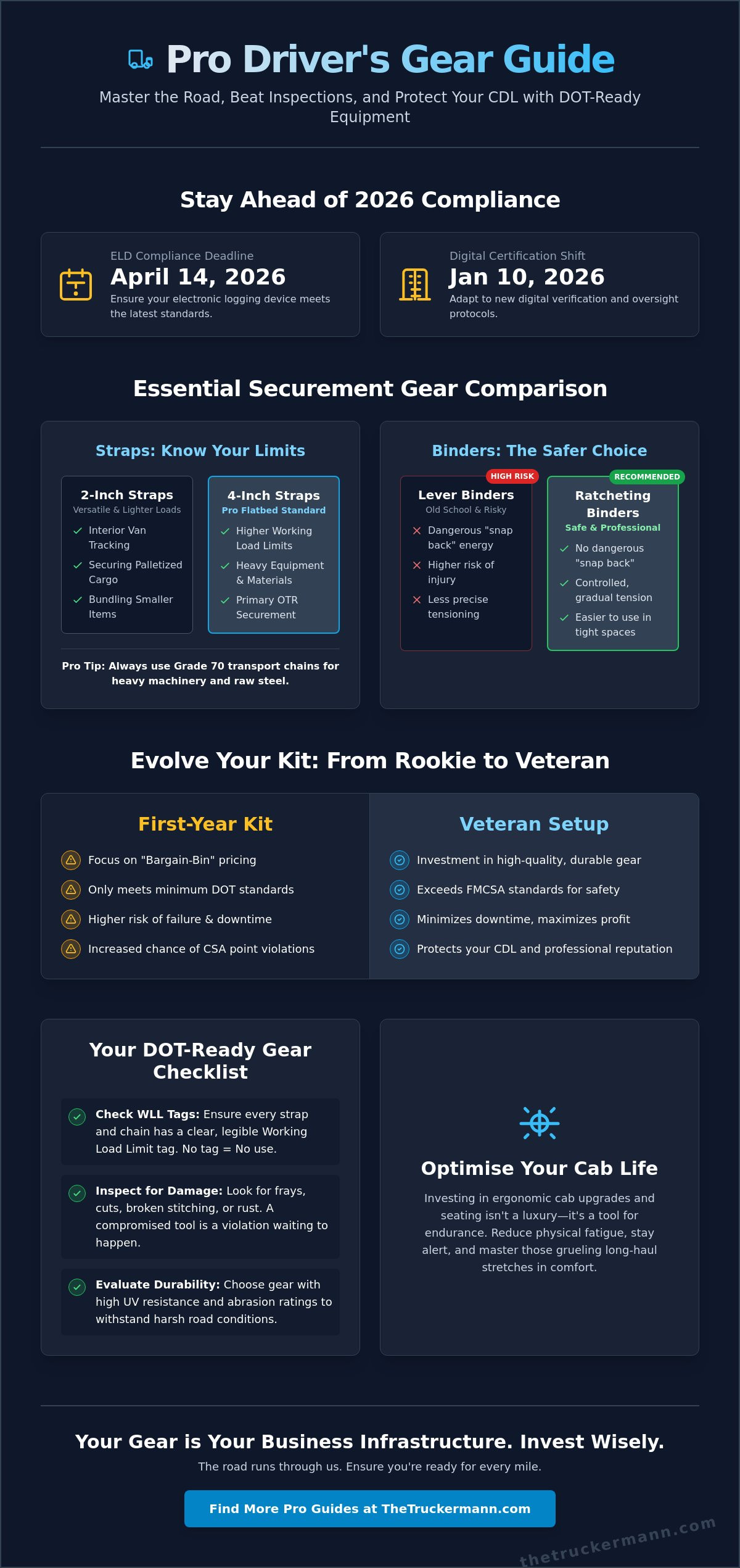
The Truckermann is here to show you exactly how to upgrade your setup to stay ahead of the April 14, 2026 ELD compliance deadline and the digital certification shift that started on January 10, 2026. This guide covers the essential tools every professional needs to secure loads faster, avoid equipment-related fines, and actually enjoy the time spent behind that wheel. We are diving into the high-tech securement systems and comfort upgrades that ensure you aren’t just surviving the road, but mastering it. The road runs through us, so let’s make sure you’re ready for every mile.
Key Takeaways
- Learn why investing in high-quality trucking gear is your best defense against the “Roadside Inspection Blitz” and how it protects your CDL from unnecessary equipment violations.
- Master the art of load securement with heavy-duty straps and winches that meet 2026 FMCSA standards for faster, safer turnarounds at the dock.
- Discover ergonomic cab upgrades and seating solutions that reduce physical fatigue, helping you stay alert and comfortable during those grueling long-haul stretches.
- Get the “Truckermann” checklist for evaluating gear durability, focusing on UV resistance and abrasion ratings to ensure your equipment doesn’t fail at the worst possible time.
- Identify the essential differences between a “First Year” kit and a veteran setup to build a professional business infrastructure that grows with your career.
Why Quality Trucking Gear is Your Best Insurance on the Road
Hey Friend, professional gear is about more than just looking the part behind the wheel; it’s about the thin line between a profitable week and a costly audit. When The Truckermann talks about professional trucking gear, we aren’t just discussing shiny accessories. We’re defining it as specialized equipment designed to meet strict FMCSA safety standards while withstanding the brutal rigors of over-the-road (OTR) life. Every time you throw a strap or secure a chain, you’re making a choice about how much you value your CDL. High-quality equipment is your first line of defense against the dreaded Roadside Inspection Blitz. A single frayed strap or a missing tag can lead to CSA points that haunt your record for years, driving up your insurance costs and scaring away high-paying brokers. If you choose to save a few bucks on bargain-bin tools, you’ll likely end up paying twice when that gear fails in the middle of a 1,000-mile haul.
The Intersection of Safety and Profit
Reliable gear is a direct investment in your bottom line because it slashes the downtime that kills your clock. When your securement systems work flawlessly, you get through inspections faster and get back to watching miles roll. Beyond the immediate time savings, gear failure has a ripple effect on your career. Carriers and insurance providers use your safety data to set premiums; a history of equipment violations suggests a lack of professionalism that costs you real money. Logistics Gear is the hardware that bridges the gap between cargo and road safety. This includes everything from high-visibility Personal Protective Equipment (PPE) for the yard to the winches holding your load tight. Your gear is your business infrastructure.
Meeting DOT and FMCSA Standards
In the United States, the DOT and FMCSA are the primary regulatory bodies that dictate what is road-worthy. You must be vigilant about checking for the WLL (Working Load Limit) tags on every piece of equipment you own. If a tag is missing or illegible, that piece of trucking gear is legally dead weight during an inspection. As we move into the stricter digital oversight of 2026, being your own inspector is the only way to stay ahead of the curve. You don’t want to explain a shifted load to a state trooper because you used a strap with an unreadable rating. For a deeper look at the specific tools that keep you compliant, check out our guide on The Best Flatbed Trucking Gear for Logistics & Securement in 2026. The road runs through us, so let’s make sure your setup is built to last.
Essential Logistics and Securement Gear for the Professional Driver
When you’re out there on the slab, your securement setup is what keeps your business upright and the motoring public safe. These aren’t just accessories; they are the “money tools” that ensure your load stays stationary from the moment you leave the shipper until you hit the receiver’s dock. If your trucking gear fails during a hard brake or a sharp turn, the consequences are immediate and often devastating. To avoid the nightmare of a shifted load, professional drivers rely on a combination of heavy duty straps, winches, and edge protectors that can handle the constant vibration and tension of long haul transport. For those looking to upgrade their inventory with equipment built for the long haul, Mytee Products offers a range of high quality securement options that stand up to the grit of the road.
Straps, Chains, and Tensioners: The Securement Core
Selecting the right tensioning tool is a matter of physics and law. While 2 inch straps are versatile for lighter loads or interior van tracking, 4 inch straps are the standard for flatbed work due to their higher Working Load Limits. When you are hauling heavy machinery or raw steel, professional grade chains are non negotiable. You should always reach for Grade 70 transport chains, as they are specifically heat treated to meet the Federal Motor Carrier Safety Regulations for cargo securement. For tensioning those chains, The Truckermann always recommends ratcheting binders over lever binders. Ratcheting models don’t have the dangerous “snap back” energy that has sent many a driver to the emergency room, and they allow for much finer tension adjustments. Before you invest in new straps or chains, using a thorough flatbed product reviews checklist can help you evaluate how gear actually performs after months of road salt and freezing rain.
Tarping Systems and Weather Protection
Tarping is arguably the most physically demanding part of the job, but the right trucking gear makes it manageable. Heavy duty lumber tarps are essential for protecting wood and sensitive cargo from road spray, though they can weigh over 100 pounds when wet. If you’re looking to save your back, consider lightweight parachute tarps for loads that only require a weather seal rather than full structural protection. You can find specialized tarping solutions and bungee kits at Truck n Tow to keep your cargo bone dry. Remember that even the best tarps will shred if you don’t use edge protectors on sharp corners. Once you’ve invested in your kit, staying on top of wear and tear is vital, so take a moment to review our guide on Mastering Flatbed Gear Maintenance to keep your equipment in top shape. Keeping your gear clean and inspected is just another way to ensure the road runs through you without a hitch.
Optimising Cab Life: Gear for Driver Comfort and Connectivity
Ergonomic Upgrades for the Long Haul
Physical fatigue from poor cab ergonomics is one of the biggest threats to a long driving career. You can fight back by upgrading your factory seat with a premium memory foam cushion or installing anti-vibration mats to dampen the constant hum of the road. These small changes significantly reduce the micro-shocks your spine absorbs every hour. Eye strain is another silent killer, so don’t settle for cheap gas station shades. High-quality, polarized sunglasses are essential for cutting through glare and reducing the headaches that often set in after a long day of driving into the sun. To keep your energy levels steady, I recommend investing in a high-efficiency 12V refrigerator or cooler to keep your diet on track and save you thousands of dollars over the next year compared to truck stop dining. Proper nutrition is just as vital as any tool in your box.
The Driver’s Tech Stack: ELDs and Beyond
In 2026, high-end connectivity gear is a professional necessity rather than a luxury. You need a tech stack that works as hard as you do, starting with a reliable ELD. Remember that on February 12, 2026, the FMCSA removed nine ELD models from their registered list, and carriers using those devices must replace them by April 14, 2026. Don’t let a hardware failure during a roadside check put a red mark on your record. While smartphone apps are convenient, a dedicated trucker GPS is superior because it accounts for bridge heights, weight limits, and truck-specific routing that standard apps often miss. Staying organized inside the cab allows you to move with the rapid-fire pace of OTR logistics without losing your mind. Before you head out on your next run, make sure your routine is as solid as your equipment by reviewing our CDL Pre Trip Inspection Checklist. The road runs through us, and a well-equipped cab ensures you’re ready for every mile of it.
Evaluating Gear for DOT Readiness and Durability
Hey Friend, when you’re standing in the yard at 4:00 AM, you need to be your own toughest DOT inspector. If you don’t find the flaw in your setup, a state trooper certainly will during a Roadside Inspection Blitz. Evaluating trucking gear isn’t just about checking if a strap looks “okay.” It’s about a vigilant hunt for UV damage, frayed stitching, and compromised abrasion ratings that occur naturally over thousands of miles. High quality gear is designed with higher density weaves and protective coatings that resist the sun’s rays and the constant friction of the road. When you’re buying new equipment, look for double-stitched edges and reinforced loops. These small details are what keep a load secure when you’re forced to make an emergency maneuver. The Truckermann knows that a “good enough” attitude is how drivers end up on the shoulder with a citation and a hit to their CSA score.
You should also maintain a gear maintenance log to show “good faith” during an audit. If you can prove that you inspect and rotate your inventory every 30 days, it shows a level of professionalism that inspectors respect. There is a “Red Flag” list that will get you put Out of Service (OOS) immediately. This includes any knots in your webbing, a cut deeper than half an inch on a four-inch strap, or any cracked links in a transport chain. If 20 percent or more of your securement devices are defective, you aren’t moving until they are replaced. Don’t let a ten-dollar strap cost you a thousand-dollar day.
Material Standards: Understanding WLL and Ratings
In the world of logistics, math is your best friend. The FMCSA requires that the aggregate working load limit (WLL) of all your securement devices must equal at least 50 percent of the weight of the cargo. If you’re hauling a 40,000-pound coil, you need 20,000 pounds of rated securement holding it down. This is why faded or missing tags are an automatic violation; if the inspector can’t read the rating, the rating is zero in their eyes. Never confuse “hardware store” grade equipment with true “trucking grade” gear. Consumer-grade tie-downs lack the verified WLL tags and the break-strength testing required for commercial use. Our flatbed product reviews checklist for choosing the best securement gear in 2026 walks you through exactly how to verify these ratings before you buy, so you never end up with zero-rated equipment during a Level 1 inspection.
Weatherproofing and Longevity
The elements are the natural enemy of your trucking gear. Road salt and winter brine will eat through chain finishes, while extreme summer heat can make nylon straps brittle and prone to snapping. Storing your gear in a dry, ventilated headache rack or tool box is the best way to prevent rot and rust. Depending on where your route takes you, you might face different regional enforcement priorities. You can learn more about how your operation type affects your requirements in our guide on Interstate vs. Intrastate Trucking. Before your next pre-trip, upgrade your securement kit today to ensure you’re always DOT-ready. The road runs through us, and that means being prepared for every inspection.
Building Your Load-Ready Kit: The Truckermann’s Final Recommendations
Hey Friend, we’ve walked through the regulations and the comforts, but now it’s time to talk about the physical reality of your setup. Your trucking gear is more than just a collection of tools; it’s the infrastructure of your small business. Whether you’re an owner operator or a company driver, treating your equipment with an entrepreneurial mindset is what separates the masters of the road from those just getting by. A veteran driver knows that relying solely on what a carrier provides is a recipe for frustration. You need to own your kit, maintain it, and understand that every piece of hardware is an investment in your safety and your paycheck. Your gear is the bridge between a successful delivery and a costly delay.
The Essential Starter Kit for New Drivers
If you’re just starting out in 2026, don’t get overwhelmed by the massive catalogs. You need a solid foundation before you start adding the bells and whistles. Every professional should carry their own “Go-Bag” that stays with them, regardless of company equipment. This ensures that if you switch rigs or end up in a loaner truck during a breakdown, your essential tools are always within reach. Here are the five non negotiable items for your first day:
- High-vis vest: Ensure it meets the latest safety standards for night work and yard operations.
- Industrial gloves: Carry at least two pairs, one for messy fueling and one for heavy duty securement.
- Tire thumper: A simple, reliable way to check your rubber during every mid-trip walkaround.
- Basic tool kit: Include a hammer, multi-bit screwdrivers, and a set of wrenches for minor cab fixes.
- High-lumen headlamp: Hands-free light is vital for those 3:00 AM pre-trip inspections in the rain.
Beyond these basics, you need to start building your own securement inventory to ensure your loads are always DOT-ready. You can find everything you need to start a professional-grade kit at Mytee Products. Having your own equipment means you know exactly how it’s been treated and when it was last inspected.
Where to Source Reliable Trucking Gear
Truck stops are great for a quick cup of coffee or an emergency bungee cord, but they aren’t the place to build a professional business infrastructure. The prices are often inflated, and the selection is limited to what fits on a small shelf. Specialized online marketplaces allow you to compare WLL ratings and material specs with the scrutiny a professional deserves. The motto for any seasoned driver is “Buy Once, Cry Once.” It’s better to invest in high-quality, UV-resistant trucking gear today than to buy a cheap replacement every three months because the sun rotted the webbing.
As you move forward, remember that the industry is shifting toward total digitalization. With MC numbers retired and USDOT numbers becoming the sole identifier in 2026, your professional reputation is tracked more closely than ever. Your gear is a direct reflection of that reputation. Check out our full list of the best trucking tools for 2026 to ensure your rig is ready for the long haul. Stay safe, stay compliant, and keep those wheels turning. The Road Runs Through Us.
Master Every Mile with the Right Setup
Hey Friend, navigating the shifts of 2026 requires more than just a CDL; it demands a commitment to the tools that keep you moving. We’ve seen how the right trucking gear acts as your best insurance against the April 14, 2026 ELD deadline and the scrutiny of a Roadside Inspection Blitz. By prioritizing FMCSA-compliant securement and ergonomic cab upgrades, you’re not just avoiding violations; you’re investing in a career that lasts. Every piece of equipment in your kit should offer heavy-duty durability that stands up to the grit of OTR life.
Don’t settle for gear that fails when the weather turns or the load shifts. Our recommendations are vetted by professional drivers to ensure you have the best “money tools” available behind that wheel. It’s time to take control of your business infrastructure and ensure your rig is truly load-ready for the long haul. Upgrade Your Professional Kit at Mytee Products to find FMCSA-compliant securement options built for real-world reliability. Stay safe out there, keep your eyes on the horizon, and remember that we are in this together. The Road Runs Through Us.
Frequently Asked Questions
How often should I replace my trucking straps and chains?
You must replace your straps or chains immediately if they meet the CVSA Out-of-Service criteria, such as a cut in the webbing or a cracked chain link. Even without visible damage, many veteran drivers choose to rotate their primary trucking gear every 12 to 24 months to account for invisible UV degradation. Constant exposure to road salt and extreme temperatures can reduce the break strength of nylon webbing by 10 percent or more over a single season.
Does DOT require specific brands of trucking gear?
No, the DOT does not mandate specific brands, but they strictly require all equipment to meet FMCSA 393.102 standards for cargo securement. Any brand you choose must have a legible Working Load Limit (WLL) tag permanently attached to the device. If an inspector cannot read the rating, they will treat the device as having zero capacity, regardless of how “heavy duty” the brand name claims to be.
What is the most important piece of safety gear for a new driver?
A high-quality, high-lumen headlamp is arguably the most critical safety item for a rookie driver. Most securement errors and personal injuries occur during low-light conditions or 3:00 AM pre-trip inspections. Having hands-free, reliable light allows you to spot a frayed strap or a leaking wheel seal that you would otherwise miss with a standard handheld flashlight. It’s a small investment that prevents massive headaches.
Can I use standard hardware store bungee cords for cargo securement?
No, standard hardware store bungee cords are strictly for securing tarps or loose hoses and are never legal for primary cargo securement. Under FMCSA regulations, bungees and tarp ties have no rated Working Load Limit for holding a load stationary. You must use Grade 70 transport chains or rated synthetic webbing to meet the 50 percent aggregate weight requirement for your cargo.
How much should I expect to spend on a basic professional gear setup?
Investing in a professional setup requires a commitment to quality trucking gear rather than bargain-bin alternatives. While prices vary by supplier, a complete flatbed kit including 4-inch straps, ratcheting binders, Grade 70 chains, and edge protectors is a significant business infrastructure cost. It is always more cost-effective to buy professional-grade tools once than to replace failed, cheap equipment three times in a single year. For a comprehensive breakdown of what belongs in your side box, our guide to the best trucking tools for professional drivers in 2026 covers every essential item with vetted recommendations.
What happens if my gear tags are missing during a Level 1 inspection?
If a securement tag is missing or illegible, the inspector will assign that device a WLL of zero pounds. This usually results in a cargo securement violation because your total aggregate WLL will no longer meet the legal requirement for the weight of your load. Depending on the severity, this can lead to an immediate Out-of-Service order, preventing you from moving until compliant straps are applied.
Is it better to buy lightweight or heavy-duty tarps for flatbed work?
You should choose based on the cargo, but many professionals now carry a mix of both. Lightweight parachute tarps are excellent for regional hauls where you only need a weather seal, saving significant strain on your back. However, for loads with sharp edges or machinery, you still need heavy-duty 18-ounce vinyl lumber tarps. These thicker materials provide the abrasion resistance that lightweight fabrics simply cannot match.
What cab accessories are actually worth the money for OTR comfort?
A 12V compressor-style refrigerator and a custom-molded orthopedic seat cushion are the two best investments for long-haul health. The refrigerator allows you to bypass expensive truck stop food, which can save a driver thousands of dollars over a 12-month period. Meanwhile, a high-quality seat cushion reduces spinal compression during 11-hour driving shifts, directly extending your physical ability to stay behind the wheel. The road runs through us, so take care of your body.
Disclaimer
The information provided on The TruckerMann is for general informational and educational purposes only. While every effort is made to ensure the accuracy and reliability of the content, trucking laws, FMCSA regulations, DOT requirements, safety standards, and industry policies can change at any time. Readers are encouraged to verify all information with official government agencies, professional advisors, or qualified industry professionals before making business, legal, financial, safety, or compliance-related decisions.
The content shared on this website reflects personal opinions, experiences, research, and commentary and should not be considered legal, financial, medical, tax, or professional advice. The TruckerMann and its owners, contributors, affiliates, or representatives are not responsible for any losses, damages, violations, penalties, or liabilities resulting from the use or misuse of information found on this website.
Some content on this website may contain affiliate links, sponsored content, or promotional material. This means we may earn a commission at no additional cost to you if you choose to purchase through certain links.
By using this website, you agree that you do so at your own discretion and risk.