Your paper medical certificate is officially on life support, and if you aren’t ready for the digital shift, your CDL is the one paying the price. We all know that gut-punch feeling when you’re sitting in a cold exam room, wondering if a spike in blood pressure or a paperwork glitch will sideline your career. You’ve spent years mastering the road, but the 2026 transition to the National Registry II (NRII) has changed the game, making your dot medical card a digital asset that requires a new kind of preparation. With the temporary paper waiver set to expire on April 10, 2026, the margin for error has never been thinner.
We understand the frustration of chasing down certified examiners and the fear of a disqualified status over a simple misunderstanding of the new electronic filing rules. This guide is built to help you pass your physical on the first try and ensure your results actually reach the state database without a hitch. We’ll break down the specific 2026 health benchmarks, show you how to handle the NRII system, and share the veteran strategies you need to keep your rig moving and your compliance record clean.
Key Takeaways
- Understand the mandatory shift to the National Registry II system and how it changes the way your medical data is shared with state licensing agencies.
- Identify if your specific vehicle weight or passenger count requires a dot medical card to stay legal on the road in 2026.
- Learn how to avoid the “Short-Term Card” trap by mastering the specific vision, hearing, and blood pressure benchmarks examiners are looking for.
- Get a step-by-step plan for finding certified examiners and filing your results at least 30 days before your current certificate expires.
- Discover practical, driver-tested health habits that ensure you pass your physical the first time and keep your CDL secure for years to come.
Understanding the DOT Medical Card and the 2026 Electronic Shift
Your medical certificate, officially known as Form MCSA-5876, is more than just a bureaucratic hurdle. It’s your federal proof of fitness, the document that tells the world you’re physically capable of handling an 80,000-pound rig. To maintain a valid Commercial Driver’s License, the law requires you to stay medically qualified at all times. In the past, this meant carrying a folded piece of paper in your wallet. Today, that paper is becoming a secondary backup to a much larger digital machine.
The 2026 regulatory landscape has introduced a massive shift in how the FMCSA tracks your health. We’re moving toward a system where your dot medical card exists primarily as a digital record within the National Registry of Certified Medical Examiners (NRCME). This isn’t just about going green; it’s about real-time enforcement and making sure there’s no lag between your exam and your status on the road. The system is designed to be faster, but it leaves very little room for paperwork errors.
To better understand this concept, watch this helpful video:
What is the NRII Rule and Why Does It Matter?
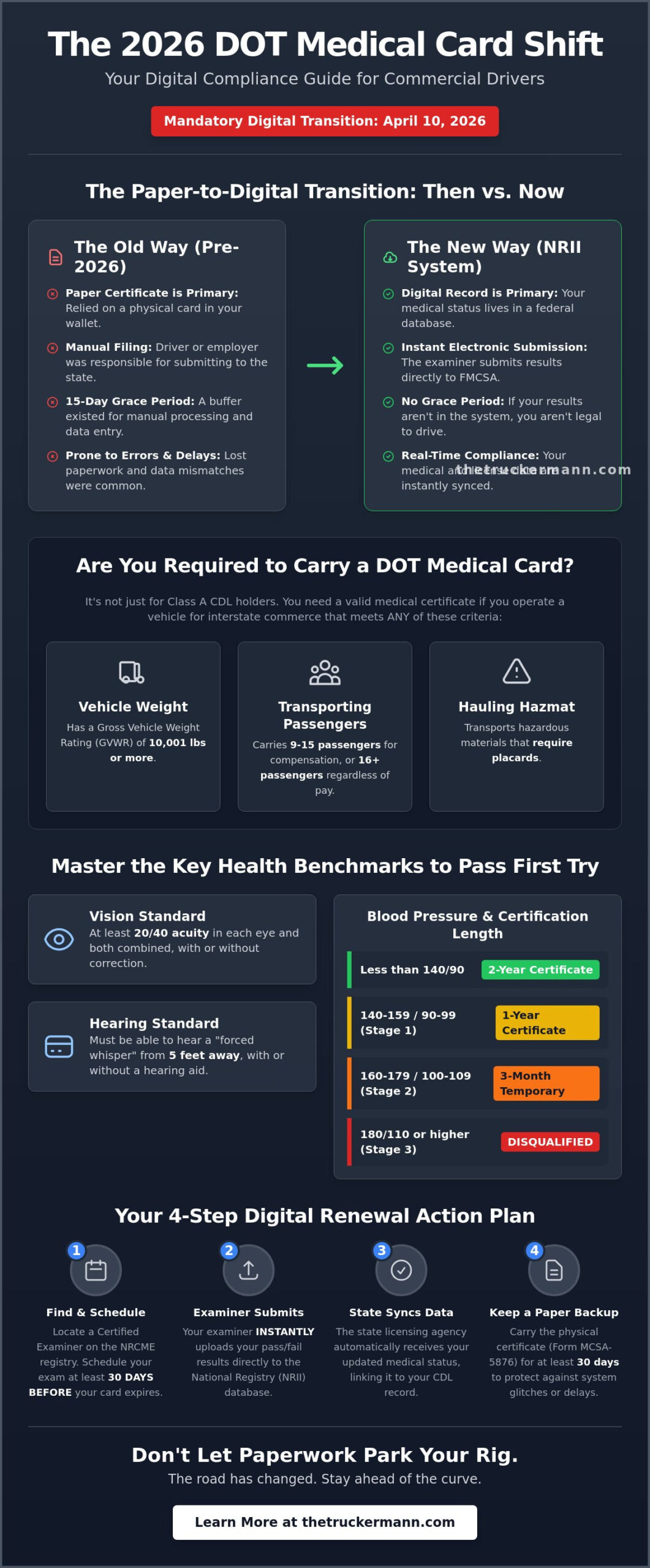
The Medical Examiner’s Certification Integration rule, or NRII, is the engine behind this change. It forces a direct, electronic link between the clinic where you get poked and prodded and the federal database. When your examiner hits “submit,” that data travels instantly to the FMCSA. This matters because the old 15-day grace period for manual filing is dead in most states. If you aren’t in the system, you aren’t legal. The digital record is now the single source of truth for your dot medical card status, ensuring that your medical data and licensing information are perfectly synced.
Do You Still Need a Physical Card in 2026?
Don’t throw away your paper Form MCSA-5876 just yet. Even with the electronic shift, you should keep a hard copy in your permit book for at least 30 days after your exam. This protects you during the transition period while state agencies sync their data. Roadside inspectors now access your medical status through their own digital portals during a Level 1 inspection, but technical glitches happen. Having that paper backup can save you from a costly violation if the system goes down. For a deeper look at staying compliant during stops, check out our DOT Inspection Level 1 Checklist.
Who is Required to Carry a Medical Examiner’s Certificate?
Not every driver needs a CDL, but many more need a dot medical card than you might realize. If you’re operating a vehicle with a Gross Vehicle Weight Rating (GVWR) of 10,001 pounds or more, the federal government wants to know you’re healthy enough to be there. This includes the hotshotters in heavy-duty pickups and the local delivery drivers in box trucks who never touch a Class A rig. It’s about the weight of the iron you’re moving, not just the license in your pocket. Even if you aren’t a “commercial driver” in the traditional sense, you’re still a commercial operator in the eyes of the law.
The rules also catch anyone transporting 9 to 15 passengers for compensation, or 16 or more people regardless of the paycheck. If you’re hauling hazardous materials that require placards, you’re in the same boat. Failing to have a valid DOT physical examination on file is a fast track to an “Out of Service” order during a roadside check. We see it all the time. A driver thinks they’re exempt because they’re local, only to get red-tagged because their vehicle weight crossed that 10,000-pound threshold.
Interstate vs. Intrastate Requirements
The moment your tires cross a state line, you enter the world of interstate commerce. This is where federal rules reign supreme. If you stay within your home state, you’re an intrastate driver. While you still need a medical certificate, your state might offer specific waivers for conditions like vision or diabetes that the feds don’t allow. It’s a complex path to choose. Make sure you understand how crossing borders changes your legal standing before you take that load across the state line.
The 4 Self-Certification Categories for CDL Holders
When you get your CDL, you have to tell the state how you plan to use it. Most over-the-road (OTR) drivers fall into the Non-Excepted Interstate (NI) category. This means you operate across state lines and must meet all federal medical standards. Excepted Interstate (EI) is a smaller group, reserved for specific roles like school bus drivers or government employees who are “excepted” from some medical requirements.
Then you have the intrastate side. Non-Excepted Intrastate (NA) drivers operate only within one state but must meet that state’s medical standards. Finally, Excepted Intrastate (EA) is for those operating locally in excepted roles. Choosing the wrong category can lead to your license being downgraded, so double-check your status before your next renewal. If you’re looking for the right gear to keep your cab organized and compliant during these long hauls, consider checking out the professional-grade options at Truck n Tow.
The DOT Physical: What to Expect and How to Pass
Stepping into a clinic for your physical often feels like a high-stakes roadside inspection for your heart, lungs, and eyes. It’s not a standard checkup; it’s a professional evaluation of your ability to stay safe behind the wheel. To protect your dot medical card, you need to treat this exam with the same discipline you use to pre-trip your rig. A veteran examiner looks at five key areas: vision, hearing, blood pressure, laboratory results (urine), and a head-to-toe physical assessment. If one of these gears is out of alignment, your livelihood could be sidelined before you even leave the parking lot.
One common point of confusion is the urine test. Many drivers walk in sweating a drug screen, but the standard physical lab work is actually checking for sugar, protein, and blood. It’s a screen for diabetes and kidney issues, not a random drug test. However, don’t let your guard down. If you’re using any Schedule I substances, including prescribed marijuana, you’re looking at an automatic disqualification. Since the 2026 electronic shift means results are uploaded almost instantly, a “disqualified” status hits the national database faster than ever. If you do fail, don’t panic; the FMCSA has a waiver process for certain conditions, but it requires a mountain of specialist paperwork and patience.
The Big Three: Vision, Hearing, and Blood Pressure
These are the hurdles where most drivers trip up. For vision, you must hit at least 20/40 in each eye and maintain a 70-degree field of vision. If you wear glasses, bring them. For hearing, you need to perceive a “forced whisper” from five feet away. If you can’t, you’ll move to an audiogram. Blood pressure is the real “card killer.” To secure a full two-year card, you must stay below 140/90. Anything higher triggers the “Short-Term Card” trap. Stage 1 hypertension (up to 159/99) drops you to a one-year certificate. Stage 2 (up to 179/109) gives you a mere three-month temporary card to get things under control. Anything 180/110 or higher is an immediate disqualification until you’re stabilized. Reviewing the official DOT Medical Exam requirements can help you understand exactly where you stand before you pay your fee.
Preparing Your Body for Exam Day
We’ve all dealt with “White Coat Syndrome,” where your blood pressure spikes the moment the cuff tightens. To stay calm, arrive early and sit quietly for ten minutes before the check. For at least 24 hours before your appointment, cut out the caffeine, high-sodium snacks, and sugary energy drinks. These are notorious for causing temporary spikes that can result in a restricted dot medical card. If you use a CPAP machine for sleep apnea, bring your compliance reports. If you have heart issues or diabetes, bring a fresh clearance letter from your specialist. Showing up prepared proves you’re a professional who takes your health as seriously as your logbook.
Step-by-Step: Renewing Your Card and Filing with Your State
Don’t play chicken with your expiration date. We’ve all seen good drivers get sidelined because they waited until the final week to book an appointment, only to find their local clinic was backed up or the system was glitching. You should schedule your exam at least 30 days before your current dot medical card expires. This buffer gives you time to handle any unexpected “Short-Term Card” issues or specialist clearances without your CDL being downgraded to “K” (intrastate only) or suspended entirely. In the 2026 digital era, a lapse in the system is visible to every scale house and patrol car in the country instantly.
Once you’ve finished the exam, your job isn’t over. While the new rules require examiners to upload results to the FMCSA portal, you are the one who pays the price if they make a typo. Ask the examiner for a printed copy of your Form MCSA-5876 and verify that they’ve hit the “submit” button before you leave the office. To be absolutely safe, check your personal Motor Vehicle Record (MVR) exactly 10 days after your exam. If the new expiration date isn’t reflecting on your state record, you need to start making phone calls immediately to avoid a license downgrade.
Finding the Right Certified Medical Examiner
Not all doctors are created equal. You must use a provider listed on the official NRCME website to ensure they are federally certified. Before you book, check reviews from other drivers in the community. You want a straight-shooter who understands the physical demands of the road, not someone who treats you like a corporate office worker. Always confirm the examiner’s 10-digit National Registry Number over the phone. In 2026, expect to pay between $80 and $150 for the exam. If a clinic is charging significantly less, double-check their credentials to ensure they aren’t a “fly-by-night” operation that will leave your paperwork in limbo.
Confirming Your Digital Status with the SDLA
Your State Driver’s Licensing Agency (SDLA) is the final word on your legal status. Most states now have an online portal where you can log in and view your medical certification status in real-time. Even though the NRII system is designed to be automatic, some states still require a manual upload of your MCSA-5876 as a secondary verification. If your portal shows a “Downgrade” warning, it means the state hasn’t received your digital record yet. Don’t let a computer error kill your career. If you want to make sure your paperwork and your rig are both in top shape for your next inspection, get the latest compliance tips from The Truckermann.
Maintaining Your Health and Compliance on the Long Haul
Your body is the most expensive piece of equipment you’ll ever own. If the engine in your rig blows, you can swap it out; if your health fails, your dot medical card vanishes, and your career stops cold. In 2026, medical examiners are shifting their focus toward long-term health stability rather than just a snapshot of your vitals on exam day. They want to see medication compliance and managed conditions. This means the choices you make at a 2:00 AM fuel stop—what you eat and how much you move—directly dictate whether you’re still hauling in five years. Active securement isn’t just about the load. It’s about keeping your heart pumping and your joints fluid.
Living in a sleeper berth makes stress management and sleep apnea compliance a constant battle. If you’ve been prescribed a CPAP, use it every single night. Examiners are now checking data logs for treatment compliance, and a gap in your sleep history can trigger an immediate downgrade to a short-term certificate. Manage your stress by staying ahead of the clock and keeping your paperwork organized. When you aren’t rushing, your blood pressure stays in the green, and your dot medical card remains secure.
Gear That Supports a Healthy Lifestyle
Investing in the right tools is a form of self-preservation. Using high-quality flatbed trucking gear reduces the physical toll that heavy chains and binders take on your shoulders and back. We recommend using ergonomic tools from Truck n Tow to make cargo securement less of a wrestling match and more of a professional process. Additionally, wearing proper safety apparel from Mytee Products prevents the slips and falls that lead to chronic injuries. If you aren’t protecting your frame, you can’t expect the feds to keep you on the road.
Staying Ahead of Regulatory Changes
Staying compliant means keeping your stress levels low before you ever hit the scales. Use our CDL Pre Trip Inspection Checklist to ensure you aren’t sweating a roadside stop; confidence in your equipment leads to a calmer mind and better health outcomes. Set digital calendar alerts for your medical renewal at least 60 days out and keep a close eye on ELD updates. Our final fraternal advice is simple: don’t let a 15-minute exam end a 20-year career. Mastery of the 2026 rules requires vigilance, but mastery of your health ensures you’ll be around to see the next million miles. Stay safe, stay healthy, and keep the shiny side up.
Protect Your Livelihood in the Digital Age
The road ahead is changing, and the 2026 NRII shift means your physical health is now a real-time data point. We’ve walked through the digital integration, the “Short-Term Card” traps, and the importance of choosing a certified examiner who actually knows the grit of this industry. This veteran-verified advice has helped over 10,000 professional drivers navigate the red tape and keep their rigs moving through every regulatory storm. Your dot medical card isn’t just a piece of paper; it’s your license to provide for your family and keep the supply chain moving.
By staying proactive with your physical health and mastering the new digital filing requirements, you ensure that no bureaucratic shift can sideline your career. Preparedness is the only tool that works every time you step into the clinic or pull into a scale house. Keep your career on track—check out our recommended safety gear at Mytee Products. Remember, the best pre-trip inspection you can do is on yourself. Stay vigilant, stay healthy, and we’ll see you at the next stop.
Frequently Asked Questions
How long is a DOT medical card good for in 2026?
A standard dot medical card is valid for up to 24 months. If you have certain health conditions like hypertension or heart disease, your examiner might limit your certificate to one year or even three months to ensure more frequent monitoring. Always check the specific expiration date on your certificate before leaving the clinic to avoid any surprises.
What happens if my DOT medical card expires before I renew it?
Your CDL will be downgraded to a non-commercial status or suspended entirely if your medical certification expires. Under the 2026 electronic rules, this change happens automatically in the state database. You cannot legally operate a commercial vehicle until you pass a new physical and the results are successfully transmitted to your State Driver Licensing Agency.
Can I drive with a 3-month temporary DOT medical card?
Yes, you can legally drive with a 3-month temporary card, but you are effectively on a short leash. This certificate is usually issued to give you time to lower your blood pressure or stabilize a specific health condition. If you don’t resolve the medical issue and pass a new exam before the 90 days are up, you’ll be pulled off the road.
Does the DOT physical include a drug test?
No, the standard DOT physical does not include a drug test. The urine sample you provide is used to check for sugar, protein, and blood to screen for diabetes or kidney issues. However, many employers require a separate DOT drug test during the same appointment to meet their own hiring or random testing requirements.
What blood pressure reading will disqualify me from a 2-year card?
Any reading at or above 140/90 will disqualify you from receiving a full 2-year dot medical card. Readings between 140/90 and 159/99 typically result in a 1-year certificate. If your pressure hits 160/100 or higher, you’ll likely receive a 3-month temporary card or be disqualified until your levels are brought under control with medication or lifestyle changes.
Can I pass a DOT physical if I use CPAP for sleep apnea?
You can definitely pass if you provide proof of treatment compliance. Examiners require a report from your CPAP machine, usually covering the last 30 to 90 days, showing you use the device as prescribed. They typically look for usage of at least 4 hours per night on 70% of the nights to confirm you are safe to operate.
How much does a DOT medical exam cost in 2026?
Expect to pay between $50 and $150 for a DOT physical in 2026. This price varies based on the provider and your location. Since these exams are considered an employment requirement, standard health insurance usually doesn’t cover them, but you can often use your Health Savings Account or Flexible Spending Account to pay the fee.
What is the NRII rule and how does it affect my CDL?
The NRII rule is the National Registry II mandate that requires medical examiners to upload your exam results directly to the FMCSA. This system integrates your medical data with your state driver record electronically. It eliminates the old paperwork lag, but it also means that any disqualification or expiration is visible to law enforcement and state agencies almost instantly.
Disclaimer
The information provided on The TruckerMann is for general informational and educational purposes only. While every effort is made to ensure the accuracy and reliability of the content, trucking laws, FMCSA regulations, DOT requirements, safety standards, and industry policies can change at any time. Readers are encouraged to verify all information with official government agencies, professional advisors, or qualified industry professionals before making business, legal, financial, safety, or compliance-related decisions.
The content shared on this website reflects personal opinions, experiences, research, and commentary and should not be considered legal, financial, medical, tax, or professional advice. The TruckerMann and its owners, contributors, affiliates, or representatives are not responsible for any losses, damages, violations, penalties, or liabilities resulting from the use or misuse of information found on this website.
Some content on this website may contain affiliate links, sponsored content, or promotional material. This means we may earn a commission at no additional cost to you if you choose to purchase through certain links.
By using this website, you agree that you do so at your own discretion and risk.