Hey Friend, in a state like Texas where the freight system moves $3.1 trillion in goods every year, your license is more than just a permit; it is your seat at the table of a massive economy. The fear of sinking your hard-earned cash into a diploma mill that leaves you unprepared for the real road is enough to keep anyone up at night. When you are vetting a cdl commercial trucks training llc, you are not just looking for a classroom, you are looking for a gateway to that $70,000 entry-level salary that Texas drivers are seeing in April 2026.
I know the confusion surrounding FMCSA requirements feels like a surprise roadside inspection, and the $1,500 to $6,000 price tag for Houston programs makes the stakes feel even higher. I promise to give you a veteran’s eye for choosing an ELDT-compliant program that actually puts you behind the wheel instead of just behind a desk. We will dive into the Training Provider Registry must-haves, the secrets to passing your exam on the first attempt, and the specific steps to turn your training into a high-paying career.
Key Takeaways
- Verify that your chosen school is listed on the FMCSA Training Provider Registry to ensure your training hours are legally recognized for the CDL exam.
- Learn to distinguish a quality program from a diploma mill by inspecting the yard organization and the safety ratings of the trucks you will be driving.
- Choosing the right cdl commercial trucks training llc requires a balance of rigorous classroom theory and the hands-on maneuvers necessary for the real road.
- Evaluate the differences between Class A and Class B training paths to align your education with the specific freight demands of the 2026 Texas economy.
- Master the pre-trip inspection as a critical skill that not only helps you pass the state exam on the first try but also keeps you safe during your first haul.
What is a CDL Commercial Trucks Training LLC?
Hey Friend, let’s break down what these training companies actually do for your career. A cdl commercial trucks training llc is a private business entity certified by the federal government to provide Entry-Level Driver Training (ELDT). In the old days, you might have learned the ropes through an unofficial apprenticeship or by “borrowing” a rig from a friend to practice in an empty lot. Those days are over. The industry has shifted from an old-school handshake era to a modern, FMCSA-mandated era where every mile of your training is tracked. To legally operate a heavy rig today, you must earn a Commercial driver’s license (CDL) through a school that is officially listed on the federal Training Provider Registry (TPR).
To better understand the level of technical skill required during your training, watch this helpful video on mastering the art of downshifting:
The Role of the ELDT Mandate in 2026
As of April 2026, self-training is no longer a legal path to getting your license. The FMCSA doesn’t care how many years you spent driving a tractor on a farm; you must complete a certified program. This mandate requires three specific components: Theory, Range, and Public Road training. Theory covers the regulations and logistics, while Range training happens in a controlled yard where you master backing and docking. Public Road training is where you finally take that steel out into real traffic. ELDT serves as the federal standard for safety and proficiency, ensuring that no one gets a “participation trophy” license without proving they can handle 80,000 pounds of moving metal.
Why “LLC” Matters for Your Training
When you choose a cdl commercial trucks training llc, you are opting for a private business structure rather than a public community college. Private schools are built for speed and efficiency, often offering intensive three to four week programs that get you on the road much faster than a semester-long college course. This flexibility is great for career changers who can’t afford to sit in a classroom for six months. However, you have to be vigilant. Because these are private companies, you must verify the LLC’s insurance and liability coverage. A reputable school will have late-model equipment and clear professional standards, protecting you from the “diploma mills” that take your money but don’t prepare you for a real-world roadside inspection.
The ELDT Certification: Non-Negotiables for Any School
Hey Friend, don’t let a flashy website or a low price tag blindside you. The only thing that truly matters when you sign up with a cdl commercial trucks training llc is whether they can legally get you to the state exam. Since the Entry-Level Driver Training (ELDT) regulations became the law of the land on February 7, 2022, the paperwork trail has become just as important as your ability to back into a tight dock. It’s not just about learning; it’s about reporting. Your training provider must electronically transmit your completion records directly to the FMCSA. If those records aren’t sitting in the federal database when you walk into the DMV, you won’t be allowed to take your skills test. This digital handshake is the primary gatekeeper for the modern driver.
You also need to look at who is doing the teaching. A school is only as good as its veterans. I always tell new guys to look for instructors with at least two years of verifiable Class A experience. You want a mentor who has handled a roadside inspection blitz or navigated a heavy haul through a mountain pass, not someone who just graduated six months ago. Equipment matters too. If the school is training you on a twenty-year-old day cab but you plan to pull a fifty-three-foot reefer for a mega-carrier, you are starting at a disadvantage. Demand to see equipment that mirrors what you’ll actually drive in the industry today.
Verifying the Training Provider Registry (TPR)
The Training Provider Registry is the only “source of truth” in this business. To protect your investment, go to the official FMCSA website and use the search tool to locate your specific cdl commercial trucks training llc. If their name doesn’t pop up with an “Active” status, walk away immediately. Training at an unlisted school means your hours are void, and you’ll be back at square one with an empty wallet. A legitimate provider will have their TPR number ready before you even ask for it. It’s a quick check that saves you thousands of dollars and months of wasted time.
Theory vs. Behind-the-Wheel Requirements
There is a massive gap between passing a written test and controlling 80,000 pounds on a rainy highway. While some schools try to cut corners with classroom-only ELDT certificates, you need a balanced mix of theory and hands-on maneuvers. The industry gold standard remains forty or more hours of actual “behind-the-wheel” time. This includes time on the range mastering the offset back and time on public roads dealing with real traffic. If a school spends ninety percent of the time in a classroom, they aren’t training you to be a driver; they’re training you to be a clerk. To stay sharp on these requirements and other gear you’ll need, check out The Truckermann’s guide to professional tools to protect your career.
Comparing Training Options: Class A, B, and Endorsements
Hey Friend, picking the right lane for your career starts with knowing which license opens the most doors. A professional cdl commercial trucks training llc isn’t just a school; it is your ticket to a specific lifestyle. If you want to handle the heavy steel and move freight across state lines, Class A is the heavy-duty path you need. It covers tractor-trailers and the big rigs that keep the American economy moving. On the other hand, Class B is ideal for local logistics, dump trucks, or delivery routes that get you home every night. While Class B is a solid choice, Class A training usually covers Class B requirements, giving you the ultimate flexibility in the job market.
You also need to think about endorsements to truly maximize your paycheck. Adding Hazmat, Tanker, or Double/Triple certifications can turn a standard driving job into a specialized career. Under FMCSA’s ELDT regulations, you must complete specific theory training for these endorsements before you can even take the written test at the DMV. A quality training provider will have these modules ready to go so you don’t have to scramble to find another school later on. It is about building a professional foundation that lasts for decades.
Class A vs. Class B Career Paths
The earning potential difference between these paths is significant. In 2025, entry-level Class A drivers in Texas were already clearing $70,000 per year. Compare that to the national median pay for all truck drivers, which sits around $57,440. With Texas freight volume projected to surge by 92% by 2050, the Class A path offers a massive safety net for your future. If you decide to go the heavy-haul route, you’ll need the right equipment to stay safe. Check out my guide on The Best Flatbed Trucking Gear for Logistics & Securement in 2026 to see what pros are using behind the wheel.
Manual vs. Automatic Transmission Training
Don’t fall into the “automatic restriction” trap. If you take your skills test in an automatic truck, your license will have an “E” restriction. This means you are legally barred from driving a manual rig. While many fleets are moving toward automatics to save on fuel and maintenance, being a manual-certified driver makes you more valuable during a hiring crunch. I always recommend learning on a manual transmission at your chosen cdl commercial trucks training llc. It keeps your options open if a high-paying job opens up at a company that still runs older, rugged equipment. You want to be the driver who can handle any key they toss you, not the one stuck waiting for a specific truck to come off the line.
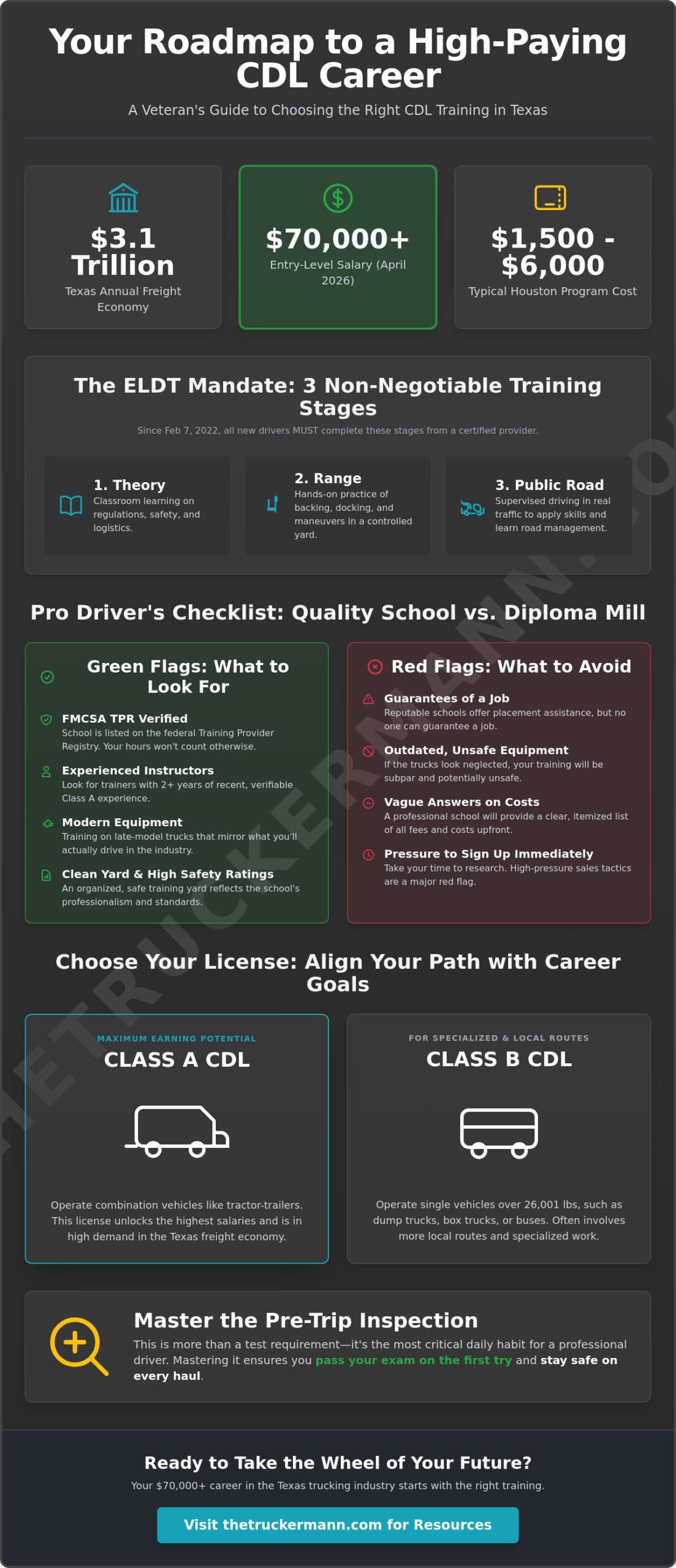
The Professional Driver’s Checklist for Vetting an LLC
Hey Friend, when you are looking at a cdl commercial trucks training llc, you aren’t just buying a course; you are investing in your future. Don’t get blinded by big numbers or shiny brochures. You need to verify every claim with your own eyes before you hand over a single dollar. This isn’t just about passing a test. It is about ensuring the school you choose has the “boots-on-the-ground” reputation to actually get you hired in a competitive 2026 market. Use this checklist to separate the pros from the pretenders.
- Verify Equipment Safety: Don’t just check the TPR status. Look up the FMCSA safety rating for the school’s specific DOT number. If their trucks are frequently sidelined by roadside inspection violations, that is exactly what you will be driving.
- Tour the Yard: Walk the facility. Is the yard organized or a disaster zone? A yard littered with broken parts and oil spills is a clear sign of poor maintenance standards.
- Demand a 4:1 Ratio: Ask for the student-to-instructor ratio. You should aim for 4:1 or better. If you are the tenth guy in line waiting for fifteen minutes of seat time, you are wasting your day and your money.
- Audit the Contract: Review the fine print for hidden fees. Some schools bury fuel surcharges or “exam retake fees” in the back of the agreement.
- Check Recruiter Ties: Ask which mega-carriers actually visit the campus. A school with deep recruiter relationships is your best path to that $70,000 entry-level salary.
Red Flags to Watch Out For
Beware of any school promising a license in “one weekend.” Under current ELDT rules, it is physically impossible to complete the required theory and range hours in forty-eight hours. These “diploma mills” are a fast track to a rejected application. Also, avoid any cdl commercial trucks training llc that won’t let you sit in the cab or pop the hood before you sign a contract. Finally, be skeptical of “guaranteed pass” marketing. The state examiner makes the final call on your skills; no school can legally guarantee their decision.
Financing and Scholarship Opportunities
Financing is often the biggest hurdle for new drivers. Look for schools with Texas Workforce Commission (TWC) approvals or WIOA grants that can cover the $1,500 to $6,000 tuition costs. You also have the “carrier-sponsored” training model. In this setup, a trucking company pays for your school in exchange for a one-year or two-year work commitment. It’s a great way to start with zero debt, but you are “beholden” to that company. If you quit early, they’ll come for the full tuition amount immediately. Independent training costs more upfront but gives you the freedom to pick the highest-paying job on day one. To help you decide which path fits your budget, check out The Truckermann’s vetted industry resources for new drivers.
Beyond the License: Preparing for Your First Haul
Hey Friend, getting your hands on that hard-earned plastic is a massive milestone, but don’t mistake the license for the finish line. Training gets you the legal document; experience is what keeps you safe when the weather turns sour on a mountain pass. When you choose a cdl commercial trucks training llc, you are building a professional foundation that carriers will scrutinize during your first interview. A clean training record, free from equipment scrapes or safety incidents in the yard, is your best leverage for landing those higher-tier initial pay rates. Recruiters in April 2026 are looking for drivers who show discipline from day one, not just someone who can barely pass a skills test.
Transitioning from a controlled training yard to a chaotic real-world fleet environment is a wake-up call for many. In the yard, you have instructors watching your every move and correcting your mistakes in real-time. On your first solo haul, it is just you and the machine. Mastering the fundamentals now ensures you don’t become a statistic during your first ninety days on the job. Your reputation starts the moment you pull out of that training facility for the last time. Part of that reputation depends on knowing exactly what an inspector is looking for when you get pulled over, so study the DOT inspection level 2 checklist before your first solo run so you are never caught off guard at a roadside stop.
Mastering the Pre-Trip Inspection
The pre-trip inspection is the single biggest hurdle for new drivers. It remains the number one reason students fail their state exam. You have to know every bolt, belt, and hose by heart because an examiner won’t accept “close enough.” I recommend finding a cdl commercial trucks training llc that dedicates at least fifteen hours to this phase alone. You should be under the hood every single day until the terminology becomes second nature. To stay ahead of the examiner, use this CDL Pre Trip Inspection Checklist: The 2026 Master Guide to track your progress. If you can’t spot a minor leak in the yard, you won’t spot a major disaster on the highway. For an even deeper dive into every component you’ll be evaluated on, the Ultimate 2026 CDL Pre-Trip Inspection Checklist: A Driver’s Master Template gives you a comprehensive pre trip checklist cdl framework built around the latest FMCSA compliance standards.
Building Your Professional Toolkit
The day you graduate, you need more than just a license. You need a professional toolkit that says you are ready for the grit of the highway. This starts with the basics: high-visibility safety vests, rugged work gloves, and a reliable tire pressure gauge. Your “Road Story” begins with the right mindset and the right equipment. Don’t show up to your first carrier orientation empty-handed. Ready to roll? Check out The Truckermann’s gear recommendations for new drivers to ensure you have the tools to protect your livelihood. The road runs through us, and it starts with being prepared for that very first mile.
Take Command of Your Trucking Future
Hey Friend, the path to the driver’s seat is paved with regulations, but it is also filled with the potential for a $70,000 starting salary. You now have the veteran’s roadmap for vetting a cdl commercial trucks training llc, from checking the federal Training Provider Registry to avoiding the “automatic restriction” trap. Remember that your reputation begins in the training yard; every hour you spend mastering the pre-trip inspection is an investment in your safety and your paycheck. This industry moves fast, and being prepared is the only way to keep your wheels turning.
I have stripped away the corporate fluff to give you the real road stories and facts you need for the 2026 ELDT standards. If you are ready to stop dreaming and start hauling, you need a guide written by a veteran driver who knows the road. Master your pre-trip and pass your exam with our Master Guide to ensure you walk into the DMV with total confidence. The road is waiting for you, and I’ll see you out there. The Road Runs Through Us.
Frequently Asked Questions
Is CDL Commercial Trucks Training LLC certified by the FMCSA?
Yes, this provider is an ELDT-certified training entity listed on the federal Training Provider Registry. Since the February 7, 2022, mandate, every school must be registered to legally report your training hours to the FMCSA. This certification is what allows you to sit for your state skills test after completing your 40 hours of required training.
How long does the average CDL training program take at an LLC?
Most intensive programs at a cdl commercial trucks training llc are designed to be completed in three to four weeks. These fast-paced courses prioritize seat time and range maneuvers to get you road-ready quickly. This is a much faster alternative to the traditional semester-long routes found at public institutions.
What is the difference between an LLC training school and a community college?
The primary difference is the speed of the program and the level of job placement assistance. Private LLCs focus on getting you through the ELDT requirements in under a month, whereas community colleges often take three to six months. Private schools also tend to have more direct relationships with recruiters from major carriers looking to fill seats immediately.
Can I get a CDL if the training LLC is not on the TPR?
No, you cannot legally obtain a CDL if your training provider is not on the Training Provider Registry. The state examiner will verify your digital record in the federal database before you are even allowed to start the truck. If the LLC isn’t registered, your training hours are void and your application will be rejected.
How much does it cost to attend a private CDL training LLC in 2026?
In 2026, the cost for a private Class A program in Texas typically ranges between $3,500 and $8,000. For those looking at Houston locations, tuition is often more competitive, ranging from $1,500 to $6,000. These prices vary based on whether the school includes endorsement training and the quality of the equipment used.
Does the LLC provide the truck for the state skills test?
Most reputable schools include the use of their equipment for your first attempt at the state skills test. It is a massive advantage to test in the same rig where you spent your 40 hours of behind-the-wheel time. Always confirm this in your contract to avoid unexpected rental fees on your testing day.
What happens if I fail my CDL test after completing the LLC training?
You will need to schedule a retest with the state, but most quality schools offer remediation hours to help you practice the specific maneuvers you missed. Be sure to check if your cdl commercial trucks training llc charges a “retake fee” for using their truck a second time. This is a common hidden cost that you should identify during your initial tour.
Do these training schools offer bilingual (Spanish/English) courses?
Many training providers in the Texas region offer bilingual instruction to accommodate the diverse workforce entering the logistics industry. This helps you master the complex ELDT theory in your primary language. Just remember that federal DOT standards require the actual skills test and road sign recognition to be conducted in English.
Disclaimer
The information provided on The TruckerMann is for general informational and educational purposes only. While every effort is made to ensure the accuracy and reliability of the content, trucking laws, FMCSA regulations, DOT requirements, safety standards, and industry policies can change at any time. Readers are encouraged to verify all information with official government agencies, professional advisors, or qualified industry professionals before making business, legal, financial, safety, or compliance-related decisions.
The content shared on this website reflects personal opinions, experiences, research, and commentary and should not be considered legal, financial, medical, tax, or professional advice. The TruckerMann and its owners, contributors, affiliates, or representatives are not responsible for any losses, damages, violations, penalties, or liabilities resulting from the use or misuse of information found on this website.
Some content on this website may contain affiliate links, sponsored content, or promotional material. This means we may earn a commission at no additional cost to you if you choose to purchase through certain links.
By using this website, you agree that you do so at your own discretion and risk.